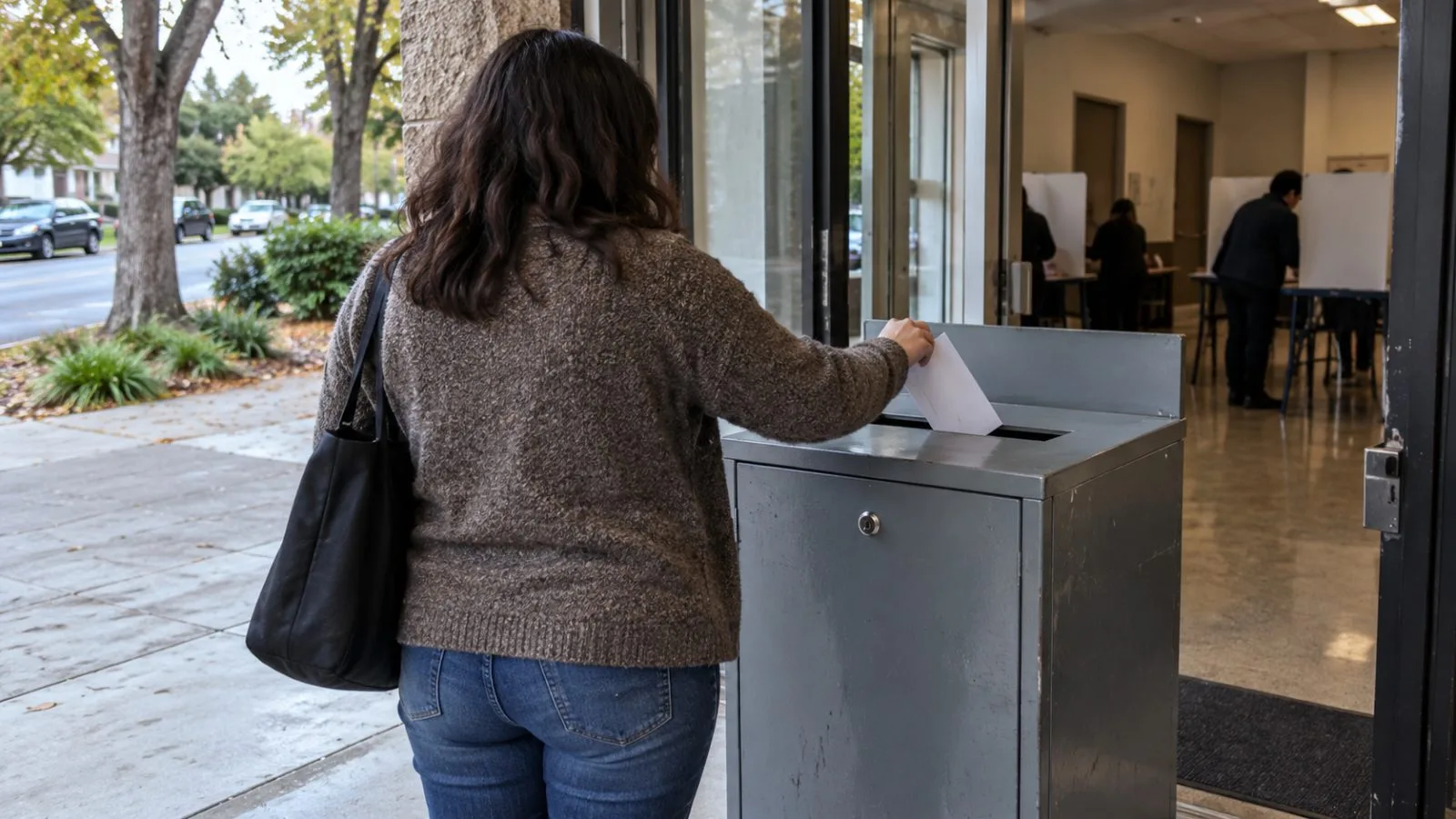
Voters in California, Florida and Washington will decide Tuesday, Nov. 3, on tax and borrowing measures that could alter public revenues and the supply of municipal bonds.
Municipal bonds are debt issued by state and local governments. The Internal Revenue Service says interest on qualifying bonds is generally exempt from federal income tax, subject to exceptions; state tax treatment varies by bond and investor.
California voters will consider two tax proposals. Proposition 3 would keep voter-approved rates for individuals earning more than $371,000, adjusted for inflation, instead of letting a temporary increase expire in 2031. The state guide estimates it would preserve $5 billion to $15 billion in annual state income-tax revenue. Proposition 40 proposes a one-time 5% tax on certain taxpayers with assets above $1 billion; the guide estimates it would generate tens of billions of dollars temporarily over several years.
Two other measures would authorize $11.25 billion in general-obligation bonds for housing and $8.4 billion for immunology and immunotherapy research. California's guides estimate annual repayment costs of $500 million to $600 million for about 25 years for Proposition 1 and about 20 years for Proposition 38. Some or all of Proposition 38's repayment costs could be offset if the research generates revenue. The guides estimate repayment costs but do not project when the state would sell the bonds or how quickly they might reach the market.
Florida's proposed amendment would set the homestead exemption for non-school property taxes at $150,000 in 2027 and $250,000 in 2028. It applies to people who maintained permanent residence in Florida as of Dec. 31, 2026, and have established or will establish homestead. A Florida legislative analysis projects local non-school property-tax revenue would be $4.95 billion lower in fiscal 2027-28 and $8.78 billion lower in fiscal 2028-29 if voters approve it.
Tom Kozlik, HilltopSecurities' head of public policy and municipal strategy, told CNBC that local governments would need to balance revenues, though the change would not necessarily lead to downgrades.
Washington's Initiative 26-645 would repeal an enacted 9.9% tax on individual annual income above $1 million. The law is scheduled to take effect Jan. 1, 2028, with first payments in 2029.
The Securities Industry and Financial Markets Association (SIFMA) reports municipal issuance totaled $473.8 billion through September, up 7.3% from a year earlier. CNBC reported 7.8% growth for the same period. SIFMA's 2026 Capital Markets Fact Book puts 2025 issuance at $587.3 billion, up 14.3%; its March outlook gives $580.4 billion and 13% growth, without reconciling the difference.
Nuveen's head of municipals, Dan Close, told CNBC that state tax increases could make the tax exemption on municipal bonds more valuable to investors. Cooper Howard, a director at the Schwab Center for Financial Research, told CNBC that continued demand would need to keep pace with issuance to support total returns.
Voters will decide whether to approve or reject the measures Tuesday, Nov. 3.