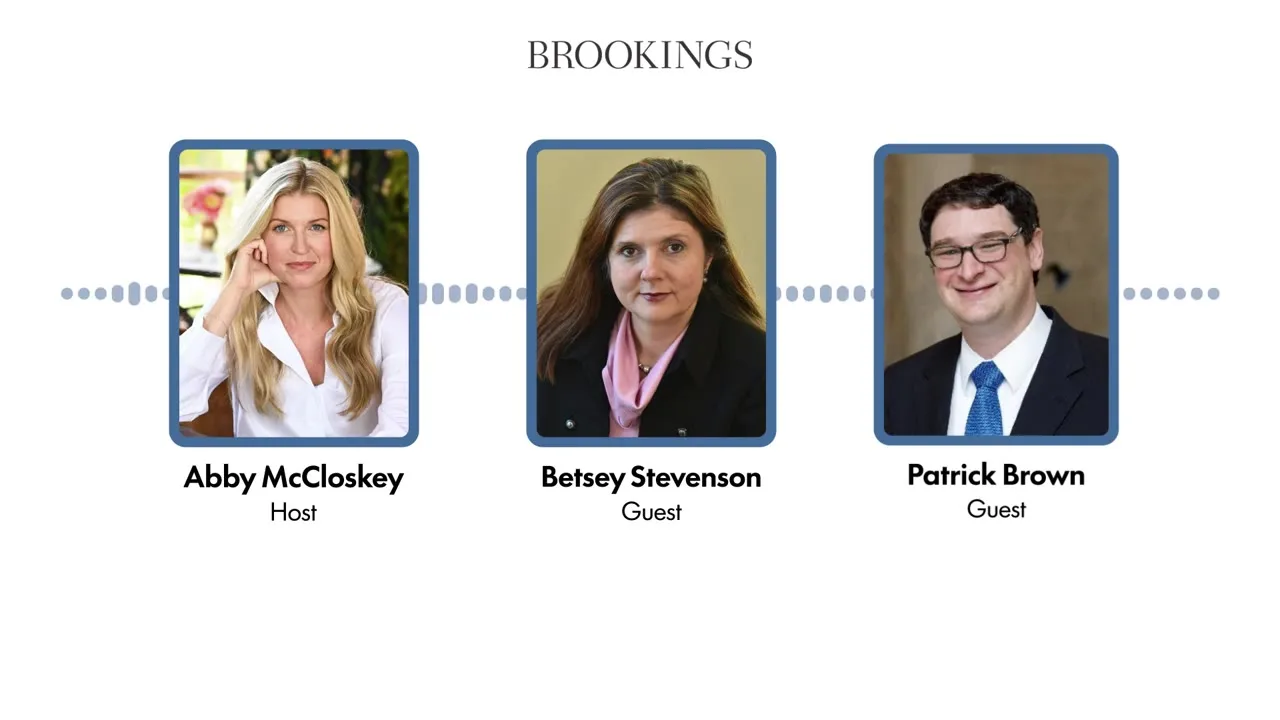
Betsey Stevenson, a University of Michigan economics professor, said the U.S. government should shift resources toward children as the population ages and federal spending favors older Americans. She spoke on the Brookings Institution programme “Parenting in polarization: The future of family policy,” published Nov. 20, 2026.
“The federal government spends very, very little on children and spends a lot on our aging population,” Stevenson said. She said Washington should recognize that its role is “to build a world for the next generation,” while preserving choices for families and local communities.
Stevenson said family expectations had changed for at least a century, including attitudes toward children’s work and the roles of mothers and fathers. A 13-year-old working had once been normal, she said, while only one in three 16- and 17-year-olds held a summer job when her teenage child worked recently.
Politics shapes the options families have as those expectations change, Stevenson said. She said polarization had intensified over the past 10 to 15 years, with voters aligning so closely with political parties that they often judged issues through a partisan lens.
People moved closer to their party’s position when asked about childcare after being asked their political affiliation, Stevenson said. Yet she said families across the political divide wanted the same basic outcome: children raised in safe communities who could lead useful, productive and joyful lives.
Patrick Brown, a fellow at the Ethics and Public Policy Center and a former senior policy adviser to Congress’s Joint Economic Committee, said parenthood was increasingly associated with conservative identity. Conservatives had higher fertility and were more likely to marry, he said, and having children had become a more deliberate choice rather than an expected life stage.
Brown said conservative family policy was expanding beyond cultural issues to include childcare costs, housing and the expenses of raising children. Those issues affect decisions about whether to have children, he said, and could offer room for policy changes outside traditional culture-war disputes.
Brown said the United States had taken responsibility for old-age costs through Social Security and Medicare after decisions in the 1930s and 1960s. Family support remained largely a state responsibility, he said, while federal budget deficits of about $40 trillion made a much larger federal role difficult.
He said gradual changes were likely for measures such as the Child Tax Credit. States also faced pressure from older voters seeking protection from property and income taxes, he said, while younger families generally had less wealth and political influence.
Stevenson said the absence of paid parental leave or a broad child allowance did not mean families would have been better without them. She described her generation as “the latchkey generation,” when children were expected to manage alone from a young age.