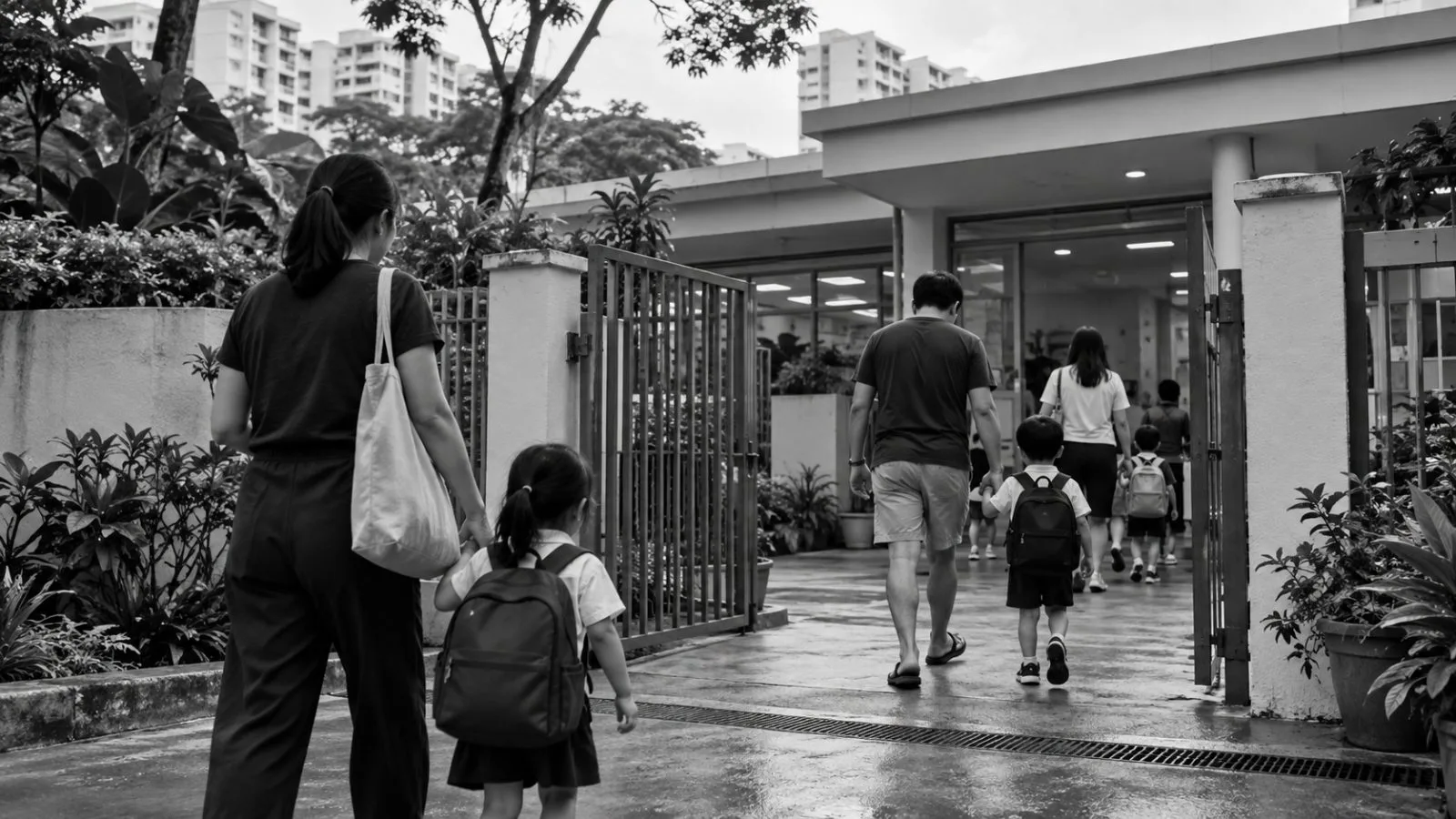
Singapore is broadening its family-policy review to consider workplace conditions, fertility and maternal health, and education pressures as the resident total fertility rate stood at 0.87 per female in 2025.
Minister in the Prime Minister’s Office Indranee Rajah said at the DBS Foundation Impact Beyond Dialogue on Oct. 23 that the Marriage and Parenthood Reset Workgroup’s next recommendations would address work-life balance, workplace practices, fertility, maternal health and education-related stress. Rajah said, “Families themselves also need supportive environments.”
The Singapore Department of Statistics reported that the resident total fertility rate was 0.87 per female in 2025, down from 0.97 per female in 2024.
When it established the workgroup, Singapore’s National Population and Talent Division cited public attitudes, government policy, workplace practices, and support from families and communities as influences on fertility outcomes. The group’s remit also includes work-life support, caregiving, housing, health care, preschool and education. Its founding announcement described a longer-term role in policy planning and public engagement around marriage and parenthood.
At the 2026 National Day Rally, the government announced its acceptance of the workgroup’s first recommendations. They included enhanced childcare leave, the SG Child Support Package, and measures to make childcare and student care more affordable and accessible.
The government said it would cover costs for statutory child-related leave, subject to the reimbursement limit, to reduce employers’ expenses. It also asked employers to support workers who take parental leave.
A fuller report from the workgroup is due in early 2027, the government says.