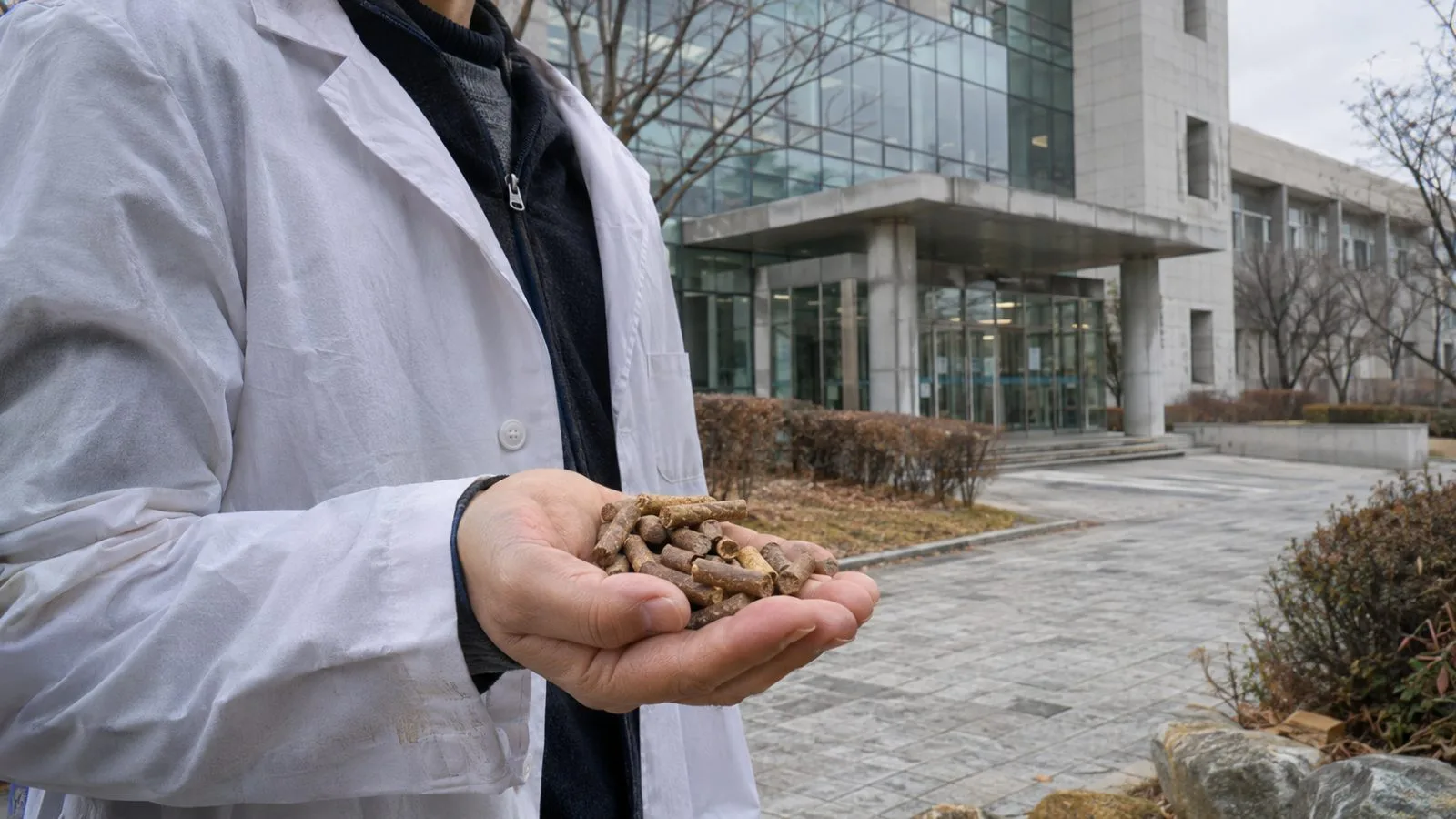
A life-cycle study from Jeonbuk National University found that a modeled wood-pellet hydrogen system had a more negative greenhouse gas balance when it supplied its own electricity, highlighting the role of power sourcing.
The paper estimated global warming potential at −17.19 kilograms of carbon dioxide equivalent per kilogram of hydrogen for the grid-connected design and −36.56 kilograms for the on-site, self-sufficient design. Both scenarios had net-negative balances in the model. The baseline used 100 tons of wood pellets per day and produced about 4.2 tons of hydrogen per day; the source does not specify the type of ton.
The on-site configuration generated electricity using biomass and recovered process heat, according to a university release. It also required additional biomass, the release said. The researchers modeled both designs as bioenergy with carbon capture and storage, which combines energy production from biomass with capturing carbon dioxide for storage.
The assessment counted carbon capture and permanent underground storage. Among the factors examined, the hydrogen conversion ratio had the strongest effect on modeled global warming potential. The grid-based case also scored worse for terrestrial acidification and freshwater eutrophication, with the paper linking those results to electricity-intensive processes.
A sensitivity analysis put the biogenic emission factor threshold for maintaining a modeled advantage over fossil-based methods at 46% to 72%. The researchers said the system’s net-negative potential also depended on clean electricity and how biomass was managed upstream. The university described the work as a life-cycle assessment, rather than results from an operating hydrogen plant.
Professor See Hoon Lee, one of the study’s authors, said in the university release that assessing the full supply chain was essential to judging whether the systems could provide meaningful climate benefits. The study appeared in Bioresource Technology’s Volume 456, published Sept. 1, 2026.