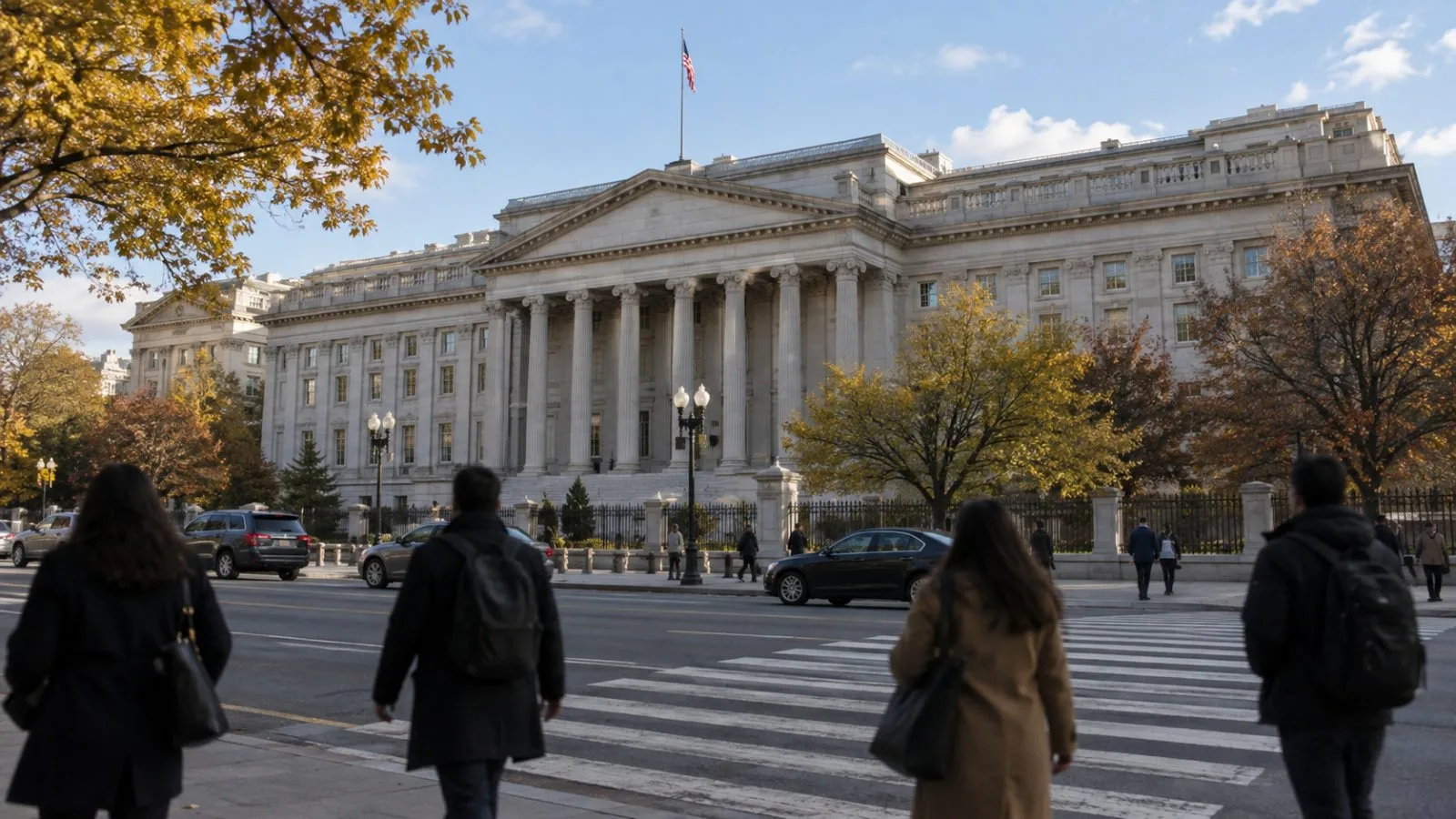
U.S. Treasuries have fallen in the paper’s safe-haven ranking of selected bonds since the pandemic, while the dollar has remained highly ranked among currencies, a Banque de France working paper finds.
Written by Valentin Burban, Pavel Diev, Gilles Dufrénot and Nelson Mongeaud, the paper covers May 2003 through July 2026. It compares government and corporate bonds, currencies and alternative assets, assessing how their correlations changed during episodes of heightened risk aversion.
The U.S. Treasury score fell after the Global Financial Crisis and again after the pandemic. Across the study period, Treasuries placed near the top of the paper’s safe-haven rankings, alongside a limited group of other G10 sovereign bonds. The decline also appeared in other advanced economies’ government bond markets.
The paper associates weaker safe-haven results with higher public debt and inflation, without establishing that either caused the decline. The average U.S. gross public debt-to-GDP ratio was 120% in 2004-19 and 143% from 2020 onward. Average inflation rose from 2.1% to 3.9% over the same comparison periods.
The authors also examined debt ownership. Price-sensitive nonbank investors’ share of U.S. sovereign debt fell from 60% to 54%. But the paper finds that this investor group’s effect varies across its safe-haven measures, so it does not present the change in their share as a uniform explanation for weaker Treasury scores.
The ranking describes assets’ relative behavior during periods of heightened risk aversion, rather than providing a general price outlook. The dollar maintained a high ranking even as Treasury safe-haven performance slipped.
In a Nov. 11 post on Klement on Investing, Joachim Klement recalled his March argument that investors were losing trust in Treasury debt while retaining faith in the dollar. That is Klement’s view, separate from the paper’s measurements. The working paper states that its views do not necessarily represent the Banque de France’s position.