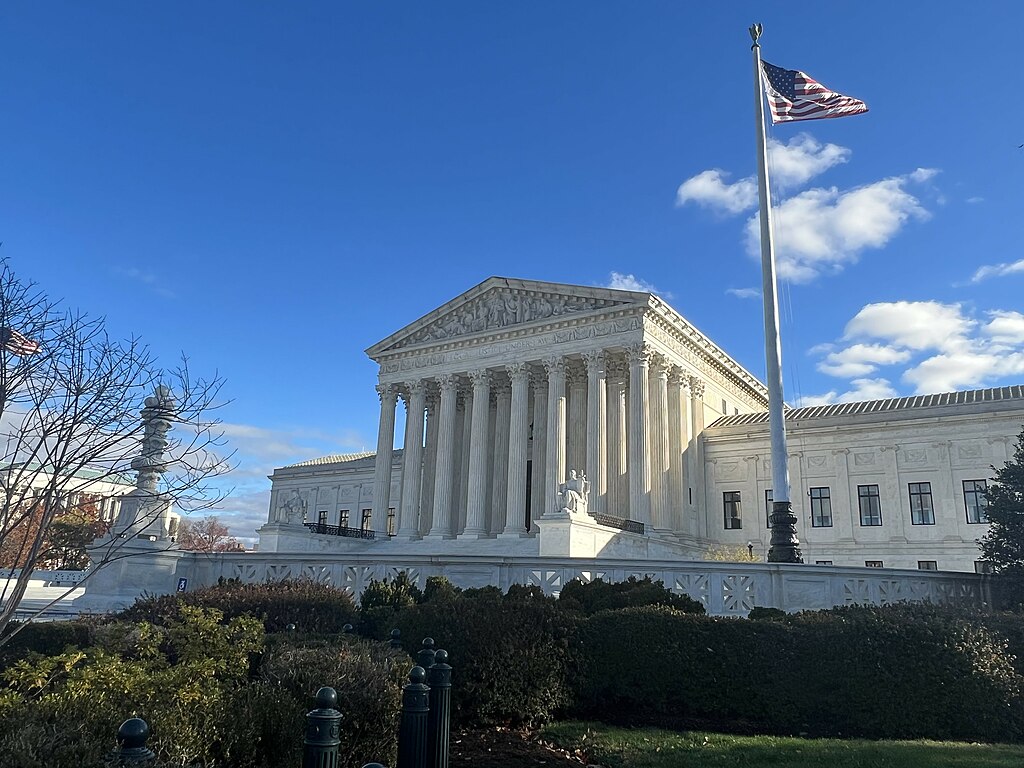
The U.S. Supreme Court has delivered a significant ruling that could influence the balance of power in Congress, siding with Republican Representative Nicole Malliotakis in a heated New York redistricting dispute. The decision may strengthen Republican efforts to maintain control of the U.S. House of Representatives in the upcoming midterm elections.
In an unsigned order, the Supreme Court reinstated the original boundaries of Malliotakis’ Staten Island-based congressional district. A New York state judge had previously blocked those boundaries, ruling in January that the district map unlawfully diluted the voting strength of Black and Latino communities. The judge directed the state’s independent redistricting commission to redraw the map to ensure minority voters could elect candidates of their choice.
The Supreme Court, which holds a 6-3 conservative majority, ruled in favor of Malliotakis. Justice Samuel Alito wrote that the lower court’s directive amounted to racial discrimination in violation of the Equal Protection Clause of the 14th Amendment. Alito argued that ordering a new district map explicitly to benefit “minority voters” constituted unconstitutional racial gerrymandering unless justified by extraordinary circumstances.
The court’s three liberal justices dissented. Justice Sonia Sotomayor criticized the majority for intervening before state appeals were completed, warning that the ruling could draw the Supreme Court into election-law disputes nationwide as states redraw congressional maps ahead of the 2026 elections.
Redistricting and gerrymandering have become central political battlegrounds as Republicans and Democrats compete for narrow majorities in Congress. Republicans currently hold a slim 218-214 edge in the House, making every seat critical. Control of Congress will shape President Donald Trump’s legislative agenda and determine whether Democrats can launch investigations into his administration.
This case follows recent Supreme Court decisions involving redrawn electoral maps in Texas and California, underscoring the growing national significance of redistricting battles ahead of the midterms.