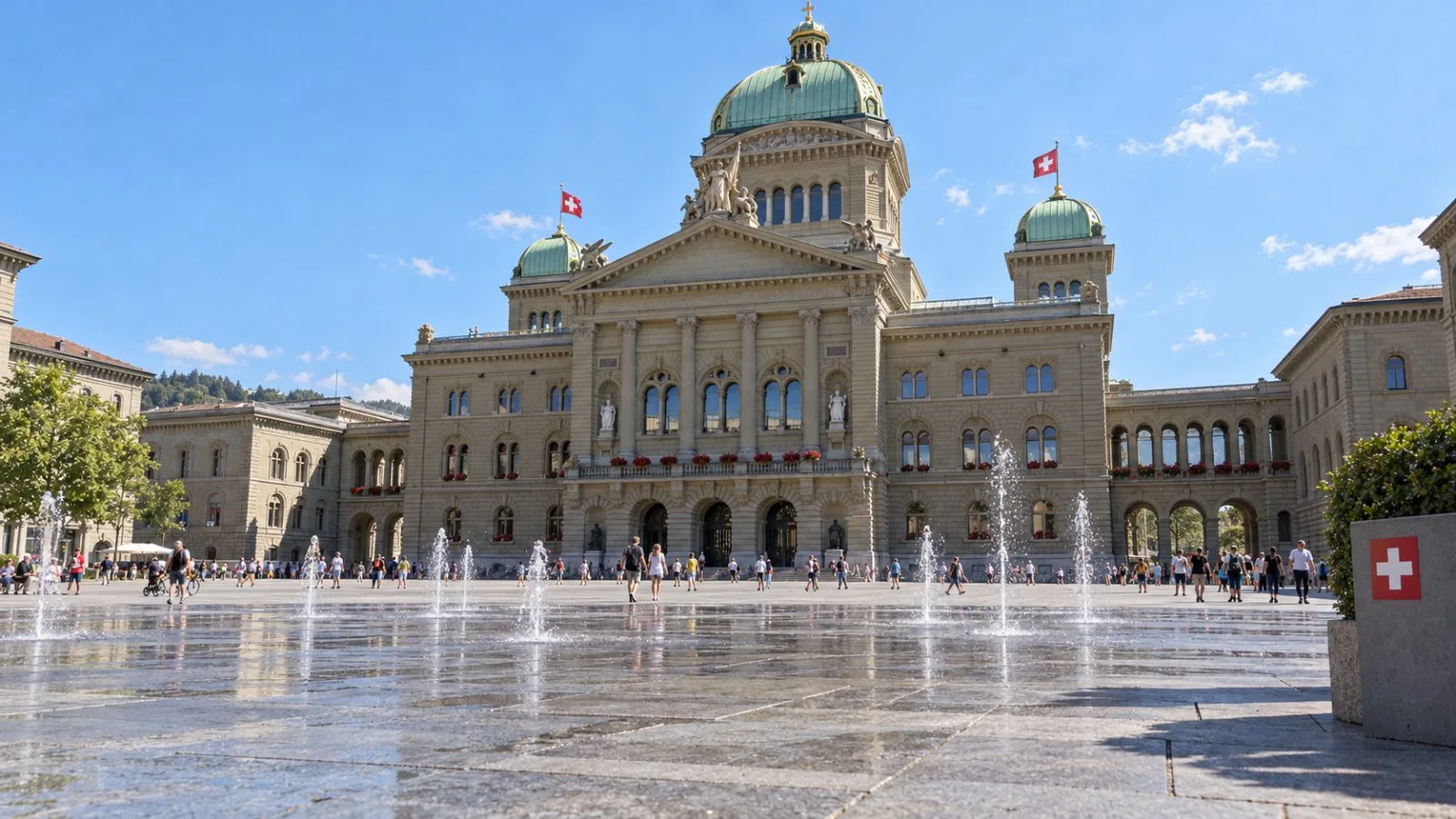
Switzerland’s Federal Council approved a 2026-31 climate adaptation strategy Wednesday, setting 30 priority areas to help protect people, infrastructure and natural resources as climate risks intensify.
Switzerland’s yearly mean temperature now stands roughly 3 degrees Celsius above preindustrial conditions, the Council said, leaving the country especially exposed to climate change. Episodes of severe heat, parched summers and intense rain are occurring more often and with greater force, according to the Council. The strategy seeks to limit related dangers while improving the country’s ability to adjust.
The six-year framework sets 30 adaptation priorities. It calls for reducing city residents’ exposure to heat, protecting the reliability of water supplies and reinforcing defenses against natural hazards. The plan also seeks greater resilience in forests, transport infrastructure, agriculture and ecosystems.
More targeted provisions address working conditions during extreme heat, water quality and river travel. The action plan includes workplace protections for hot weather and steps to maintain water quality. It calls for forests better suited to shifting climate conditions and adjustments to navigation on the Rhine in response to increasingly dry summers.
The strategy links community safety with the management of land and water, as well as transport services. Its specific actions sit alongside broader goals for agriculture, forests, ecosystems and infrastructure.
A second layer includes 12 measures that cut across sectors. The Council said they are intended to strengthen scientific understanding, coordination and follow-through on adaptation work. These actions are part of the accompanying plan, distinct from the strategy’s 30 priority areas.
For its strategy, the Council used a 2025 assessment of national climate risks and revised scenarios for Switzerland. The scenarios consider the possibility that greenhouse gas emissions will continue to rise. The strategy aims to reduce climate risks, strengthen society’s capacity to adapt and make use of possible opportunities as conditions change.