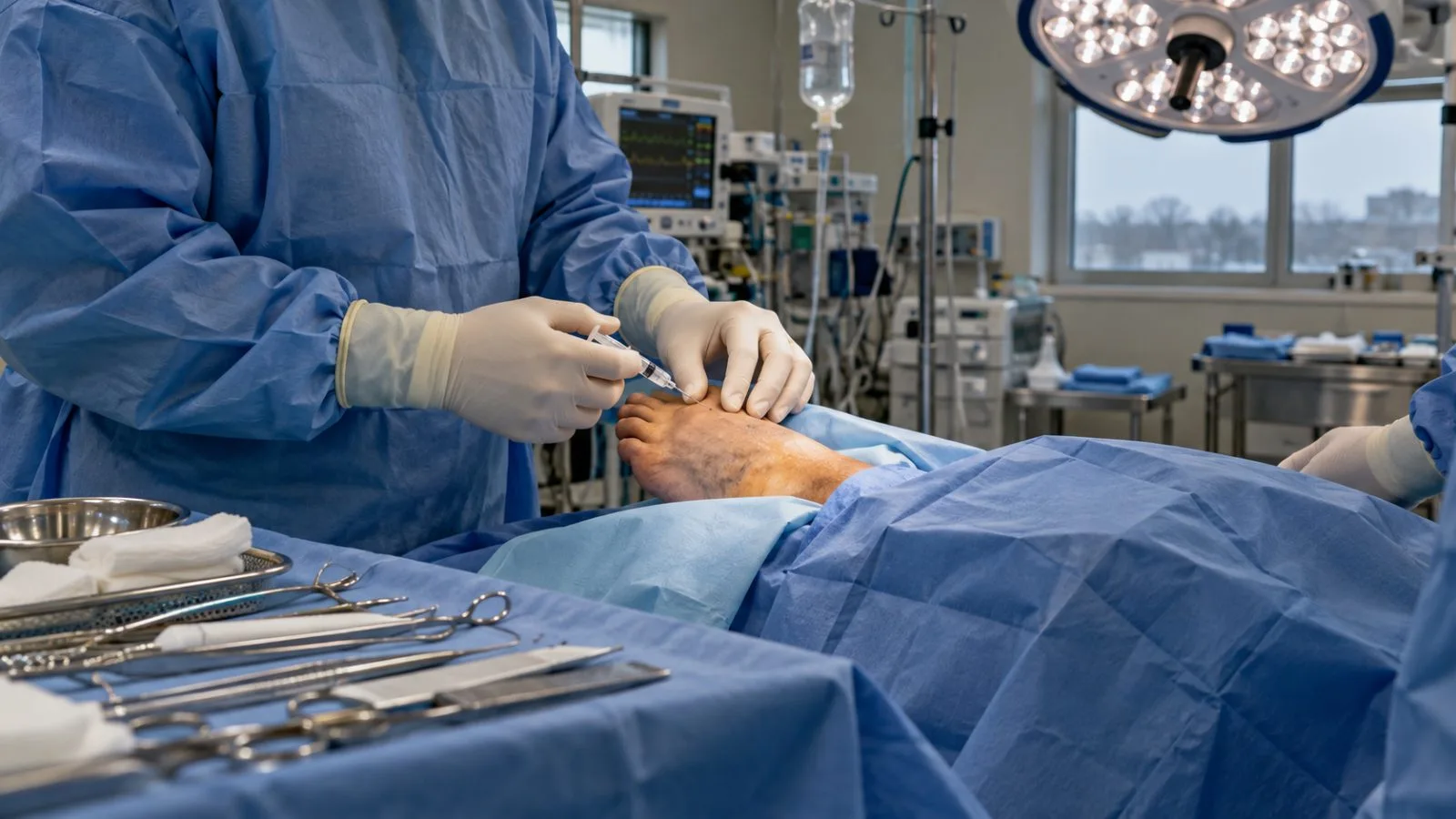
TLC BioSciences Corp. said its experimental pain medicine lowered cumulative pain scores and rescue-opioid use after bunion surgery in a U.S. Phase 3 trial, supporting plans for a drug application.
TLC reported the preliminary results on Oct. 19 from a randomized, double-blind trial involving 304 patients. Of those, 100 received TLC590, 102 received liposomal bupivacaine, sold as Exparel, and 102 received placebo. TLC590 is a single-dose, extended-release formulation of the local anesthetic ropivacaine.
The trial’s primary measure was cumulative pain intensity with movement during the first 72 hours after surgery. TLC reported a statistically significant difference favoring TLC590 over placebo (p=0.0024). The comparison with Exparel also favored TLC590 (p=0.0202).
Median rescue-opioid use over those 72 hours was 10 mg morphine milligram equivalents with TLC590, compared with 20 mg for placebo and 15 mg for Exparel, TLC said in a Taiwan market disclosure. It reported p-values of 0.0109 against placebo and 0.0177 against Exparel.
TLC said a separate analysis of cumulative pain intensity through 168 hours favored TLC590 over placebo (p=0.0168) and Exparel (p=0.0226). That seven-day result does not show whether the differences were significant at each individual time point. The reported rescue-opioid comparison covers only the first 72 hours.
Among TLC590 recipients, the company reported neither a serious adverse event it attributed to the drug nor a discontinuation because of a drug-related adverse event. The findings remain preliminary while TLC completes its full analysis.
Exparel is an established commercial treatment: Pacira BioSciences, Inc. reported $575.1 million in net product sales for the drug in 2025 in its annual filing. The supplied results do not include a comparison of treatment costs.
TLC plans to complete its clinical study report and prepare a New Drug Application for the U.S. Food and Drug Administration. It gave no submission date.