


 US, Greece Launch New Counterterrorism Security Program
  Houthis Strike Aden Airport as Yemen Fighting Escalates
  Saudi Arabia Probes Flydubai Cockpit Attack
  Trump Weighs FBI Probe Into Nolan Wells’ Death
  Rapidus Seeks Chip Customers as Japan Pushes 2nm Semiconductor Revival
  North Korea Slams US Taiwan Arms Sales, Reaffirms Russia Support
  Trump Rallies in Texas as Republicans Face Tight Midterm Races
  Lincoln University Students Sue Missouri Over Decades of Underfunding
  Mexico Bars Dual Citizens From Presidential Races Starting in 2028
  Lula Weighs Alckmin as Finance Minister to Boost Fiscal Credibility
  Tsai Warns of China’s Sustained Pressure on Taiwan
  Trump Backs Florida Golf Course as Presidential Retreat
  Hegseth Praises USS Abraham Lincoln Crew After Record Iran War Deployment
  JD Vance Says Iran Must Cut Nuclear Enrichment to End War
  Trump Says He Deserves 2026 Nobel Peace Prize Despite Uncertain Chances
  Merz Warns of Extremism After AfD Gains Power in Saxony-Anhalt
  Pentagon Orders Iran Strike Preparations as Trump Weighs Military Action


 Add as a preferred source on Google
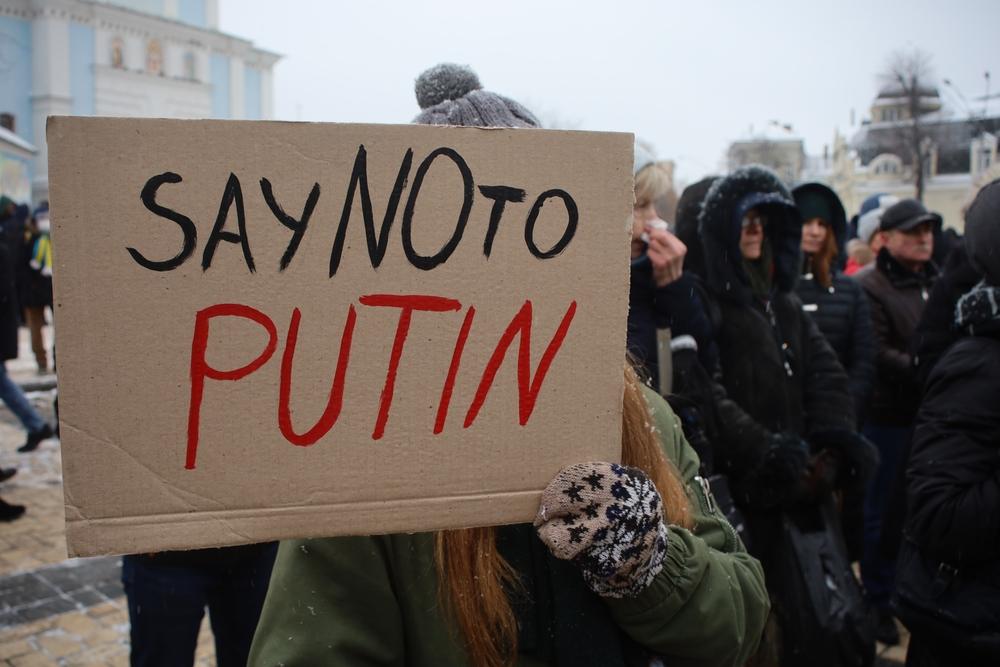

The Biden administration is delivering on its vow to impose “severe sanctions” against Russia for its military aggression against Ukraine.
The new sanctions announced on Feb. 24, 2022, will cut off Russia’s major banks and companies from Western financing and impose direct financial costs on many of Russian President Vladimir Putin’s chief political allies. The sanctions package will also restrict Russia’s access to semiconductor products and the technologies it needs to sustain its industrial sector and military capabilities.
And the next day, the U.S. and its European allies prepared sanctions against Putin personally – an important symbolic step although not likely to have significant impact.
Because the new sanctions are multilateral in design and being implemented in close coordination with allies in Europe, Japan, Australia and other countries around the world, our research suggests they will have a significant impact on Russia.
What makes sanctions stick
We’ve studied the effectiveness of past sanctions both in terms of their economic impact and whether they attain their political objectives.
We’ve found that there are two conditions necessary for sanctions to be effective, at least when it comes to their economic impact: They must be multilateral, meaning they involve a broad coalition of governments, and they must be implemented by countries that have extensive commercial relations with the targeted regime.
That’s why the participation of the U.K., Germany, France and other European states – which have a much higher volume of trade with Russia than does the United States – in enforcing the sanctions is crucial.
And that explains why the Russian stock market went into a nose dive and the ruble down fell to a record low against the dollar after Russia launched its invasion and the new sanctions emerged. As a result, Russia’s billionaires lost an estimated $71 billion on Feb. 24, 2022.
Powerful new sanctions
The new sanctions being implemented by the White House and the governments of other countries fall into two general categories: financial restrictions and export controls.
In the first group, the United States and its allies in Europe and other countries are imposing asset freezes and financial sanctions on Russia’s largest banks and several of the country’s richest and most powerful oligarchs. These measures cover nearly 80% of all Russian financial assets, what the U.S. Treasury Department called the “core infrastructure of the Russian financial system.”
The financial sanctions will block Russia’s largest financial companies including Sberbank and VTB Bank from accessing credit and currency markets and impede the ability of state-owned and private entities to raise capital.
And by imposing steep costs on these financial firms as well as on Putin’s main allies, such as Aleksandr Bortnikov, head of Russia’s Federal Security Service, and his son, Denis Bortnikov, who chairs VTB’s board, the sanctions should undermine the investment and development that drives the Russian economy.
The export controls, the second category, prohibit companies and countries from exporting technological equipment to Russia with components that use U.S.-built or -designed microchips.
Since the U.S. continues to dominate in making the kinds of high-end semiconductors necessary for advanced technologies, this provides important leverage. The export controls target Russia’s defense, aerospace and maritime sectors and will cut off Russia’s access to vital technological inputs, which will likely lead to the atrophy of key sectors of its industrial base.
While Russia imports most of its semiconductors from China, these are low-end chips used to run washing machines – not to operate a guided missile. Russia relies on U.S. semiconductor components for many of its most important technological applications.
Similar export controls on semiconductor products are being imposed by many others, including Europe, Japan and Taiwan.
Altogether, these sanctions – if sustained for many months – should have a significant effect in curtailing Russia’s strategic capabilities by hurting the powerful energy sector and military industrial companies, which are bulwarks of Putin’s regime.
Why SWIFT isn’t on the list – yet
Missing from the latest sanctions is something Ukrainian President Volodymyr Zelenskyy has called for explicitly in recent days: denying Russia access to the SWIFT system of global financial communications and credit facilitation.
SWIFT, which stands for the Society for Worldwide Interbank Financial Telecommunication, connects thousands of financial institutions around the world. Ejecting Russia would completely cut off Russia from Western financial markets and prevent hard currency transactions. This would impose immediate economic costs on Russia.
When Iran was cut off from SWIFT in 2012, it lost half of its oil export revenues and 30% of its foreign trade.
On the flip side, cutting off Russia would create costs for the many banks and corporations in Europe and other countries that currently do business with Russia, which is why so far the West has been unwilling to impose this sanction.
Importantly, that decision doesn’t belong to the U.S. alone but to the central banks of the 10 member countries, which also include Canada, Germany and Italy.
Bearing the costs of imposing sanctions
Discussions are continuing and pressure may build to take this or other more severe measure in response to the Russian assault, especially if its military engages in serious violations of humanitarian law regarding treatment of innocent civilians and the leaders of Ukraine.
Other measures on the table include more direct product-based sanctions of oil, natural gas and aluminum. But they also would have more immediate negative consequences for Europe.
Ultimately, the effectiveness of sanctions depends on the strength of the measures and the willingness of the states imposing these measures to bear the costs of their implementation.
In this case the impact of the strong sanctions now levied will hurt Russia in an ongoing way for the next few years, even as U.S. and its allies’ banks and commercial companies, and their customers, are going to bear some of the cost for standing up against aggression.
That the economy will feel pain is clear to us. Whether Putin and his closest allies pay a political price high enough that it leads to changed behavior is less certain.







