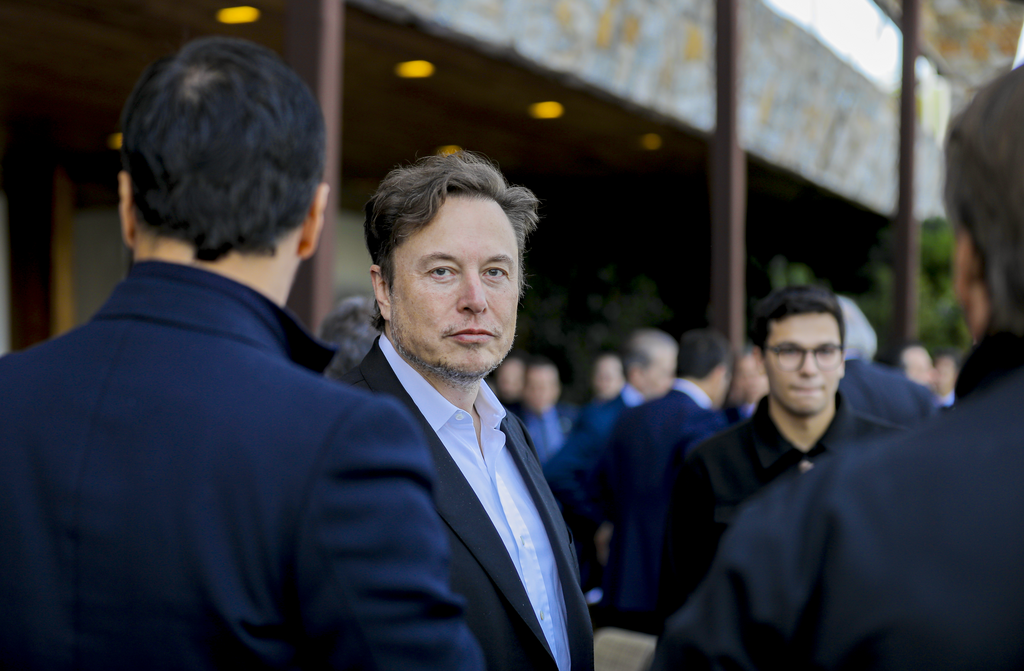
Tesla Inc (NASDAQ: TSLA) is set to restart development of its next-generation supercomputer, Dojo3, marking a renewed push into artificial intelligence infrastructure. Tesla CEO Elon Musk confirmed on Sunday that work on Dojo3 will resume now that the company’s AI5 chip design has reached a stable stage. Musk shared the update via social media, adding that Tesla is actively recruiting new talent to support the project.
The announcement comes just months after Tesla shut down the Dojo program and disbanded the team behind it. At the time, Musk described Dojo2 as an “evolutionary dead end,” signaling that the previous architecture failed to meet the company’s long-term AI and self-driving ambitions. The renewed effort suggests Tesla has reassessed its strategy and sees Dojo3 as a more viable path forward.
Dojo was first deployed in 2023 as a custom-built supercomputer designed to train Tesla’s artificial intelligence systems, including its Full Self-Driving (FSD) and driver assistance software. The system plays a critical role in processing massive volumes of video data collected from Tesla vehicles worldwide, enabling rapid improvements in machine learning models.
Musk’s latest comments indicate that Dojo3 may be built around Tesla’s in-house AI5 chip, which he has previously described as a significant leap over the company’s current hardware. While Tesla had earlier floated the idea of Dojo2 using Tesla-designed chips, the AI5 appears to be the cornerstone for the third-generation system.
Tesla currently operates several large-scale computing clusters and relies on a hybrid approach, using both its own chips and those supplied by NVIDIA Corporation (NASDAQ: NVDA). Musk has emphasized that Tesla does not plan to replace Nvidia’s data center GPUs entirely. Instead, the company aims to complement them with custom silicon optimized for its specific AI workloads.
The AI5 chip is expected to be manufactured in collaboration with leading semiconductor players, including TSMC (NYSE: TSM) and Samsung Electronics (KS: 005930). If successful, Dojo3 could strengthen Tesla’s vertical integration in AI, reduce long-term computing costs, and accelerate progress in autonomous driving technology, reinforcing the company’s competitive position in the rapidly evolving AI and electric vehicle landscape.