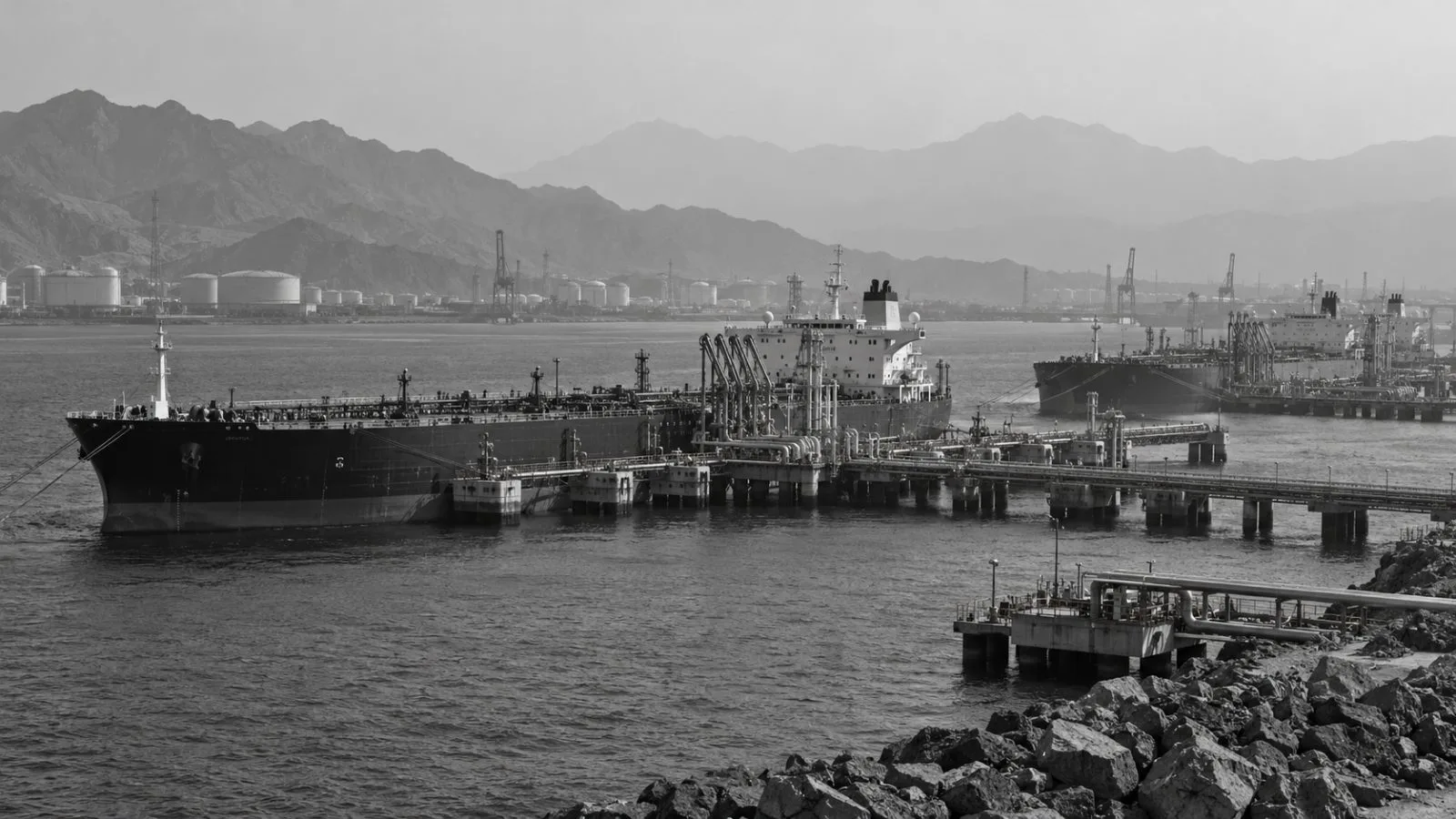
Middle East oil shipments excluding Iran exceeded a prewar weekly benchmark, The National reported, citing preliminary Kpler data that count routes beyond the Strait of Hormuz.
The average for the week ended Oct. 18 was above 24.5 million barrels per day, compared with 24.4 million bpd for the week ended Feb. 22, according to the report. The provisional total may change as more vessel crossings are recorded.
The National said the weekly tally combines Red Sea exports and port loadings in Fujairah and Oman with Hormuz shipments and Gulf of Oman ship-to-ship net exports. It covers a broader range of oil flows than crude exports alone.
Kpler’s separate Sept. 1-28 assessment counted crude and condensate exports excluding Iran at no less than 16.5 million bpd. That matched its prewar average, calculated from March 2025 through February 2026. For that September period, 60% of exports physically crossed Hormuz, down from 83% before the war. Another 23% loaded along the Gulf of Oman coast, mainly at Fujairah, and 17% left via the Red Sea.
Saudi Arabia’s East-West Pipeline to Yanbu and the UAE’s Abu Dhabi Crude Oil Pipeline to Fujairah provide alternatives to the strait, Kpler said. Kuwait, Qatar and most of Iraq lack a route around it.
Those export figures do not measure regional output. Kpler said Middle East crude and condensate production, including Iran, was about 5 million bpd below its February level as of Oct. 6. The company linked the export rebound partly to UAE production above its prewar level and a likely temporary rise in Saudi output.
The rerouting carries costs for buyers. Kpler said freight and risk costs were raising delivered crude prices, while security risks kept freight elevated. The pressure was also described in earlier EconoTimes coverage of shipping costs. In an Oct. 1 analysis, Kpler put clean-product loadings about 50% below prewar levels.
The International Maritime Organization recorded 119 confirmed incidents and 24 seafarer fatalities as of Oct. 21. Kpler identified repairs at Yanbu and capacity for Gulf of Oman transfers as constraints on further rerouting.