Regardless of your industry, the marketplace is continually evolving. The reason, increasingly, is the evolution of disruptive technology.
Disruptive technologies are enhanced or new technological innovations that essentially displace conventional and established technology, rendering it obsolete. They can create opportunities for new products, new markets, and new ways of conducting business.
In 2016, business models will again change as businesses adapt. The enhancement of current technology and the development of new technological innovations will undeniably transform how new businesses are established, and how existing businesses compete. For small and medium-sized firms, technology will also enable significant leaps forward in terms of innovation, efficiency and competitiveness.
Adapting quickly will be essential, so here’s the top six we think you should be prepared for.
Social Robotics
Robots, no longer restricted to the factory floor, are increasingly being designed to interact directly with humans. This not only means that – depending on your industry – certain robots may be about to enter your product ranges, but also that a robot may be interacting with customers on your behalf. Like the emotion-sensing Pepper robot, which according to TTG Asia has just been “hired” to work on cruise ships.
Robots have previously been fixed the the factory floor, but in 2016 they are set to become much smaller, more collaborative and more affordable. Robotics are also making it possible for small companies to expand, such as Skyline Windows in New York, which rely on robots for installation of its windows.
Artificial intelligence and smart services
True artificial intelligence - that which is so similar to human intelligence as to be indistinguishable - is difficult to develop, but that doesn’t mean we won’t be running into intelligent machines and smart services as the years progress.
Consider the applications of a machine or service that could learn about your customers, going beyond website analytics to truly understanding their day-to-day behaviour. Or IBM’s Watson which uses natural language processing to enable partnerships between people and computers. The same technology could help you with business concerns from staffing to strategy. While we’re not quite there yet, consider how smart services like Apple’s Siri are already becoming more ubiquitous as smart phone ownership increases.
Virtual reality
Originally considered a gaming technology, virtual reality is becoming more mainstream, and the applications for businesses and consumers are plentiful.
Consider how you could apply a completely immersive environment in your business, and how this might change the competitive landscape in your industry. For instance, in 2015 Volvo offered virtual reality test drives using Google’s mass-produced virtual reality technology, Cardboard. The technology has also been used to provide tours, make events more immersive, and even for training purposes.
3D printing
Just as virtual reality offers us the ability to bring our thoughts into “reality” for consumers or colleagues, 3D printing offers us the chance to do this with physical reality. 3D printing lets us bring imagination into the physical world, whether we’re showcasing prototype products to investors or custom-making products for consumers. 3D modelling and 3D printing are gradually changing consumer markets and have been used to create a range of products including muscial instruments, medical equipment, artificial organs and manufactured car parts.
The internet of things
We already know that everyone is connected, but what about everything? This is the reality that the “internet of things” will bring. From small changes - your car communicating with your office to switch on the air conditioning, computer and coffee machine moments before you arrive - to larger changes like your global offices being truly connected, beyond what is already offered by cloud computing to consumer applications.
Innovations like the Nest Protect allows users to “hush” a smoke alarm from a smartphone, essentially allowing the smoke alarm to speak to smart devices. The treatment of security and privacy concerns will determine the speed with which the internet of things rolls out.
Mobile and wearable technology
Smartphone ownership is at an all time high, bringing opportunities for businesses to take their operations truly mobile – and to contact consumers in new ways.
Developments in Near Field Communication technology allow us to know where consumers are (with their permission of course) and mean we could potentially send them relevant promotions based on their location, or remember their preferences for a whole new take on customer loyalty.
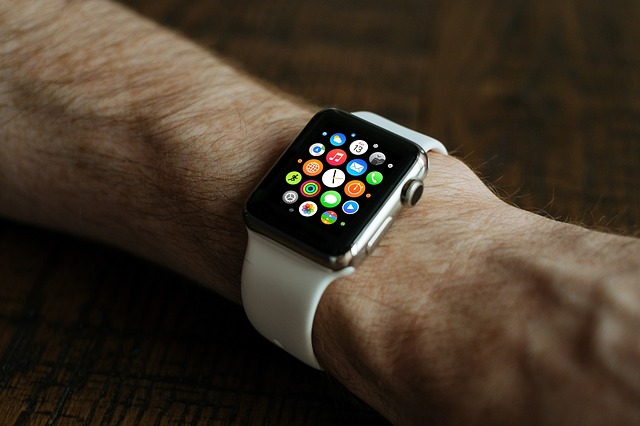
Consumers are also increasingly taking up wearable technology such as smart watches, pedometers and ear pieces. This wearable technology, working with data on patterns and behaviour, could not only empower consumer interactions but make for more efficient, productive and happier employees. Smart clothes are potentially the future of wearables - OMsignal already offers a line of smart shirts, and soon a sports bra which tracks biometric fitness data.
Disruptive technologies will significantly influence business models over the next few decades. A recent report from the Economist Intelligence Unit and Ricoh stated that “businesses will have nowhere to hide from the disrupting yet energising effects of technology change”. The report suggests it’s no longer viable to implement new technological innovations simply for short-term efficiency gains; instead technology disruption necessitates the implementation of new changes over time, for longer-term efficiency gains.
 The authors do not work for, consult, own shares in or receive funding from any company or organization that would benefit from this article, and has disclosed no relevant affiliations beyond the academic appointment above.
Kate Letheren, Postdoctoral research fellow, Queensland University of Technology
This article was originally published on The Conversation. Read the original article.