


 Parasites are ecological dark matter – and they need protecting
  Brazil Court Suspends Sigma Lithium Mine Operations
  Australia’s Corporate Leaders Face Parliament Over KPMG Client Data Scandal
  How America courted increasingly destructive wildfires − and what that means for protecting homes today
  Trump’s Arlington Arch Project Faces New Court Restrictions
  California Seeks Paramount Divestitures in Warner Bros. Merger
  As the Black Summer megafires neared, people rallied to save wildlife and domestic animals. But it came at a real cost
  GesiaPlatform Launches Carbon-Neutral Lifestyle App ‘Net Zero Heroes’
  Ukraine minerals deal: the idea that natural resource extraction can build peace has been around for decades
  What’s so special about Ukraine’s minerals? A geologist explains
  SEC Seeks ISS Client Voting Records in Proxy Adviser Probe
  Amazon Shares Fall as FTC Plans Ad Pricing Lawsuit
  Swimming in the sweet spot: how marine animals save energy on long journeys
  Judge Rejects Minnesota Bid to Force ICE Agent Extradition
  How is Antarctica melting, exactly? Crucial details are beginning to come into focus
  Burkina Faso and Mali’s fabulous flora: new plant life record released


 Add as a preferred source on Google



Extinction threatens iconic Australian birds and animals. The regent honeyeater, the orange-bellied parrot, and Leadbeater’s possum have all entered the list of critically endangered species.
It is too late for the more than 50 species that are already extinct, including bettongs, various wallabies, and many others. Despite international commitments, policies and projects, Australia’s biodiversity outcomes remain unsatisfactory.
A 2015 review of Australia’s 2010-2050 Biodiversity Conservation Strategy found that it has failed to “effectively guide the efforts of governments, other organisations or individuals”.
Insufficient resourcing is one cause of biodiversity loss. The challenge is impressive. Australia must tackle degradation and fragmentation of habitat, invasive species, unsustainable use of resources, the deterioration of the aquatic environment and water flows, increased fire events, and climate change.
This all requires money to support private landholders conducting conservation activities, to fund research, to manage public lands, and to support other conservation activities conducted by governments, industry, and individuals.
So where can we find the funds?
How much money is needed?
We have estimated that Australia’s biodiversity protection requires an equivalent investment to defence spending – roughly 2% of gross domestic product.
Of course, such estimates are up for debate given that how much money is required depends on what we want the environment to look like, which methods we use, and how well they work. Other studies (see also here and here point to a similar conclusion: far more money is needed to achieve significantly better outcomes.
Apart from government funding, private landholders, businesses, communities, Indigenous Australians, and non-government organisations contribute significantly to natural resource management. We were unable to quantify their collective cash and in-kind contributions, as the information is not available. But we do know that farmers spend around A$3 billion each year on natural resource management.
Nonetheless, the erosion of environmental values indicates that the level of spending required to sufficiently meet conservation targets far exceeds the amount currently being spent. The investment required is similar to value of agriculture in Australia.

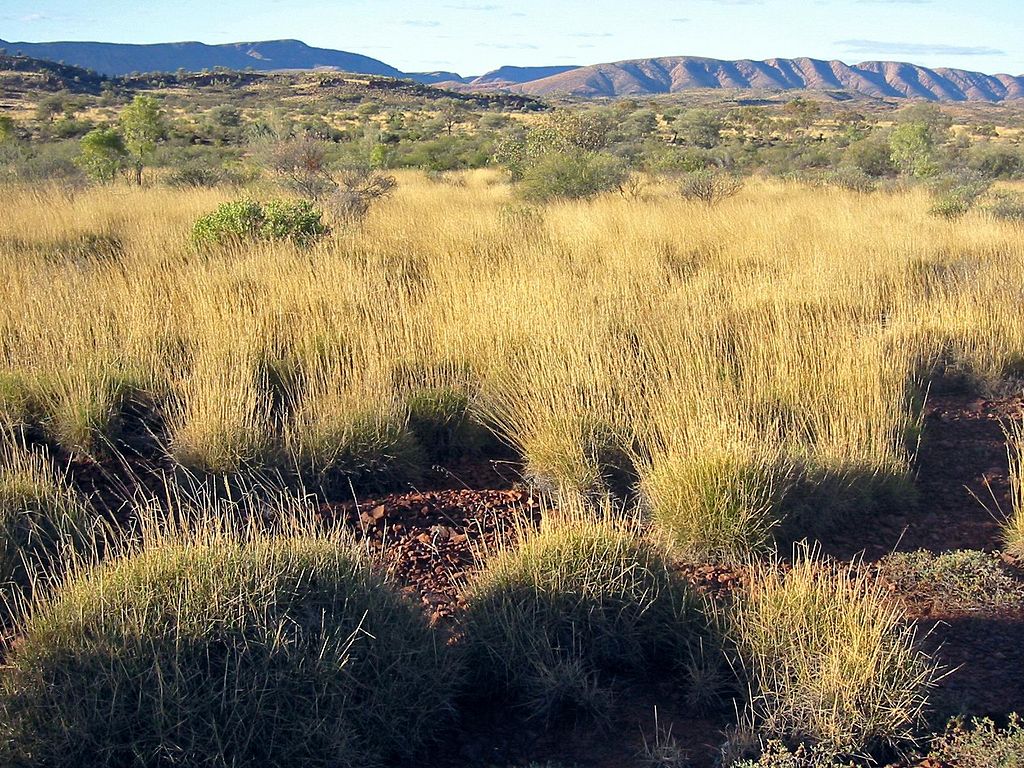
Conservation doesn’t come cheap. JJ Harrison/Wikimedia Commons, CC BY-SA
Unfortunately, the concentration of wealth and labour sets a limit to what any given community can pay.
Despite a high GDP per person and very wealthy cities, Australia has fewer than 0.1 people per hectare and a wealth intensity (GDP per hectare) of less than US$2,000 due to the sparse population and income of rural Australia.
Australia’s rural population has declined sharply, from over 18% in 1960 to around 10% today. Other countries (for example in Europe) are not limited to the same degree. Even China has a greater rural resource intensity than Australia.
Rural incomes are often volatile, but environmental investments need to be sustained. The history of Landcare highlights that private landholders have struggled to secure a reliable investment basis for sustainably managing the environment.
Can government pay what is required?
If Australia is serious about the environment, we need to know who will pay for biodiversity protection (a public good). This is especially true given that it is not feasible for rural (particularly Indigenous) landholders and communities to invest the required amount.
Will government be the underpinning investor? The federal government’s current spending program on natural resource management was initiated in 2014 with an allocation of A$2 billion over four years.
This was split between the second National Landcare Program, the (now-defunded) Green Army, the Working on Country program, the Land Sector Package, the Reef 2050 plan, the Great Barrier Reef Foundation, and the Whale and Dolphin Protection Plan.
As well as federal funding, the state, territory, and local governments invest in public lands, bushfire mitigation, waste management, water management, environmental research and development, biodiversity programs, and environmental policies. Local and state government departments together spend around A$4.9 billion each year on natural resource management.
The problem is that government spending on natural resource management can not be significantly increased in the near future due to fiscal pressures and the focus on reducing budget deficits.
Show us the money
At a time when Australia is reconsidering many aspects of its environmental policies, we should address the strategy for funding natural resource management.
It should be possible to leverage more private spending on the environment preferably as part of a coordinated strategy. Diverse, market-based approaches are being used around the world.
For example, we could use market instruments such as biodiversity banking to support landholders in protecting biodiversity.
Taxation incentives, such as a generous tax offset for landholders who spend money on improving the environment, can be a very powerful catalyst and could be crucial for meeting environmental investment needs.
Evidence suggests that integrating a variety of mechanisms into a coordinated business model for the environment is likely to be the most efficient and effective approach. But this will not happen unless Australia faces the fiscal challenge of sustainability head-on.
Australia needs an innovative investment plan for the environment. By combining known funding methods and investment innovation, Australia can reduce the gap between what we currently spend and what the environment needs.
Without a more sophisticated investment strategy, it is likely that Australia will continue on the trajectory of decline.
 The authors do not work for, consult, own shares in or receive funding from any company or organisation that would benefit from this article, and have disclosed no relevant affiliations beyond the academic appointment above.







