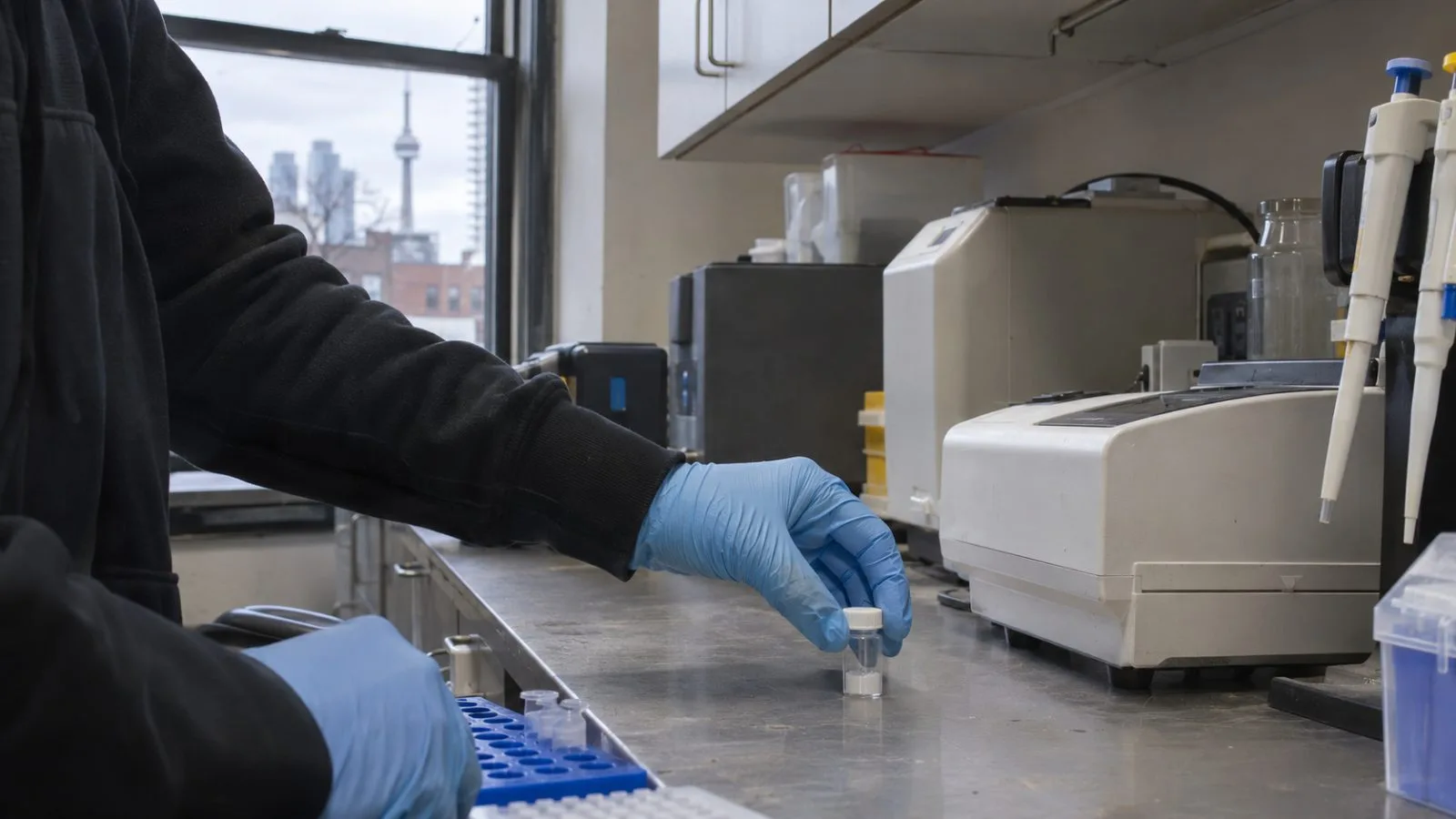
Toronto’s Drug Checking Service found an unidentified opioid in four samples submitted as fentanyl in October 2026, according to Karen McDonald, the service’s executive director, in a Canadian Press report published by Global News. The finding points to an unknown substance in the unregulated supply, but its identity and effects have not been established.
The service could not determine whether the samples contained N′-Phenethyl-5-chloro nor-orphine or a chemically similar compound, N′-Phenethyl-6-chloro nor-orphine, McDonald told the outlet. The report also said the substances had been detected in Vancouver; that account, like the Toronto sample count, comes from the report.
Toronto’s service combines test results every other week to track drugs submitted for checking. Its findings describe those samples, not the full supply in circulation. McDonald said the unregulated fentanyl supply is changing and the substances appearing in it are novel.
The report said the service detected cychlorphine, another opioid in the orphine class, in Toronto’s illicit supply late in 2025. The new substance’s potency and effects are unknown, McDonald said.
The Public Health Agency of Canada (PHAC) found that the share of opioid- and stimulant-toxicity deaths involving combinations of three or more substances or substance groups increased from 20% in 2018 to 42% in 2023. The analysis used data from up to 10 provinces and territories and excluded British Columbia, Alberta and Manitoba.
PHAC says drug samples can contain unexpected mixtures, including newly emerging drugs. The agency separately says combinations of opioids with other substances can complicate clinical presentations and contribute to increased risk.