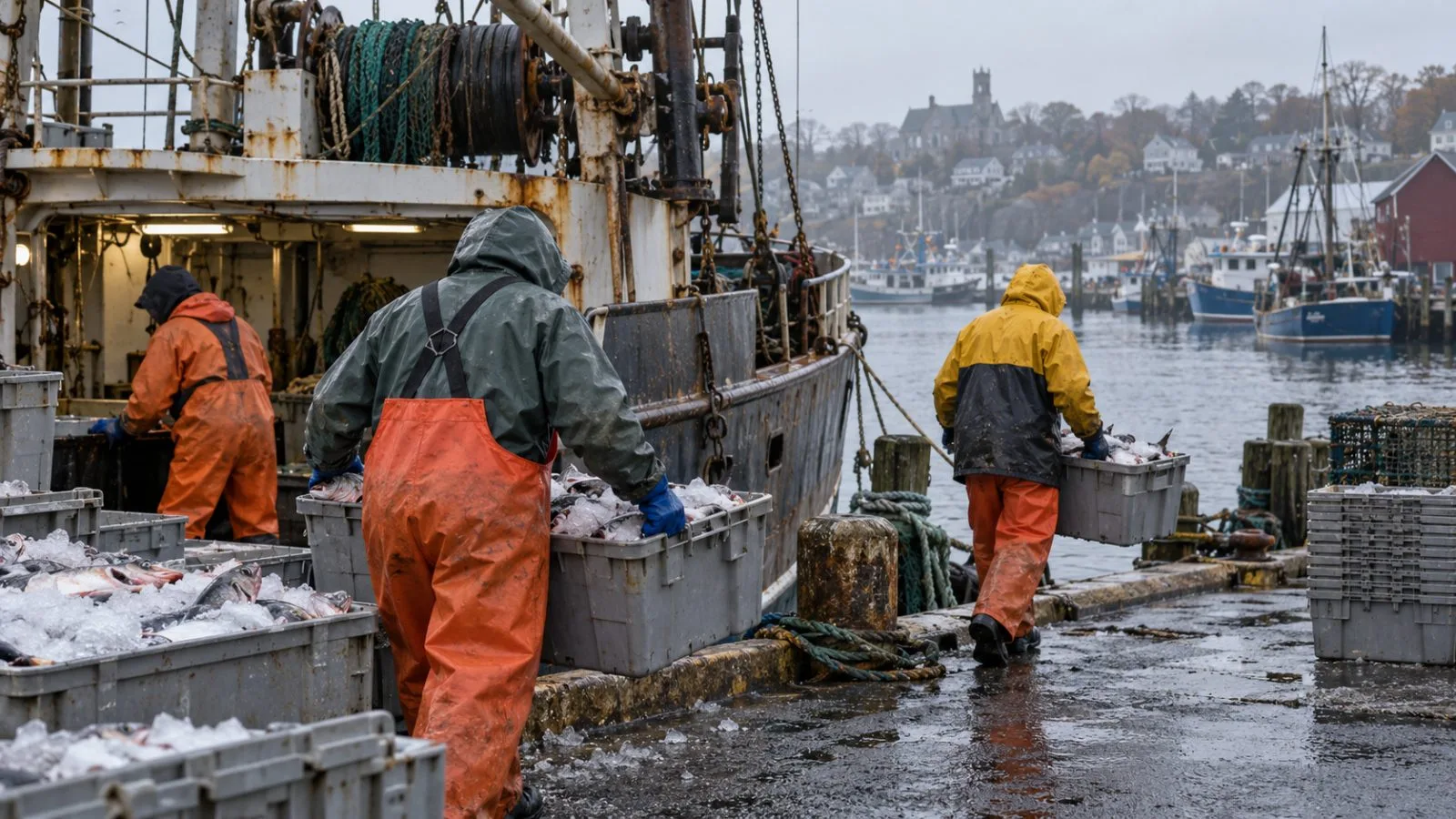
President Donald J. Trump’s administration announced the America First Seafood Strategy on Oct. 23, setting out steps to expand U.S. production in a market where imports met an estimated 80% of seafood demand in 2023.
The National Oceanic and Atmospheric Administration (NOAA) reported that edible seafood imports totaled 6.3 billion pounds and $25 billion that year, while the trade deficit in edible seafood products reached $20 billion. NOAA said the plan is intended to benefit U.S. fishing businesses and the coastal communities they support.
The plan’s five areas include origin labeling and market access, domestic processing and infrastructure, import oversight, regulatory changes and industry partnerships, and seafood’s role in public health. NOAA said agencies would carry out the work through existing programs and legal authorities. The administration also introduced Seafood.gov as a resource for people in the fishing industry and seafood buyers.
Trump’s April 17, 2025, executive order tasked the secretary of Commerce with developing the strategy and required consultation with the secretary of Agriculture. The White House has cited import competition, limited domestic processing and regulatory and permitting barriers as reasons to strengthen the sector.
Separately, the U.S. Department of Agriculture (USDA) announced at least $5 billion in availability through its Strengthening Processing for U.S. Ranchers (SPUR) Guaranteed Loan Program for meat, poultry and seafood processors. USDA would guarantee 90% of loans made by commercial lenders, with a maximum loan of $175 million per borrower. Funding awaits congressional approval, and USDA has not specified how much, if any, would go to seafood processors.
A Food and Drug Administration (FDA) review of 26 imported frozen seafood samples collected from May through September 2025 found that 12 weighed below their declared net amount. The agency refused the 12 shipments and placed 11 associated firms and products on an import alert. FDA said the sample was not designed to support comparisons by country of origin. The U.S. Department of Health and Human Services (HHS) has said ice glaze can leave consumers paying for more seafood than they receive.
FDA also issued draft, nonbinding guidance outlining a voluntary “U.S.-Caught” designation for seafood taken in U.S. waters or by qualifying U.S.-flagged vessels. Its examples distinguish those products from seafood caught or farm-raised abroad and processed entirely in the United States. FDA says origin claims should be substantiated; the comment period runs through Dec. 13, 2026.