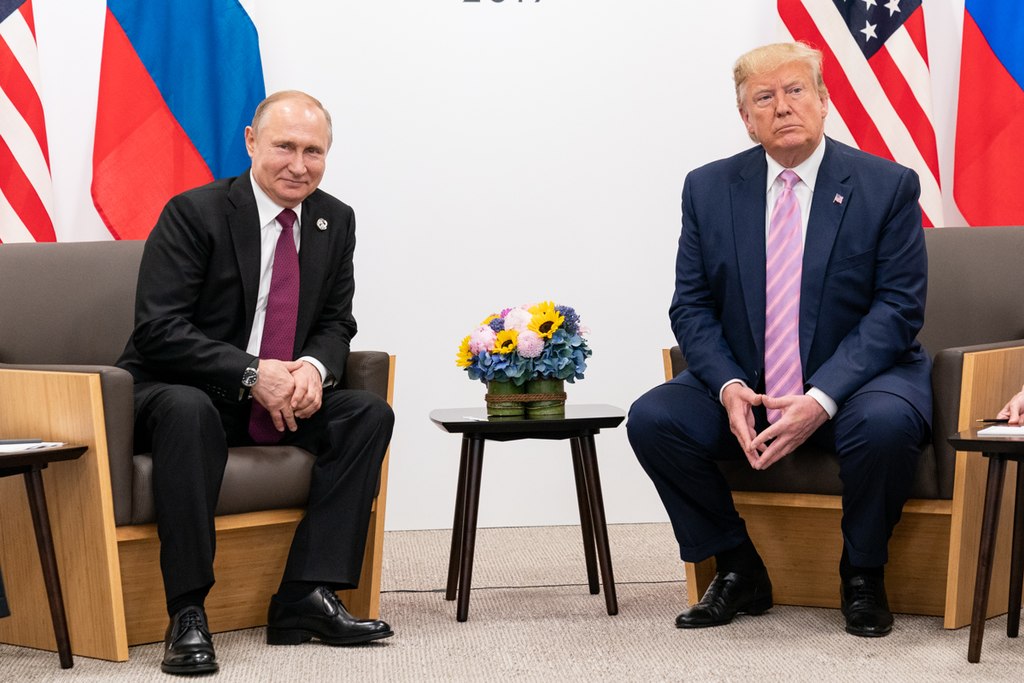
US President Donald Trump has delayed a final decision on Russia sanctions and tariffs, allowing a 60-day review of their potential economic impact as Washington seeks to balance pressure on Moscow with rising global energy prices.
The announcement follows Trump's executive order on Friday waiving major sanctions and tariffs under the Graham Act, legislation signed last month to increase pressure on Russia over its ongoing war in Ukraine.
Speaking at his Mar-a-Lago resort in Florida on Saturday, Trump indicated that his final position remained undecided. He later explained on Truth Social that his approach was intended to prevent Russia from abandoning negotiations aimed at ending the conflict.
US Secretary of State Marco Rubio confirmed that the administration would use the 60-day period to evaluate how additional Russia sanctions could affect the American economy and international markets.
The proposed measures include tariffs on Russian imports and penalties targeting countries purchasing Russian oil and natural gas. These restrictions were originally scheduled to take effect next week.
The uncertainty surrounding Trump's Russia sanctions decision comes as global oil markets face mounting pressure from the Iran war and disruptions to international energy supplies. Brent crude was trading near $109 per barrel, highlighting concerns about tightening fuel availability.
Ukrainian President Volodymyr Zelenskiy criticized the sanctions waiver, warning that easing economic pressure could strengthen Russian President Vladimir Putin's position and prolong the Ukraine conflict.
Meanwhile, Washington is pursuing a separate agreement with Moscow to increase diesel supplies and stabilize fuel prices.
Under the arrangement, Russia is expected to initially deliver more than 300,000 metric tons of diesel to the United States, with additional shipments planned for November and subsequent months.
US Energy Secretary Chris Wright defended the agreement, describing it as an incentive for Russia to reduce hostilities rather than financial assistance to Moscow.
Wright argued that additional Russian diesel exports could lower fuel costs for American consumers while encouraging progress toward peace negotiations.
Rubio acknowledged that the overlapping conflicts in Ukraine and the Middle East have complicated global energy security and US foreign policy decisions.
Investors are now watching whether Trump ultimately reinstates Russia sanctions and tariffs, a move that could tighten energy supplies, increase oil price volatility and reshape global trade flows.