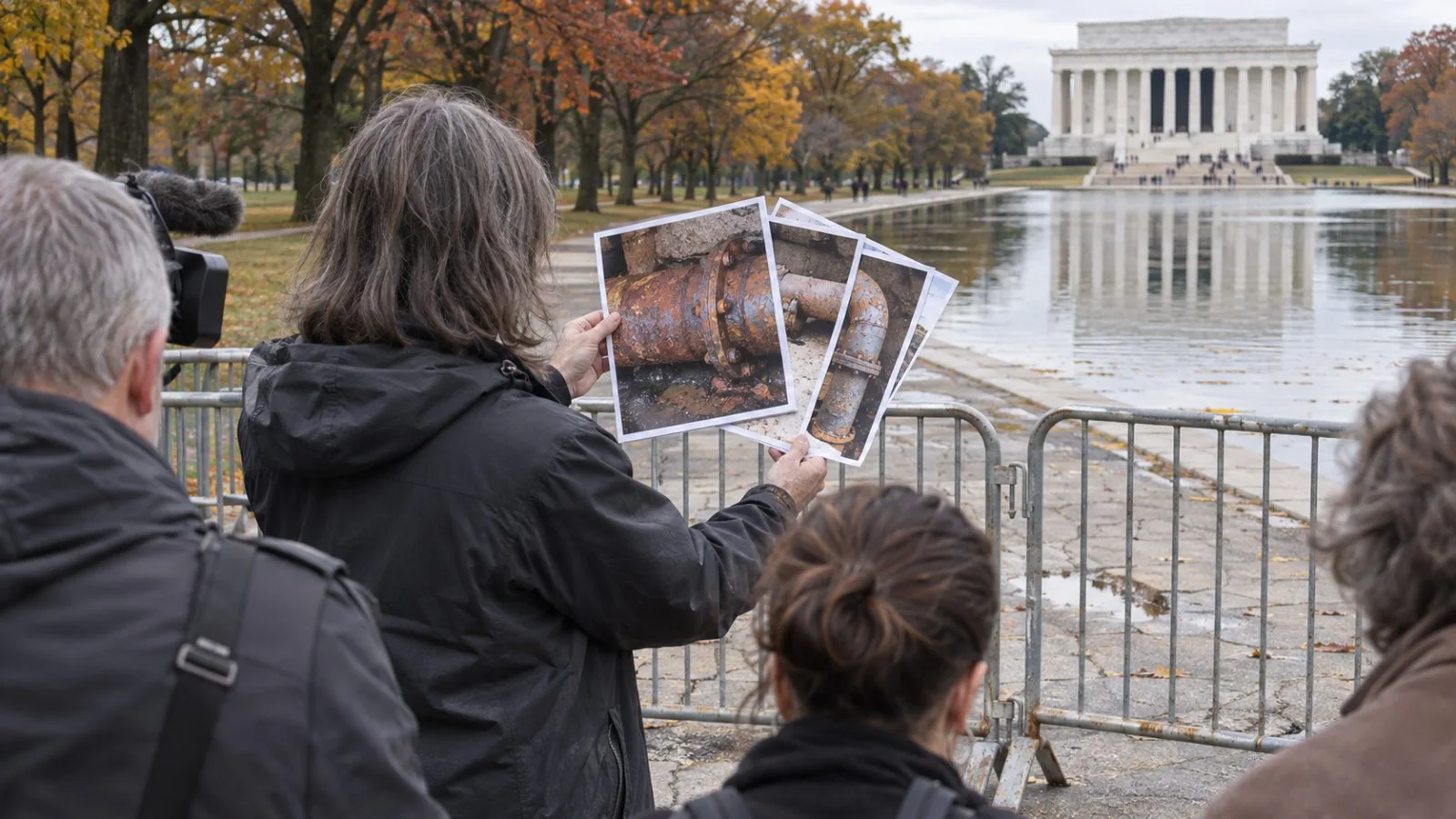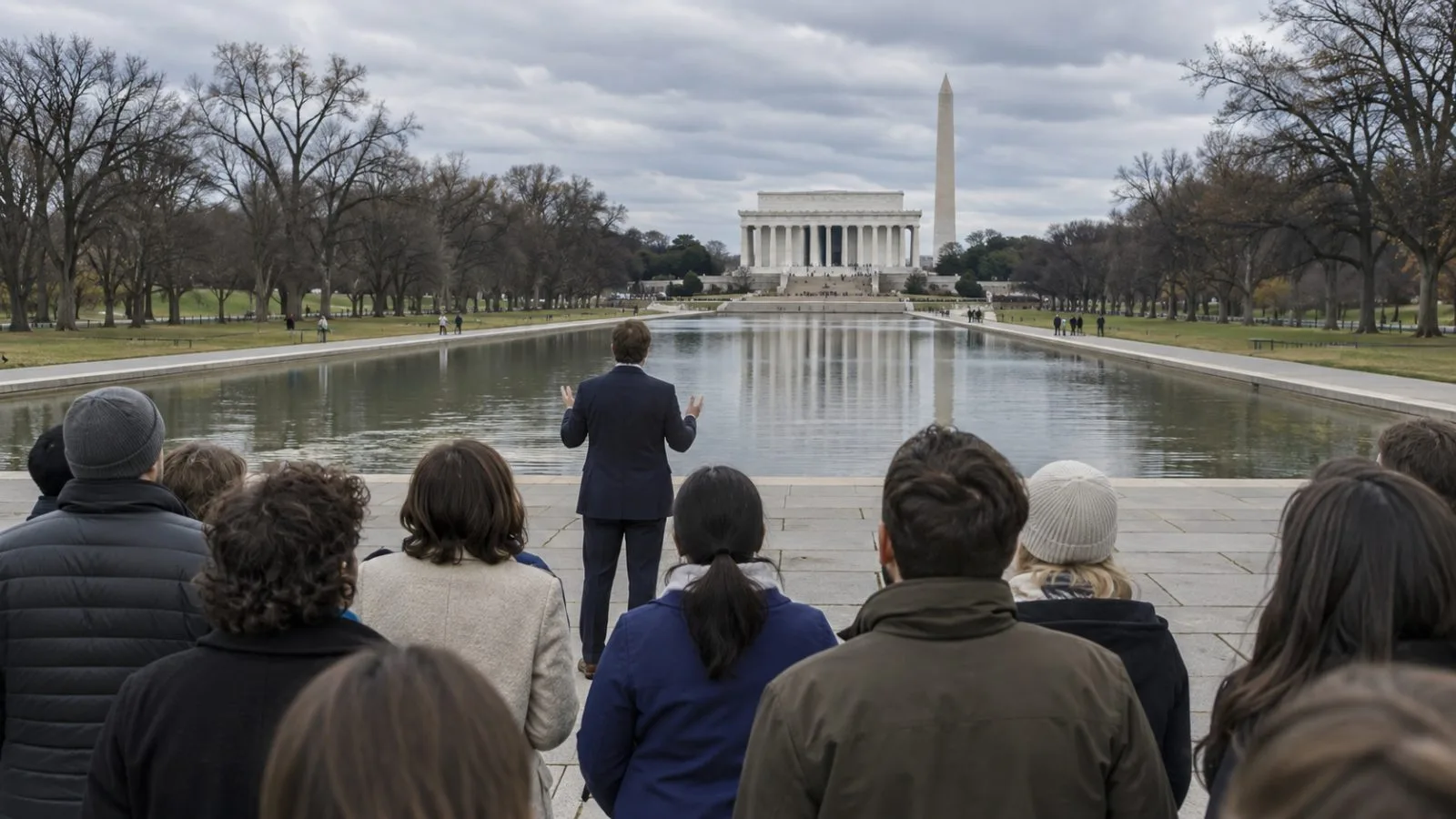
President Donald Trump used a Monday address at Washington’s Lincoln Memorial Reflecting Pool to press his case ahead of Tuesday’s congressional elections, as oil-market shifts and Iran diplomacy raised the stakes for voters.
Trump is not a candidate, but The National reported that he asked voters to judge his record through the congressional result. At the event, he said, “I hope people realize that when they go into the voting booth,” the Associated Press (AP) reported. The National said Republicans faced the possibility of losing their congressional majorities as household costs and the Iran war’s effect on energy prices weighed on the campaign.
U.S. Energy Information Administration (EIA) data put average oil flows through the Strait of Hormuz at 21.6 million barrels per day in the fourth quarter of 2025 and 4.9 million in the second quarter of 2026. Euronews tied an early Monday decline in oil prices to hopes of reopening the strait, reporting Brent crude near $108.50 a barrel, down about 2.8% from Friday’s close. AP later reported Brent at $104.98, down roughly 7.5%; the outlets cited separate Monday snapshots.
In an interview with Al Jazeera, Iran’s Foreign Minister Abbas Araghchi said a proposal discussed by Qatari and Pakistani mediators could restore passage within two days if Washington accepted Tehran’s conditions. He listed sanctions relief, restored oil waivers, a reduced U.S. military presence, recognition of shipping routes agreed by Iran and Oman, and an end to fighting on all fronts. Araghchi said the plan “reduces the implementation period to two days.”
AP separately reported, citing two regional officials and another person familiar with a weekend call, that Israeli Prime Minister Benjamin Netanyahu urged Trump to consider additional strikes after the midterms. The White House did not directly address questions about the call, AP said, and Trump made no commitment to military action.
Voters are scheduled to choose Congress on Nov. 3. The EIA’s next outlook release is scheduled for Nov. 10.