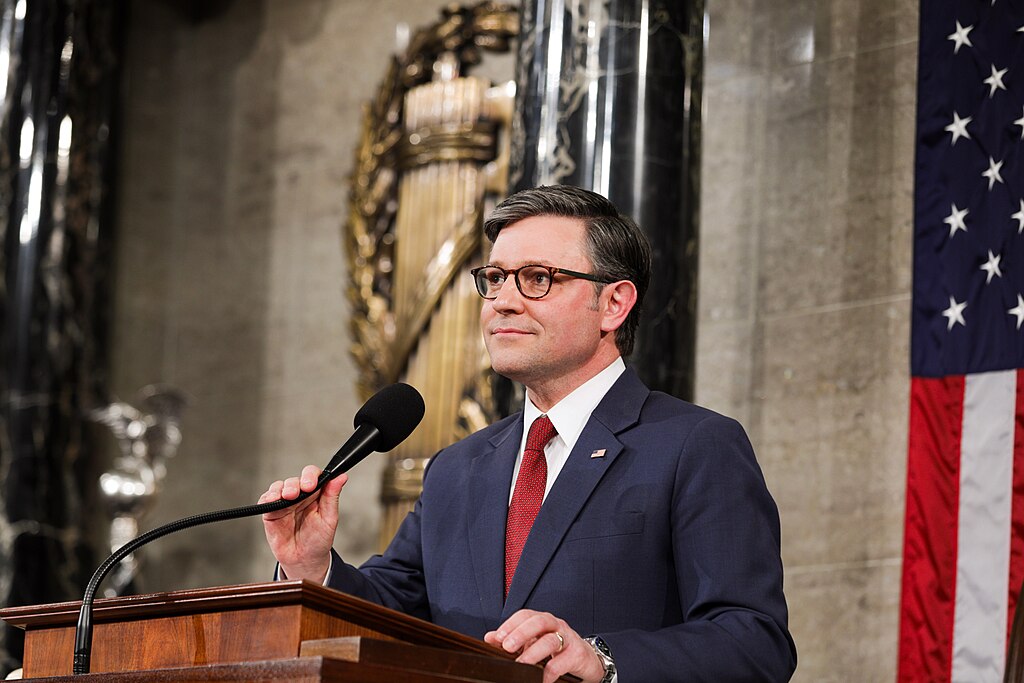
President Donald Trump is reportedly close to selecting a permanent Director of National Intelligence (DNI), according to U.S. House Speaker Mike Johnson, as lawmakers debate the future of a key U.S. surveillance law set to expire this week.
Speaking to reporters after meeting with Trump, Johnson said the president is nearing a decision on a full-time intelligence chief and is considering five candidates for the position. Johnson expressed confidence that the role would be filled by a highly qualified individual, a move that could ease congressional concerns and improve the chances of renewing Section 702 of the Foreign Intelligence Surveillance Act (FISA).
The White House has not commented on the matter. Trump recently announced that Bill Pulte, currently head of the Federal Housing Finance Agency, will serve as acting Director of National Intelligence beginning June 19. Pulte replaces Tulsi Gabbard, who is stepping down from the role effective June 30.
Johnson’s remarks contrast with earlier reports suggesting Trump was reluctant to appoint a permanent DNI. According to Politico and sources familiar with the discussions, Trump indicated during the meeting that he may prefer to keep Pulte in the acting position rather than nominate a permanent successor.
The debate comes as Congress faces a deadline to reauthorize Section 702 of FISA, a critical intelligence program that allows U.S. agencies to collect communications data from foreign nationals located outside the United States without obtaining warrants. Intelligence officials argue the authority is essential for national security and counterterrorism operations.
However, the proposed renewal has encountered resistance in the Senate. Democrats have raised concerns over Pulte’s lack of national security experience and fear that intelligence-gathering powers could be misused for political purposes. Several Republicans have also voiced concerns about privacy protections for Americans whose communications may be incidentally collected.
Last week, seven Republican senators joined Democrats in delaying the legislation. Senate Republican Leader John Thune criticized the opposition, accusing Democrats of jeopardizing a vital intelligence program. Meanwhile, Senator John Barrasso said some lawmakers believe the DNI position itself may no longer be necessary, though he emphasized that any occupant of the role should possess strong national security credentials.
With Republicans holding a narrow 53-47 Senate majority, party leaders will need bipartisan support to secure the 60 votes required to pass the FISA renewal bill before it reaches Trump’s desk for approval. The outcome of both the intelligence chief appointment and the Section 702 reauthorization is expected to play a significant role in shaping U.S. national security policy in the coming months.