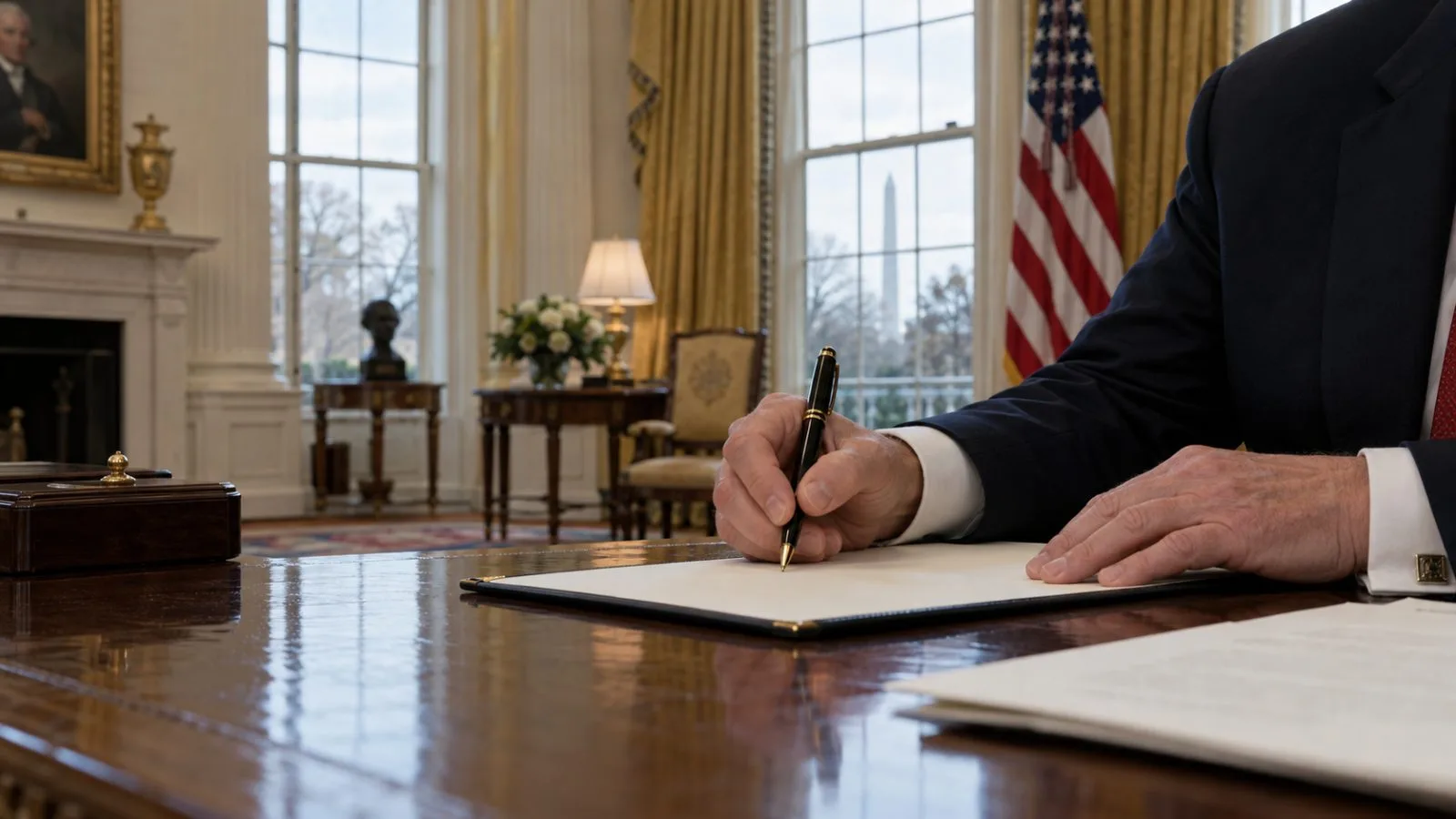
President Donald Trump signed a proclamation revising which Canadian goods face an additional 50% U.S. tariff under Section 338, changing the duty’s coverage from Oct. 30.
From 12:01 a.m. ET on Oct. 30, the updated list applies to goods entered for consumption or withdrawn from a warehouse for consumption, according to the proclamation signed Oct. 23. The annex removes 22 tariff classifications, including specified plywood, paper and pulp products, plastic packaging, seaweed for human consumption, refrigeration equipment and agricultural sorting machinery. It adds selected carpets and floor coverings, cocoa powder, shampoos and soaps, some chemical and waste products, hand-operated taps and valves, window or wall air conditioners, freezers and canoes.
U.S. Sen. Susan Collins said nine product categories important to Maine’s blueberry, potato, apple and seaweed industries would be exempt from the duty. That figure refers to product categories; the White House annex separately lists 22 tariff classifications. Collins said, “Many of our farmers and growers rely on specialized equipment, packaging materials, and other products from Canada that are either unavailable from American suppliers or cannot be replaced without incurring significant expense.” Her office said the exclusions follow earlier exemptions for pulp, road salt and cement.
The administration says the Section 338 duties address what it describes as discrimination against U.S. commerce through Canada’s motor-vehicle tariff system. It says the latest revision is intended to offset a burden on U.S. commerce and serve the public interest. The proclamation says these duties remain in addition to applicable Section 232 tariffs. The White House says the Section 338 tariff applies to covered goods whether or not they qualify under the U.S.-Mexico-Canada Agreement (USMCA).
The revision comes amid election-season tensions over tariffs. The Associated Press reported the tariff change was intended to help Collins’ reelection bid, a rationale not cited in Trump’s proclamation. The Federal Election Commission lists Nov. 3 as the next regularly scheduled federal general election, four days after the revised tariff coverage takes effect.