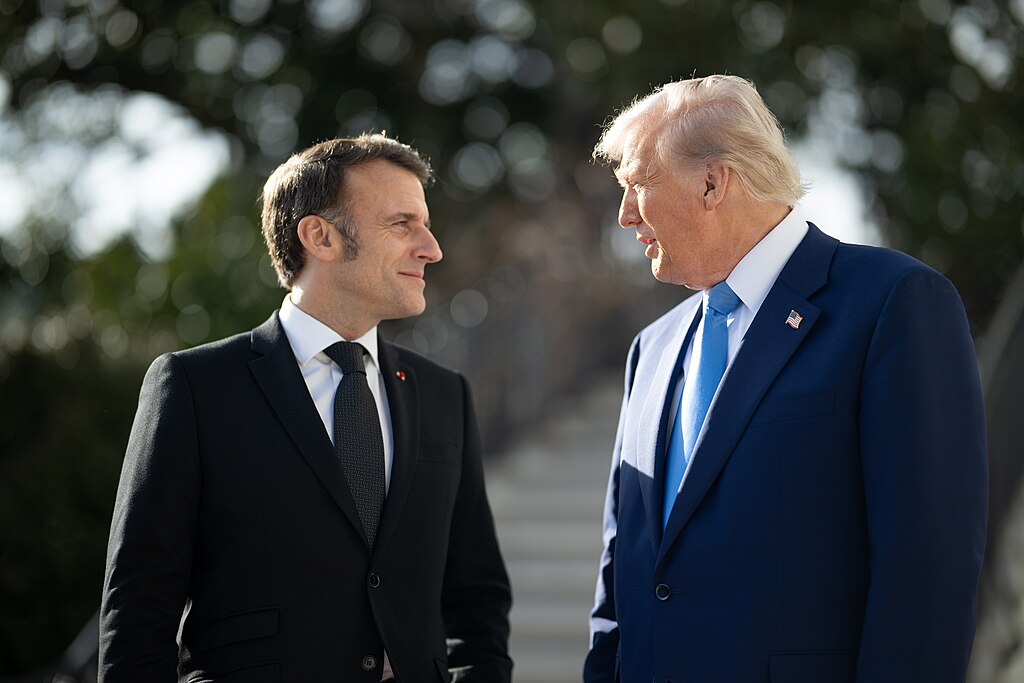
U.S. President Donald Trump has sparked fresh controversy after saying he would impose a 200% tariff on French wines and champagnes, linking the move to French President Emmanuel Macron’s refusal to join his proposed “Board of Peace” initiative. The plan, according to Trump, is designed to help resolve global conflicts, but it has already drawn skepticism from key allies and international diplomats.
Speaking to reporters, Trump reacted sharply when told that Macron had no intention of joining the initiative. “Did he say that? Well, nobody wants him because he will be out of office very soon,” Trump said. He went on to claim that the tariff threat would pressure France into compliance, adding, “I’ll put a 200% tariff on his wines and champagnes, and he’ll join, but he doesn’t have to join.”
Despite Trump’s remarks, a source close to the French president confirmed on Monday that France plans to decline the invitation at this stage. Paris has not publicly commented on the tariff threat, but the comments have raised concerns about escalating trade tensions between the United States and France, particularly in the already sensitive wine and luxury goods sectors.
Trump first proposed the Board of Peace in September, when he announced plans aimed at ending the war in Gaza. However, invitations sent to world leaders last week suggest the initiative would have a much broader mandate, focusing on resolving conflicts worldwide. According to a draft charter seen by Reuters, countries wishing to remain members for more than three years would be required to contribute $1 billion in cash.
The proposal has been met with cautious reactions from governments and diplomats, many of whom worry the initiative could undermine or duplicate the role of the United Nations. Critics argue that tying financial contributions to membership risks turning global peace efforts into a pay-to-play system.
Adding to the controversy, Trump revealed on Monday that Russian President Vladimir Putin has also been invited to join the peace board. “He’s been invited,” Trump said, a statement likely to intensify debate over the initiative’s credibility and geopolitical implications.
As discussions continue, Trump’s tariff threat and the mixed international response highlight growing tensions around trade, diplomacy, and the future of multilateral peace efforts.