


 Stellar Leads RWA Tokenization Growth With $36.4M Inflow
  Bitcoin Exchange Reserves Hit Multi-Year Low at 2.68 Million BTC
  ISIS Attack Near Kirkuk Kills Iraqi Policeman After US Withdrawal
  Takaichi Pledges to Control Japan Bond Issuance
  Peter Brandt Flags Key XRP Breakout at $1.6572
  Bank of America Sees EUR/USD at 1.15 by Year-End
  Mexico Seeks US Evidence After Border Gunfire Claim
  Yemen Launches Major Offensive to Retake Houthi-Held Areas
  US DOT Ends Airline Privacy Review Without Enforcement
  Trump Offers US Help to Russia After Plague Lab Worker Dies
  Chainalysis AI Traces $387M Bitget Hack in Under 10 Minutes
  AAVE, PUMP, WLD and SKY Rally as Crypto Market Slips
  Zcash Mining Profits Surge as Liquidity Risks Grow
  Ukraine to Intensify Strikes on Russian Oil Refineries
  Weekly Crypto Pulse: $528M ETF Inflows Meet a Cooling US Economy
  OpenAI, Anthropic Back Mandatory AI Breach Reporting in Australia
  Trump Plans Diesel Tax Relief as Fuel Prices Hit Record Highs


 Add as a preferred source on Google
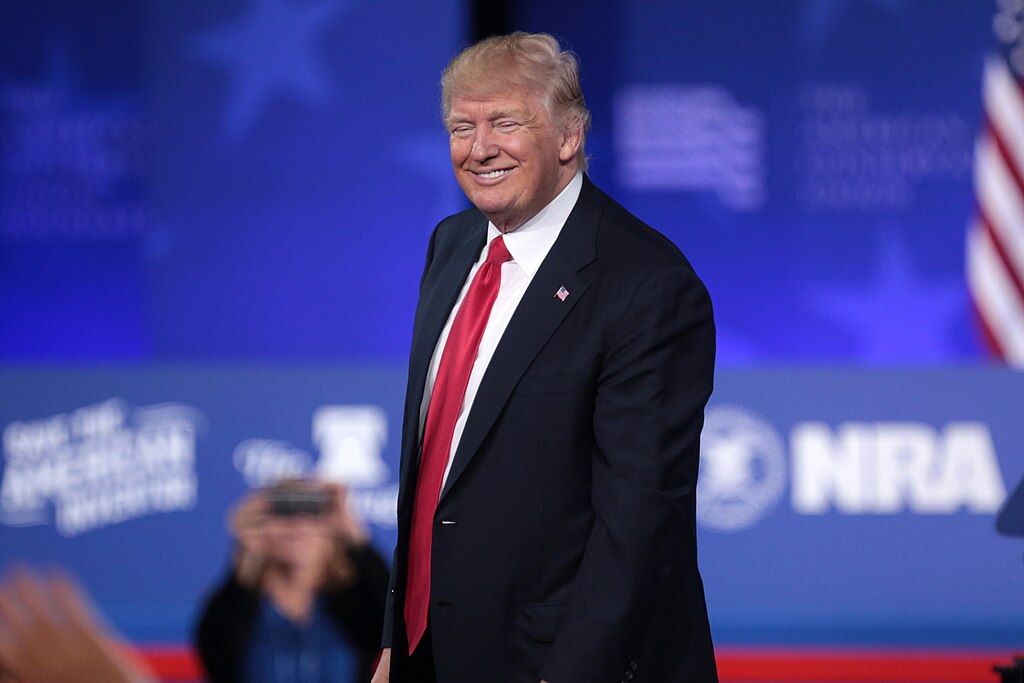
Donald Trump is set to become the first president of the United States with a felony conviction.
On May 30, 2024, a New York County jury found Trump guilty on 34 counts of falsifying business records in the first degree. That constituted a Class E felony in the state of New York, when the falsification is committed with an intent to defraud, commit another crime, or to aid or conceal the commission of another crime.
Class E felonies carry a potential penalty of up to four years in prison and a fine up to $5,000 for each count. Trial courts reserve discretion, however, to impose a sentence that accounts for other factors, such as the defendant’s criminal history.
Trump is set to be sentenced on Jan. 10, 2025. In recent court filings, Trump has sought to get his guilty verdict thrown out, arguing that the U.S. Supreme Court’s recent decision on presidential immunity in criminal prosecutions means he can’t be found guilty.
On July 1, 2024, the U.S. Supreme Court concluded that the Constitution provides “absolute immunity from criminal prosecutions for actions within his … constitutional authority.” The court also concluded that presidents hold “at least presumptive immunity from prosecution for all his official acts” and “no immunity for unofficial acts.”
To be clear, Trump was convicted of unlawful conduct that occurred before his first term as president. And while it appears that the Supreme Court’s July 1 ruling applies to both state and federal criminal prosecution, as the court held, there is no immunity for unofficial acts, which the falsification of business records undoubtedly is.
On Jan. 3, 2025, Justice Juan Merchan, who presided over the New York trial, rejected Trump’s argument regarding presidential immunity because the Supreme Court’s immunity decision is not applicable in Trump’s New York case. And on Jan. 9, 2025, New York’s highest court declined to block Trump’s sentencing.
But Merchan has expressed little willingness to impose prison time for the president-elect. In the same order rejecting Trump’s presidential immunity argument, Merchan said, “It seems proper at this juncture to make known the Court’s inclination to not impose any sentence of incarceration.”
Even if Merchan imposed prison time, many constitutional law scholars, including myself, argue that Trump’s sentence would, at minimum, be deferred until after his next term in the Oval Office.
Rather, Merchan has hinted that he may impose “unconditional discharge” as a sentence. That means there would be no penalties or conditions imposed on Trump, such as prison time or parole.
Serving the public interest, not time
According to New York law, a court “may impose a sentence of unconditional discharge … if the court, having regard to the nature and circumstances of the offense and to the history, character and condition of the defendant, is of the opinion that neither the public interest nor the ends of justice would be served by a sentence of imprisonment and that probation supervision is not appropriate.”
Regarding Trump’s case specifically, Merchan continued, “A sentence of an unconditional discharge appears to be the most viable solution to ensure finality and allow (Trump) to pursue his appellate options.”
Put simply, it appears Merchan, having considered the totality of the circumstances, including Trump’s election to a second term as president, concluded, as is his right as a judge, that it is in the best interest of the public not to imprison Trump.
Generally, trial courts reserve a tremendous amount of discretion when it comes to imposing sentences. Legislatures can, and often do, set sentencing guidelines, prescribing what penalties trial judges can impose. It is clear in this case that the New York State Legislature allows trial judges to, at their discretion, deliver “unconditional discharge” as a sentence.
Accordingly, if Merchan follows through on his Jan. 3 comment, an unconditional discharge sentence would be legally proper.
Uniquely, Trump has sought dismissal of his guilty verdict before his sentencing. Normally, criminal defendants do not have a legal right to appeal their verdicts until a final judgment is entered against them. In criminal law, a final judgment must include the defendant’s sentence.
But, of course, this is not your ordinary criminal case. As Merchan hinted, moving forward with the sentencing would favor Trump because it would result in a final judgment being entered against him, thus enabling him to properly appeal his guilty verdict.







