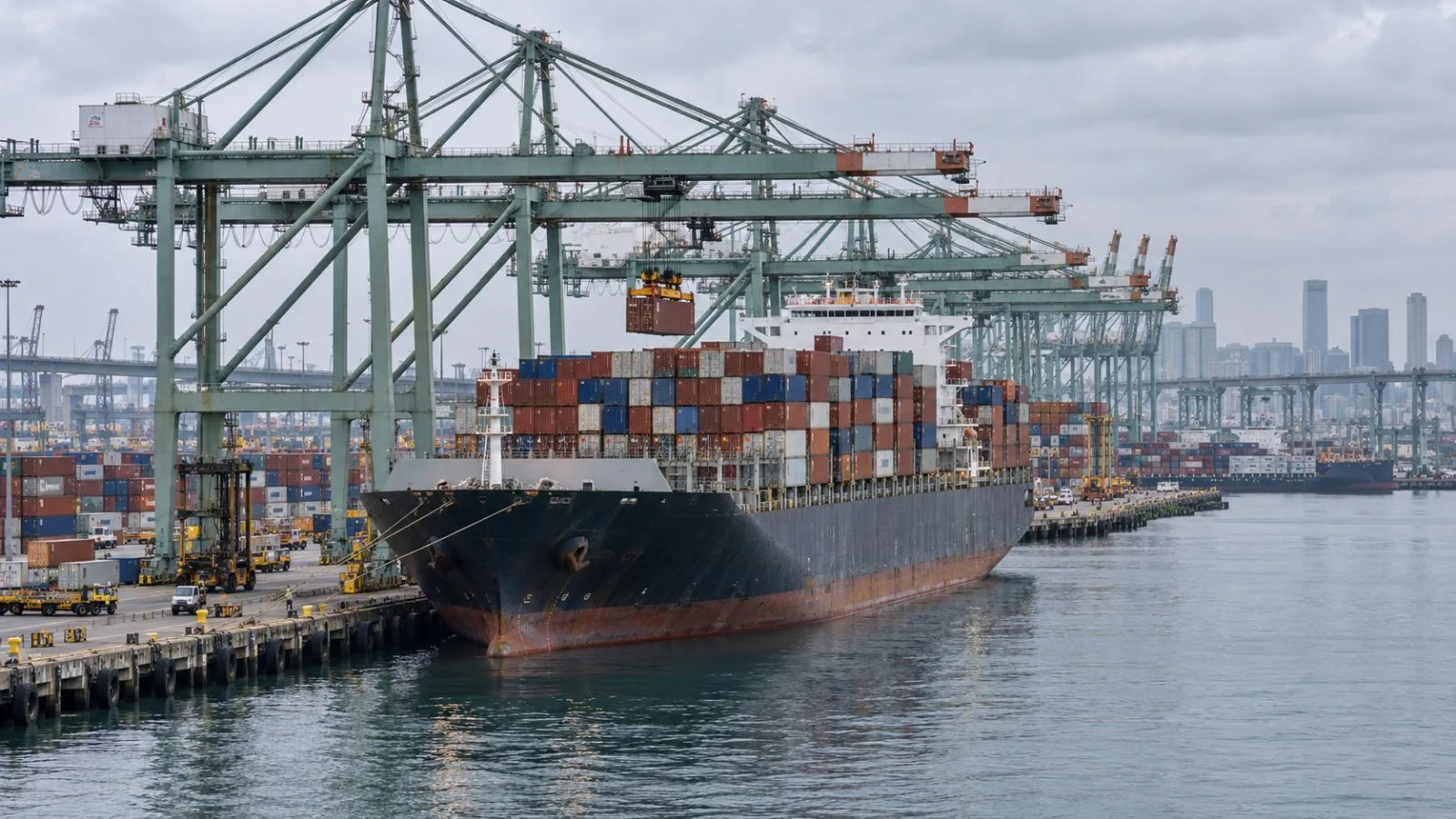
Joseph Politano of Apricitas Economics argued in 2024 that Donald Trump's proposed import tariffs would put U.S. trade policy out of step with other high-income economies and raise consumer costs.
In a TIME interview published April 30, 2024, Trump said he was considering a tariff above 10% on all imports, along with a reciprocal tariff. The Republican Party's 2024 platform supported baseline tariffs on foreign-made goods and a reciprocal trade act, but named no rate. It linked those policies to its goals for trade, domestic industry and agricultural workers.
Politano's assessment concerned a proposed levy, rather than an average rate charged across U.S. imports. He argued that low-income households would be especially exposed to higher goods prices and that manufacturers buying materials or equipment from abroad would face greater costs. The platform presented U.S. workers, farmers and industries as intended beneficiaries.
Trump later raised a range of 10% to 20% in an August 2024 speech, The Washington Post reported. The newspaper said his campaign stressed that he had not specified that a 20% rate would apply to every country.
World Bank World Integrated Trade Solution (WITS) data put the U.S. effectively applied tariff in 2023 at 1.36% when weighted by trade and 2.74% as a simple average. The World Trade Organization reported most-favored-nation averages for that year of 2.2% by trade weight and 3.3% on a simple-average basis.
Apricitas Economics used a different calculation: customs duties collected as a share of imports. It put that figure at 1.6% in 2017 and 2.6% in 2023. Those measured rates and Trump's proposed tariff on imports describe different things.
An executive order signed April 2, 2025, added a 10% duty to most imports from April 5, with exceptions, and set rates for some trading partners. On Feb. 20, 2026, the Supreme Court found that the International Emergency Economic Powers Act did not grant the president authority to impose tariffs.
A presidential proclamation issued that day established a separate 10% import surcharge for 150 days beginning Feb. 24. The Office of the United States Trade Representative announced Section 301 duties of 10% or 12.5% on 60 economies on July 23, with exemptions for some products.