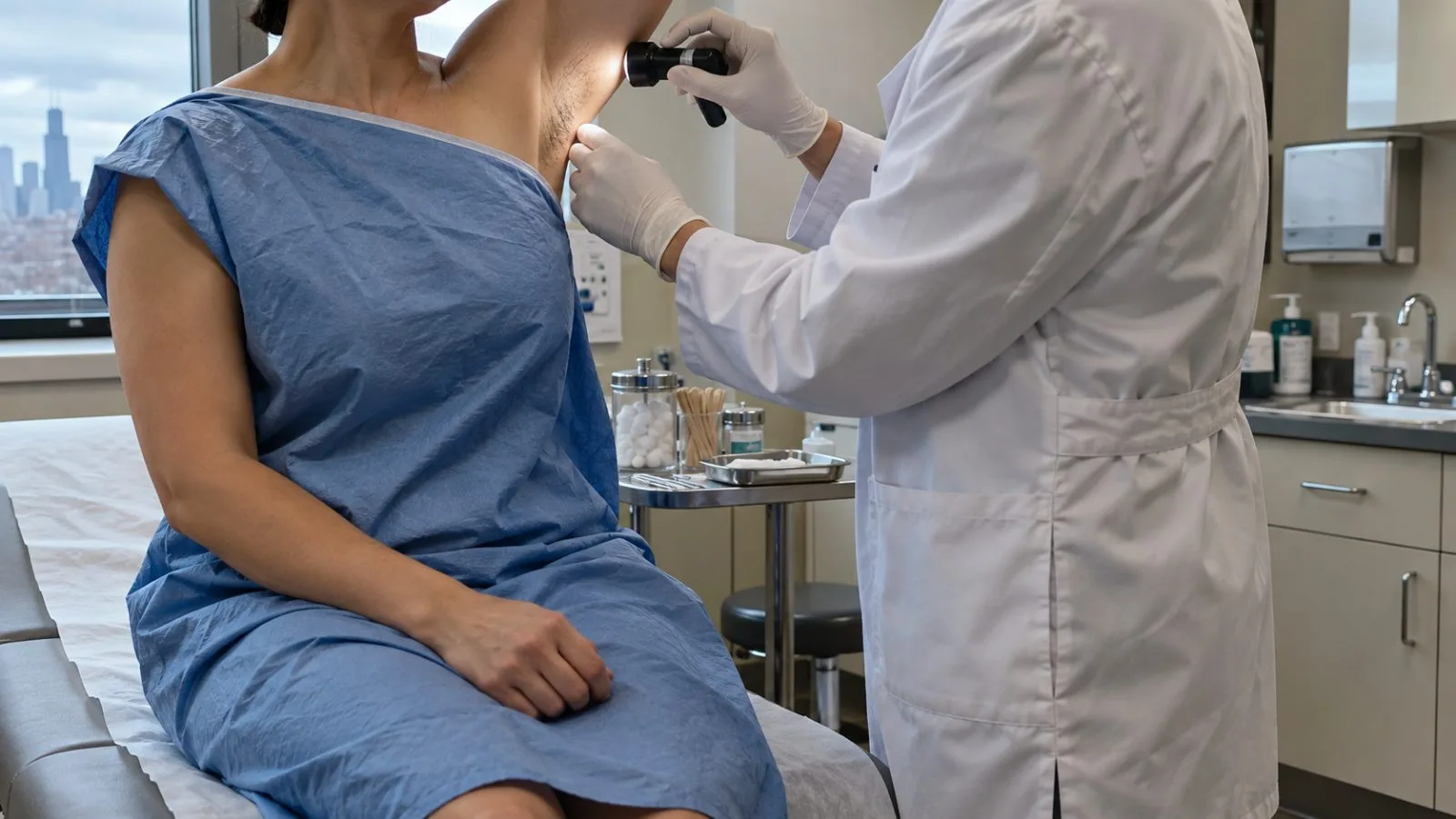
The American Academy of Dermatology (AAD) and Hidradenitis Suppurativa Foundation (HSF) announced their first joint guidelines Oct. 20, strongly recommending four biologic medicines and routine pain assessment for hidradenitis suppurativa.
The groups developed 37 recommendations after reviewing research and grading the evidence. For moderate to severe cases, they strongly recommend adalimumab, bimekizumab, infliximab and secukinumab. Routine assessment of patients’ pain also received a strong recommendation.
Hidradenitis suppurativa, or HS, is a chronic inflammatory skin condition that causes recurring, painful lumps, often in the armpits, groin and other areas where skin rubs together. The AAD says it can be mistaken for acne or an infection, delaying diagnosis.
The guidelines give conditional recommendations to selected topical medicines, antibiotics and procedures, as well as spironolactone, upadacitinib and short-term systemic corticosteroids. Those recommendations call for treatment decisions to reflect each patient’s circumstances and preferences. The document covers supportive care alongside medicines and procedures.
Access to prescribed treatment remains a concern. The AAD says insurer rules known as step therapy can delay appropriate HS care by requiring patients to try designated treatments before an insurer covers a medicine prescribed by their clinician. Patients may therefore face a wait even after a clinician has selected a treatment.
HSF President and guideline work group co-chair Haley B. Naik said, “Every person living with HS deserves care that meets this standard.”
U.S. and Canadian HS foundations published North American clinical management guidelines in 2019. The guidance announced Oct. 20 is the first set of guidelines developed jointly by the AAD and HSF.