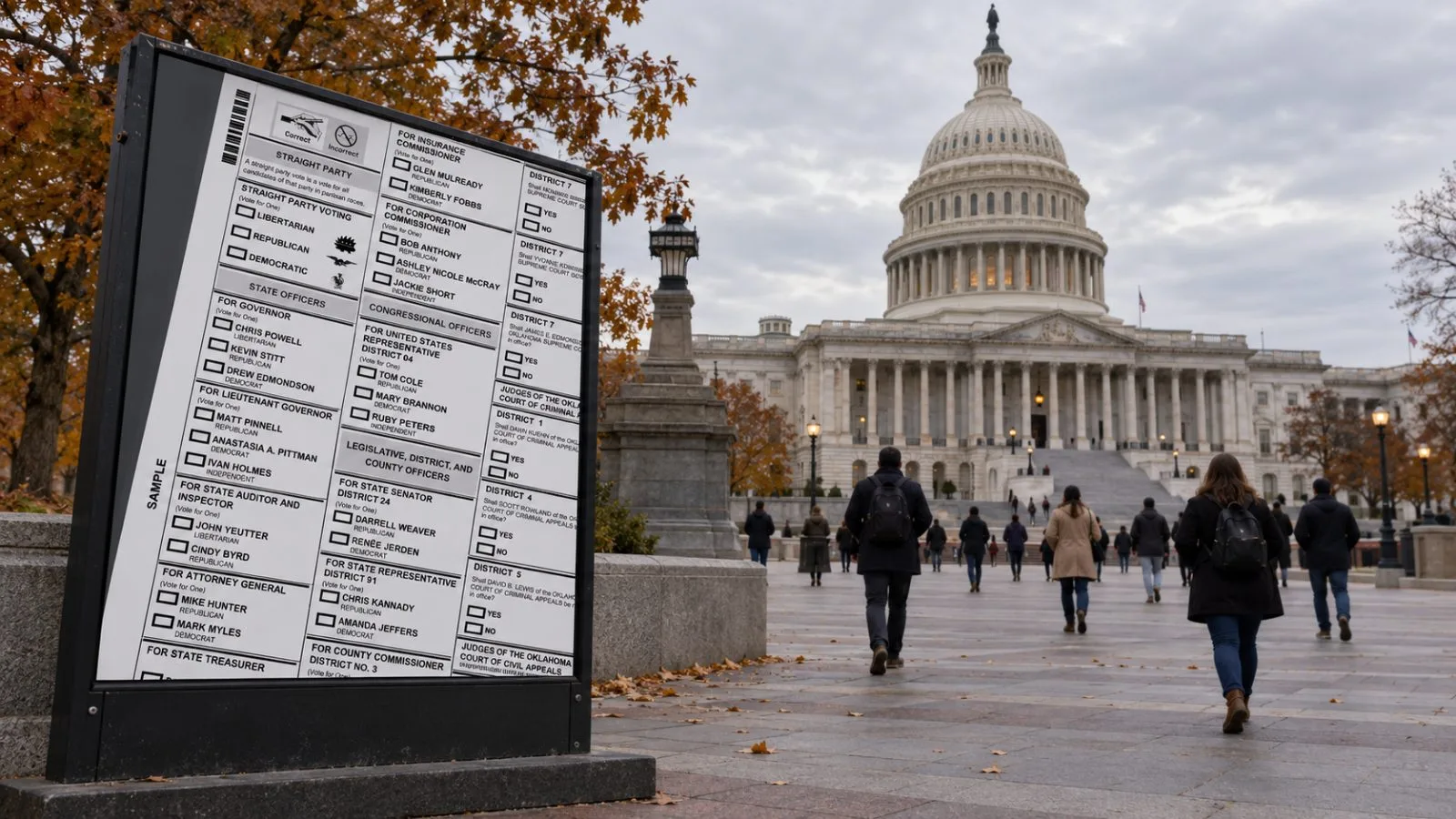
Investors are weighing Tuesday’s U.S. midterm election alongside late-October central bank decisions that left rates unchanged but showed disagreement over whether policy may need to tighten further. The election will determine party control of Congress for the next two years.
The Federal Reserve (Fed) kept its target range at 3.75% to 4.00% on Oct. 28. Two members favored a quarter-point increase, after the Fed raised the range by the same amount on Sept. 16.
The European Central Bank (ECB) held its deposit rate at 2.50%, its main refinancing rate at 2.65% and its marginal lending rate at 2.90%. It said higher energy prices posed upside risks to inflation and downside risks to growth.
The Bank of Japan (BOJ) set guidance for its overnight call rate at around 1.25% in an 8-1 vote; the dissenting member proposed a rate near 1.50%. The Bank of Thailand (BOT) unanimously maintained its rate at 1.00%. It projected growth of 2.4% in 2026 and 2.1% in 2027, citing household debt and weak purchasing power as constraints on consumption.
Maybank Securities Thailand, in an analysis published by the Bangkok Post, viewed the rate holds as a short-term support for risk-taking because they could temper expectations of more increases. The analysis forecast contrasting market effects from election outcomes: a Democratic sweep could weigh on U.S. stocks, bond yields and the dollar, while a Republican sweep could support shares and lift yields and the dollar. The Fed and BOJ votes showed disagreement over rates, while the ECB warned that higher energy prices posed risks to inflation and growth.
Reuters reported on Nov. 2 that forecasts broadly favored Democrats for the House, while control of the Senate remained less certain. It said investors were considering how congressional control could shape AI investment, debt-limit talks and potential investigations of companies. All 435 House seats and one-third of Senate seats are up for election Tuesday, Nov. 3.