U.S. arrests for vagrancy and drug possession increased in 2025 despite a steep drop in violent crime, showing how arrest trends can diverge from estimates of reported offenses.
The Federal Bureau of Investigation (FBI) estimated a 9.3% decline in the violent-crime rate from 2024. Its national estimates, which begin in 1936, show no larger annual decline. The bureau put the murder rate at 4.1 per 100,000 people, equal to its estimates for 1955 and 1956 and the lowest in the series. More than 17,000 agencies covering 96.2% of the U.S. population submitted data for 2025.
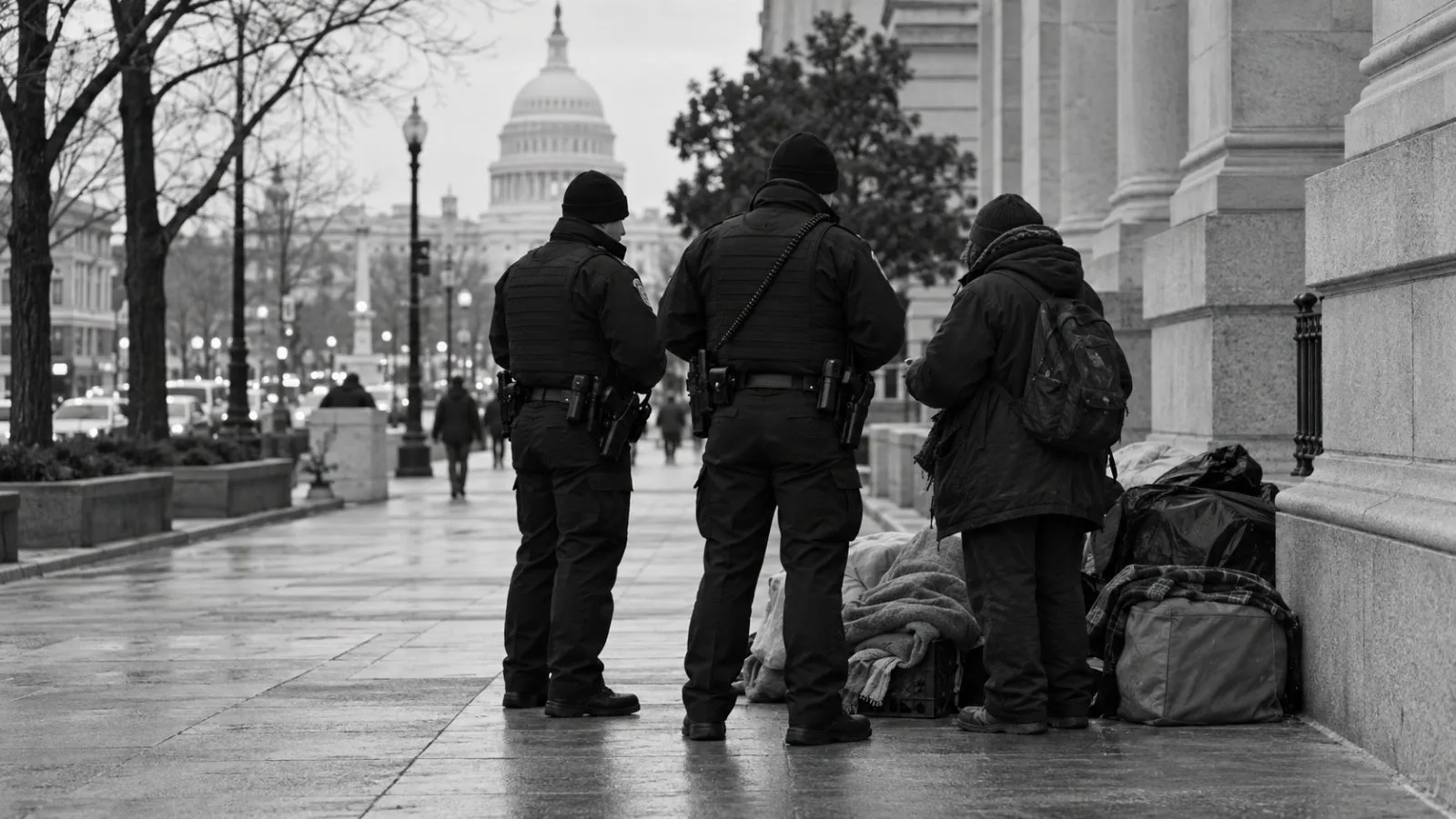
FWD.us, analyzing FBI arrest data, counted 32,728 vagrancy arrests in 2025, compared with 22,769 the year before. That was an increase of 9,959 arrests, or 44%. Arrest totals count police actions; the FBI’s violent-crime figure estimates offenses reported by law enforcement.
Drug-possession arrests rose as well. FWD.us counted 201,273 marijuana-possession arrests, an increase of 11,091, or about 6%. Arrests for possession of other drugs reached 523,520, up 15,433, or about 3%.
Black people accounted for 9,201 of the additional marijuana-possession arrests, representing 83% of the nationwide increase, the group found. For possession of other drugs, FWD.us reported increases of 14,236 arrests in California and 2,205 in Oregon.
FWD.us connected the state increases to changes in drug policy. California’s Proposition 36 permits a treatment-mandated felony charge for possession of certain drugs after at least two specified prior drug convictions. Oregon made possession of small amounts of controlled substances a misdemeanor again on Sept. 1, 2024. The arrest figures alone do not establish that either change caused the increases.
The group also identified the U.S. Supreme Court’s June 2024 Grants Pass decision as a possible factor in the rise in vagrancy arrests. The court held that enforcing generally applicable public camping restrictions does not violate the Eighth Amendment’s prohibition on cruel and unusual punishment. The ruling does not establish why arrests rose.
FWD.us Executive Director Zoë Towns said safe communities depend on “housing, healthcare, and local violence prevention.” The group warned that an arrest can disrupt work or housing even if charges are dropped. Its analysis did not quantify those costs or show how many arrests resulted in charges, convictions or time in custody.