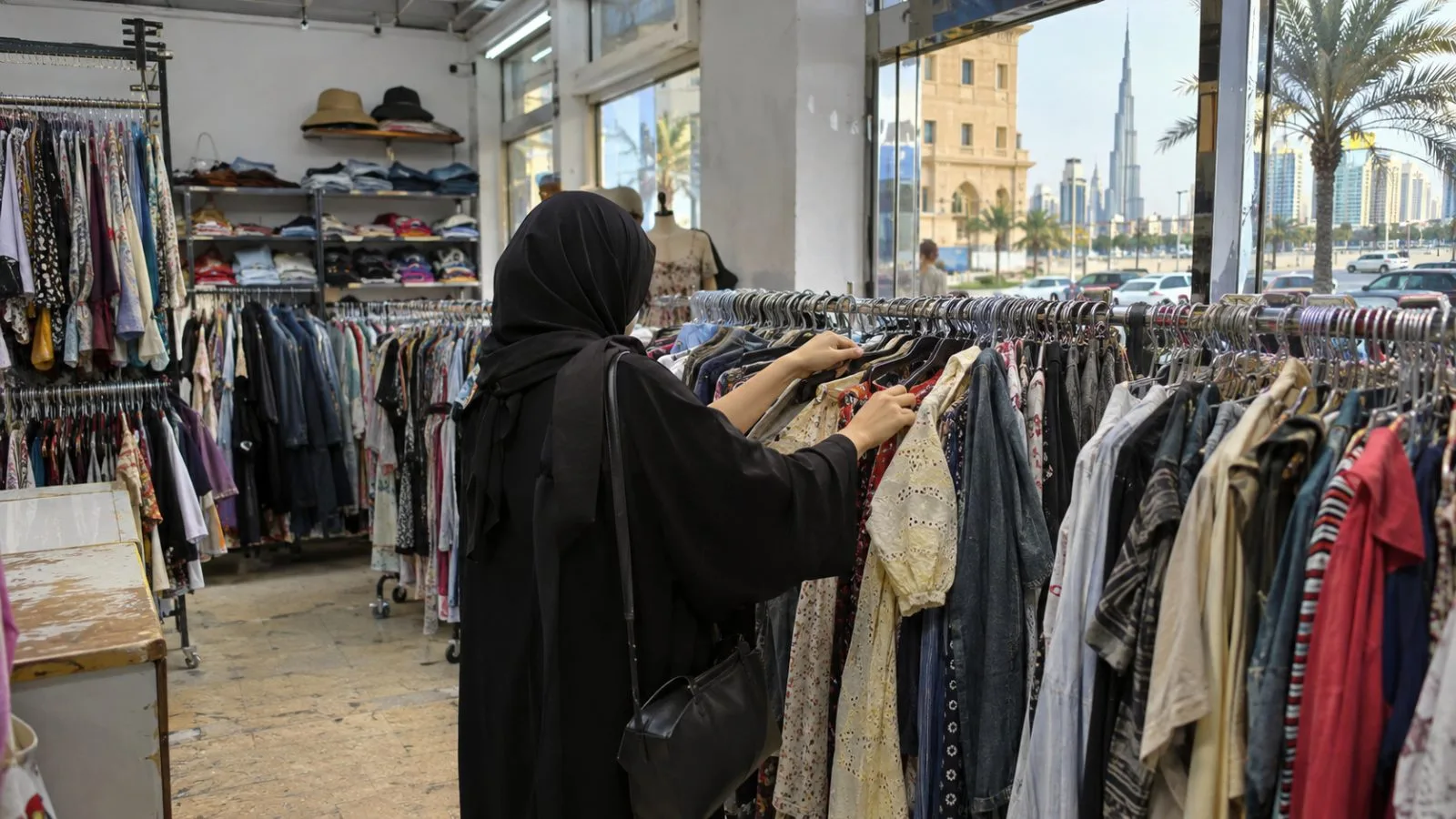
Secondhand shopping apps in the United Arab Emirates include both paid resale and free exchanges, a distinction that complicates one shopper’s concern that new services may be crowding the market.
Revyn says it was founded in Dubai and lets sellers prepare item listings with AI assistance. The company says it offers shipping across the UAE and charges no commission. Hiiba describes a free service for giving and adopting items, a different kind of exchange from conventional resale.
A 2023 UAE Circular Economy Landscape Report listed Facebook groups, Depop and Dubizzle, along with businesses and initiatives including Garderobe, RETOLD, The Luxury Closet, Think Upcycle and Thrift for Good.
Shopper Randi Comrie told The National she had accounts on six or seven resale apps. She said new secondhand apps seemed to be appearing frequently, telling the newspaper, “It does feel like every other week” a new app was launching. The National’s report included no market-share, active-user or sales totals to quantify whether customers are being divided among services.
Revyn founder Federica Bonnometti told The National that buyers and sellers had been spread across social media and messaging groups. She described the sector as being “at a very early stage.” Those interview-based views point to both a search for dedicated resale services and concern about how many platforms shoppers will use.
The UAE’s National Media Authority (NMA) said the Naseej textile circularity initiative launched June 1, 2026. The NMA estimated that the country generates about 220,000 tonnes of textile waste annually, a measure of waste rather than demand for resale apps.
The examples show a varied secondhand ecosystem, but do not establish whether customers are being divided among the apps.