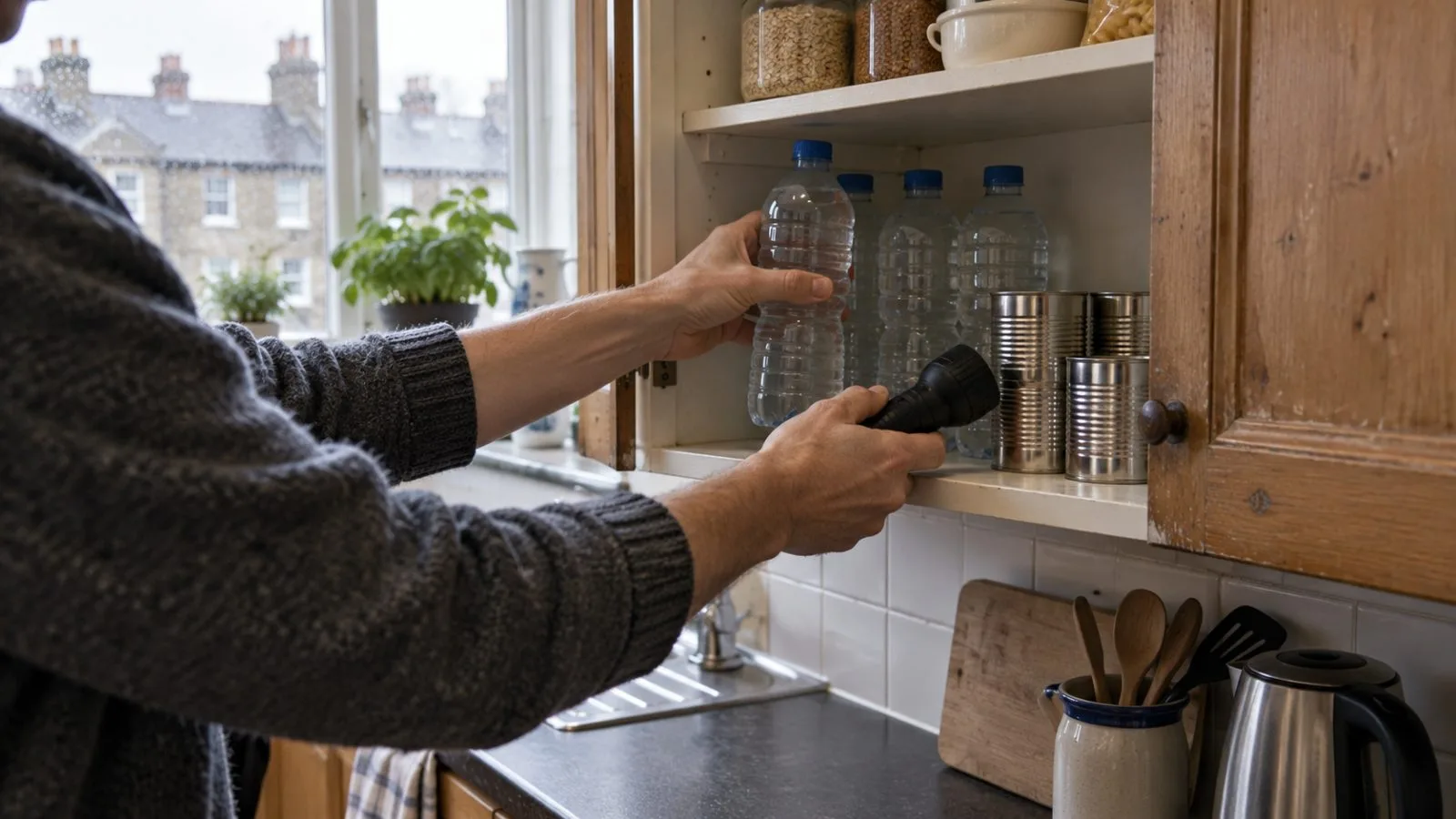
The UK Cabinet Office is asking households to keep enough drinking water and basic supplies for three days, a preparedness push intended to help people manage disruptions and ease pressure on emergency responders.
The checklist advises keeping three liters of water per person each day for drinking, equal to nine liters over 72 hours. That amount does not cover cooking or washing. The guidance also calls for a three-day stock of shelf-stable food that can be eaten as is, plus blankets or warm clothing, a flashlight, spare batteries, an FM radio, a charged power bank, first-aid supplies and essential medicines. It also recommends keeping cash, cards, important documents and written contact and medication details. The update adds detail to earlier coverage of the campaign.
The government advises people to check their existing supplies and add items over time through routine shopping. Eligible households can join the free Priority Services Register so utility providers know who may need extra help during an outage. The guidance does not set a cash amount or give an overall estimate of household preparation costs.
The Cabinet Office points to winter storms and summer wildfires as examples of weather that can disrupt electricity, water, phone service and internet access. Cyberattacks are another scenario addressed by the wider guidance. Security Minister Dan Jarvis said basic preparation can “reduce pressure on emergency services.” The government says this could help responders prioritize people who need more support.
A Cabinet Office survey of 10,791 adults, conducted from Feb. 27 to May 11, 2026, found that 13% felt their household was “largely or totally prepared” for an emergency or disaster. Another 33% felt moderately prepared, while 50% said they were slightly or not at all prepared. In the same survey, 84% said it was very or somewhat important for the government to provide household preparedness information.
The Cabinet Office says three-day readiness advice is also used in France, Ireland and the Netherlands. Household resilience guidance has been available in the UK since May 2024, and much of the advice remains unchanged. More than 500 organizations have signed up to share the campaign’s materials. The government plans to promote the guidance on social media and radio in the coming weeks and months.