Euronews reported that Milan’s Forestami urban forestry project received United Nations restoration flagship status at COP17 in Yerevan, adding an Italian initiative to a global effort that needs far more annual funding.
The United Nations Environment Programme (UNEP) announced five awards Oct. 29 for initiatives in China, Colombia, Ethiopia, Italy and the United States. Its announcement did not identify the Italian initiative; Euronews named it as Forestami.
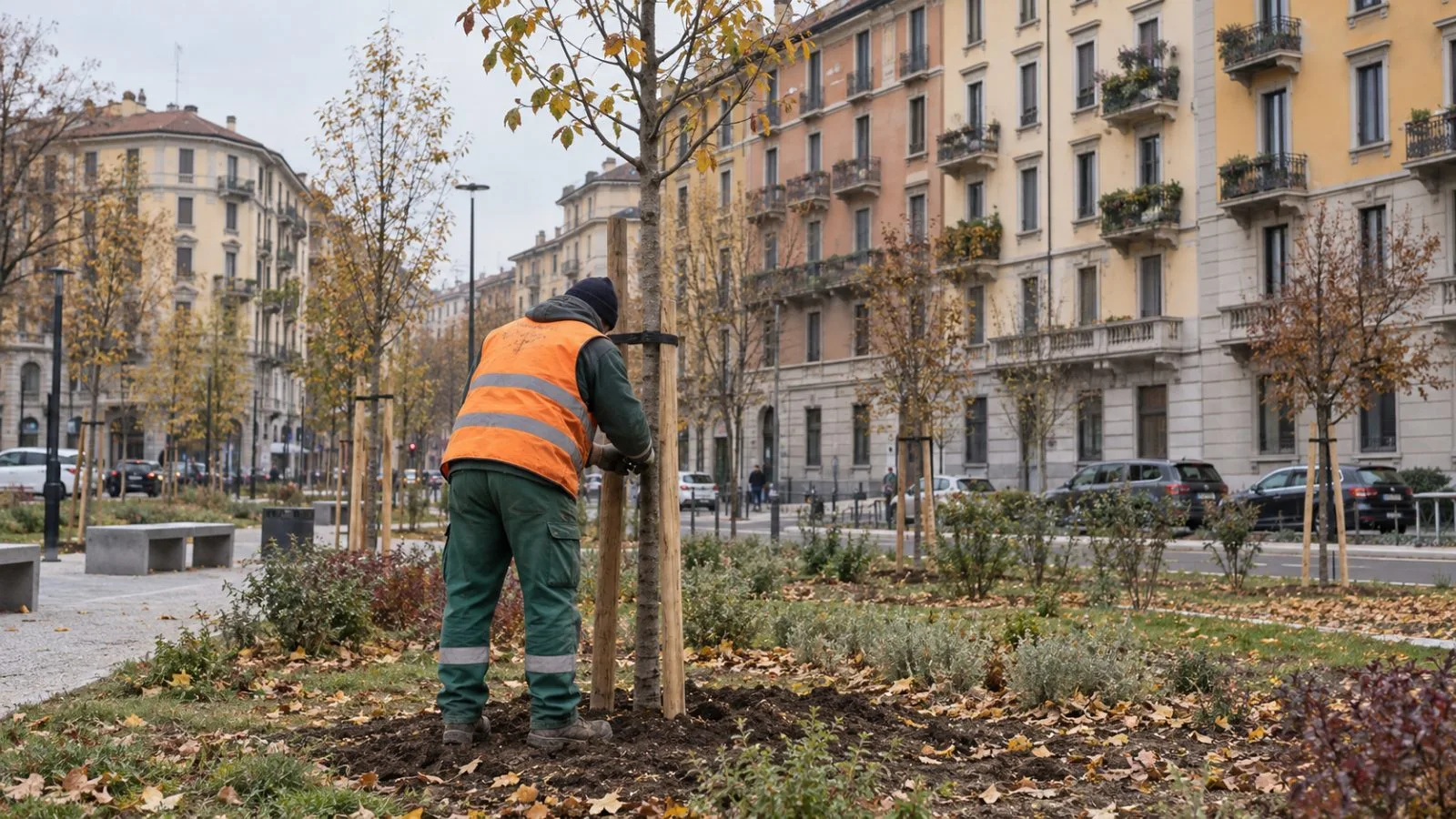
Forestami says it began in 2019 and aims to plant three million trees by 2030 across Milan’s metropolitan area. Its website, last updated in April 2024, lists 611,459 trees and shrubs planted since the 2018-19 agricultural season, 58 planting interventions, 38 hectares of green space created, managed and maintained, and 10,000 citizens engaged. Euronews reported a later total of nearly 640,000 trees and shrubs.
Euronews also reported that Forestami had restored degraded urban land equivalent to about 350 football pitches. The UNEP announcement did not give an area figure for the Milan project.
Forestami says its overall planting tally combines work by municipalities, agencies, local associations, the project itself and partner projects. Social cooperatives care for Forestami’s direct plantings during their first five years, after which responsibility passes to municipalities or other participating bodies.
The project operates in the Po Valley, where the European Space Agency says geography and weather can trap pollution. IQAir recorded Milan’s PM2.5 concentration at 92 micrograms per cubic meter at 1 a.m. ET Oct. 17, with an air quality index above 170, classified as unhealthy.
Globally, UNEP says restoration is underway across 252 million hectares in 149 countries. Its assessment says annual restoration finance needs to increase from $64 billion to $296 billion by 2030 and estimates the work could generate up to 32 million jobs worldwide by then. UNEP Executive Director Inger Andersen said, “we are still not restoring nature at the scale or speed required.”
Target 2 of the Kunming-Montreal Global Biodiversity Framework calls for at least 30% of areas of degraded terrestrial, inland water, coastal and marine ecosystems to be under effective restoration by 2030.