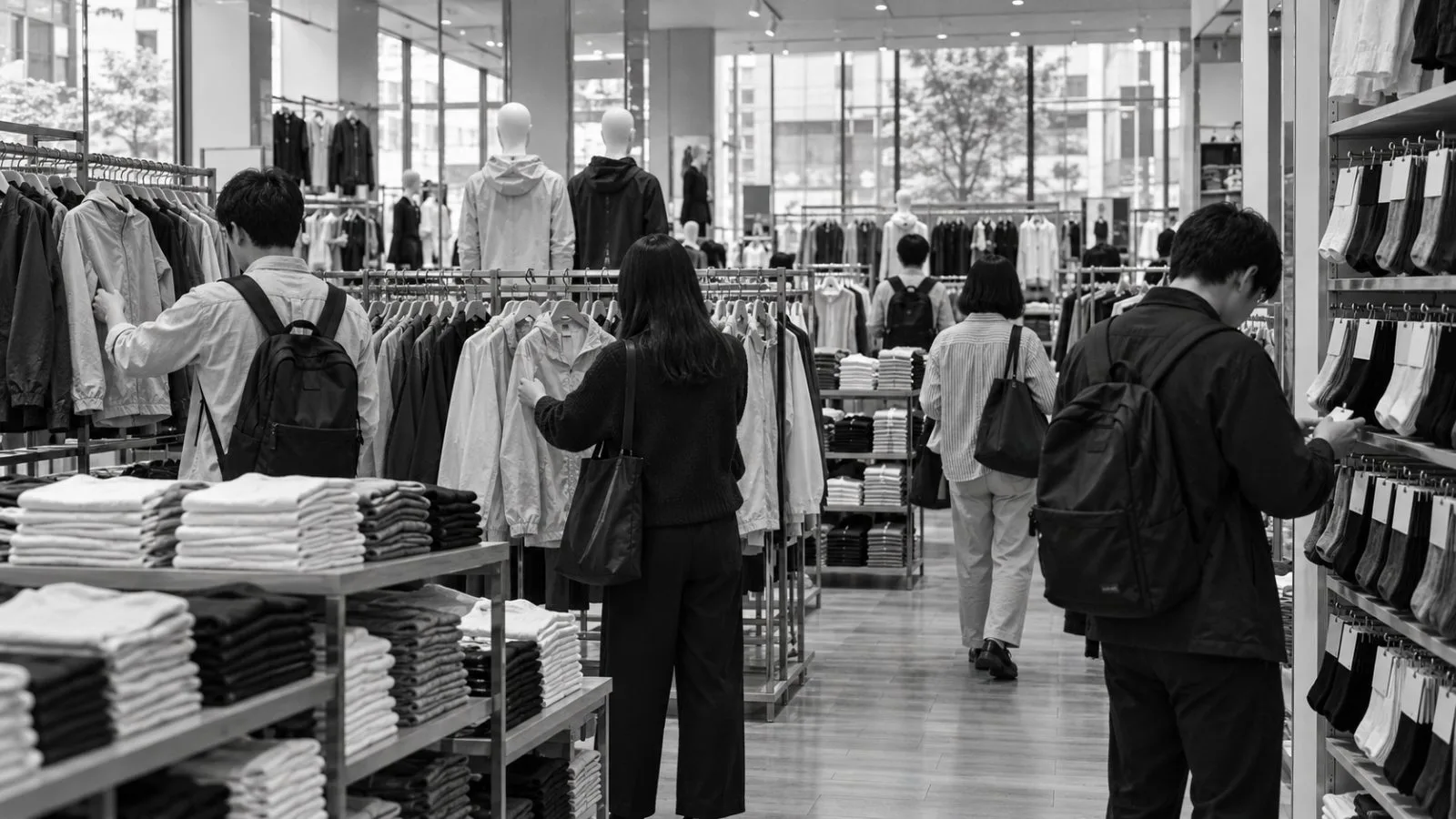
A proposed increase on Uniqlo’s 290-yen socks has become a test of Japanese shoppers’ tolerance for inflation: the retailer reversed the 100-yen rise after online criticism, Bloomberg reported.
Fast Retailing, Uniqlo’s owner and operator, had planned to set the price at 390 yen per pair and end discounts for purchases of three or more pairs. Bloomberg reported that the retailer kept the 290-yen price and multi-pair offers.
The reversal came less than two weeks after Fast Retailing announced wider clothing price increases earlier in October, citing rising input costs. A company spokesperson said, “As socks are an essential everyday item, in Japan we reconsidered our planned price revision.”
Uniqlo’s earlier notice covering 11 products had set Nov. 10 for the changes. It cited raw-material and logistics costs and a weaker yen, with average selling prices expected to rise about 4%, EconoTimes reported.
The sock decision followed September increases on two clothing items and higher shipping and alteration fees. Fast Retailing’s fiscal 2027 outlook also pointed to a slight decline in UNIQLO Japan’s gross margin, while unfavorable yen rates on procurement currency contracts were expected to add costs, according to EconoTimes’ earlier coverage.
Bloomberg reported that online complaints preceded the reversal. Atsushi Takeda, chief economist at Itochu Research Institute, told Bloomberg the move showed the retailer was alert to consumer resistance. He said concern over price rises had reached households above the lower-income group.
Bloomberg also cited Japan’s deflationary past as a reason shoppers had grown used to stable prices. Its account pointed to a 3.2% year-over-year rise in September for a consumer-price measure excluding fresh food and other items, alongside shrinking household spending.
The figures form a difficult backdrop for retailers weighing higher costs against consumer resistance. Bloomberg described companies as trying to recover expenses while judging how much of those costs shoppers would accept.