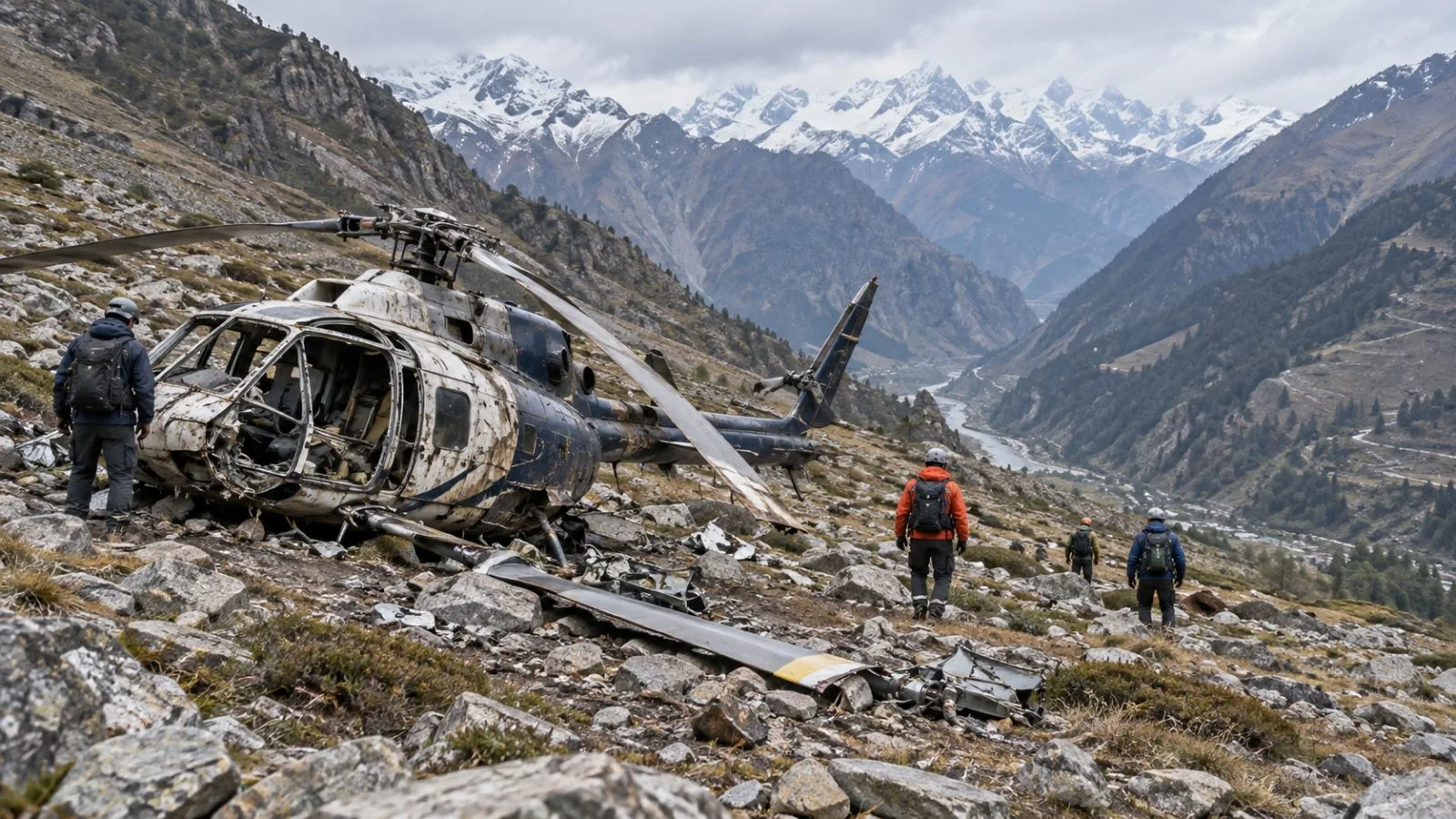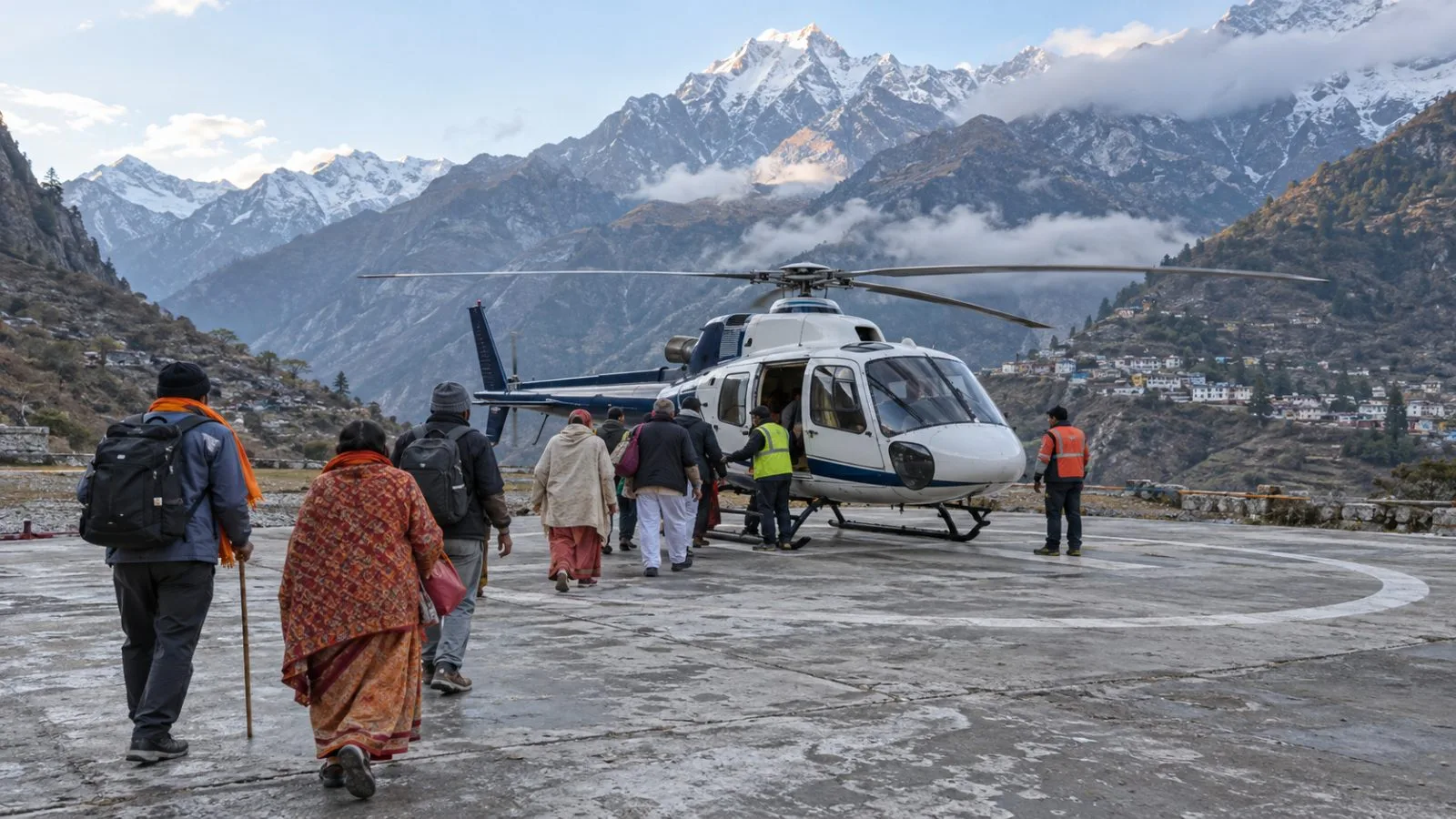
Eleven helicopter charter operators in Uttarakhand proposed suspending Char Dham flights from Nov. 2, saying a new two-pilot requirement would make the service harder to operate at current rates. Their proposal followed an Oct. 30 crash near Joshimath that killed the pilot and five passengers, the Associated Press reported.
The Ministry of Civil Aviation said the Transbharat Aviation Pvt. Ltd. helicopter left Badrinath for Dehradun at 3:44 a.m. ET (1:14 p.m. IST) and crashed near Chai village in Joshimath. One pilot and five passengers were on board. The ministry dispatched a DGCA team to Dehradun to conduct an initial regulatory review and did not give a cause for the crash.
Uttarakhand Civil Aviation Development Authority Chief Executive Officer Prateek Jain told the Press Trust of India that the two-pilot configuration was agreed with DGCA officials and would become mandatory Nov. 2. The New Indian Express reported that a DGCA official said the co-pilot must be qualified for hill flying. Hindustan Times reported that separate instructions require crews to obtain destination and en-route clearance before each flight sector and submit a pilot report after landing.
Business Today and Hindustan Times reported that 11 operators wrote to the DGCA on Oct. 31, proposing to suspend charter services from Nov. 2 while seeking a review. The operators said an additional pilot’s salary, accommodation and logistics costs would exceed what current rates and margins could absorb; they also said passing the full increase to passengers was not commercially feasible and asked for an alternative operating framework.