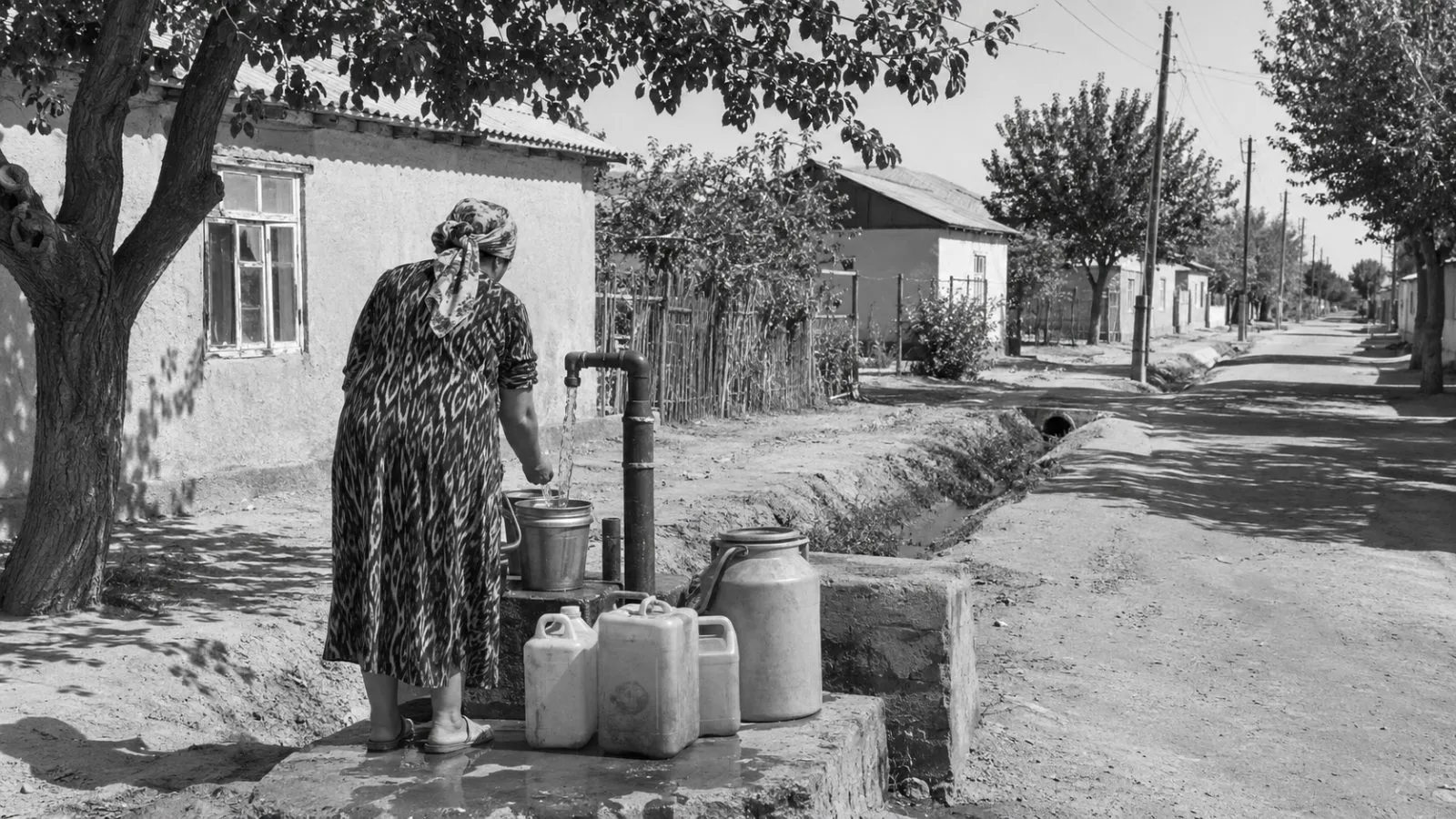
Uzbekistan reported that centralized drinking water reached 83% of its population in July, while a plan to replace 232,000 standpipes with direct household connections highlights the gap between network reach and in-home access.
On July 21, 2026, the government said centralized supply access had risen from 63% in 2017. It reported building or reconstructing 39,000 kilometers of water networks since then. The government also said 7.7 million people received centralized supply for the first time and service improved for 11 million residents.
The release called for replacing 232,000 standpipes with networks connected directly to homes. The 83% figure measures population access to centralized supply, so it should not be read as the share of homes with taps.
The Republic of Karakalpakstan, an autonomous republic in northwestern Uzbekistan, was the focus of a 2018 Asian Development Bank (ADB) project. ADB approved a $145 million loan for work intended to benefit about 388,000 residents. The bank estimated the total project cost at $172.3 million, including a $27.3 million contribution from Uzbekistan. ADB’s baseline said 37% of people in the project area were connected to centralized supply; among connected households, 40% received water for less than six hours a week.
In a Nov. 11, 2025, notice, Karakalpakstan’s legislature said 263 kilometers of pipelines had been laid and a laboratory and pumping stations commissioned in Nukus district. It reported improved water access for more than 31,000 residents and an increase in the district’s level of water supply from 68.4% to 90%. That local measure is distinct from the national population-access figure.
The government has said tariffs do not fully cover service costs and put water losses at 35%, with a goal of reducing them to 25%. The Uzbekistan 2030 strategy sets a target of 83.5% of people having permanent access to drinking water services in 2026 and 90% by 2030. Those targets use a different indicator from the July centralized-supply measure.