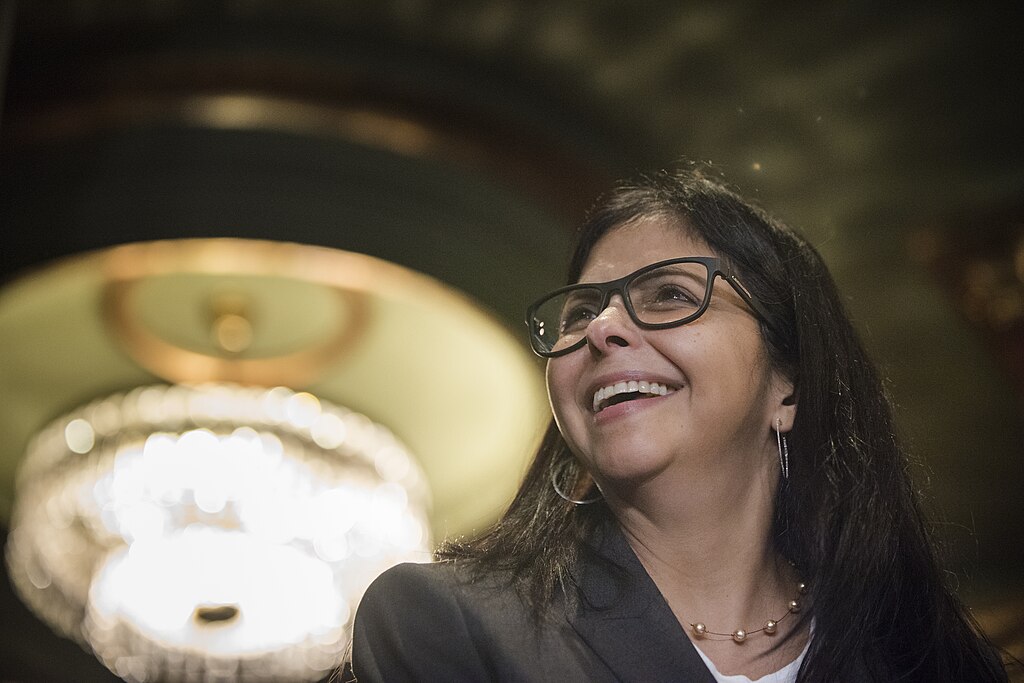
Venezuela’s interim president Delcy Rodríguez announced on Friday a proposed amnesty law aimed at releasing hundreds of prisoners and easing political tensions in the country. Speaking at an event held at the Supreme Court of Justice in Caracas, Rodríguez said the law is intended to help heal the divisions caused by years of political confrontation, violence, and extremism, while promoting justice and peaceful coexistence among Venezuelans.
The proposed amnesty law would apply to cases dating back to 1999 and could impact hundreds of detainees still held in Venezuelan prisons, as well as individuals who have already been conditionally released. However, Rodríguez emphasized that the law would exclude those accused of killings, serious human rights violations, and drug trafficking. The initiative comes amid growing domestic and international pressure over the treatment of political prisoners in the South American nation.
Human rights organization Foro Penal welcomed the announcement with cautious optimism, saying it hopes the law will contribute to justice, freedom, peace, and national reconciliation. The group urged authorities to continue releasing prisoners while the amnesty law is debated and approved. Foro Penal reports that 711 political prisoners remain incarcerated, although it has verified that 303 detainees have been released since the government announced a new wave of releases on January 8.
Families of detainees and rights advocates have long demanded that charges against those considered political prisoners be dropped. Many of the jailed include opposition politicians, journalists, dissident security officials, and human rights activists, often accused of crimes such as terrorism and treason, which relatives describe as arbitrary and unjust.
Rodríguez also announced plans to convert the notorious Helicoide detention center in Caracas into a sports and social services facility. The Helicoide has become a symbol of alleged government repression, with rights groups accusing security forces of abusing detainees there. A 2022 United Nations report claimed prisoners at the facility were subjected to torture, allegations the Venezuelan government has denied. In recent weeks, relatives of detainees have held vigils outside the prison demanding their loved ones’ release.
The announcement follows recent developments in U.S.-Venezuela relations. The U.S. embassy’s X account, inactive since 2019, stated that all U.S. citizens held in Venezuela had been released. Opposition leader and Nobel Peace Prize laureate María Corina Machado said the amnesty proposal was the result of significant pressure from the United States, expressing hope that imprisoned allies would soon reunite with their families.