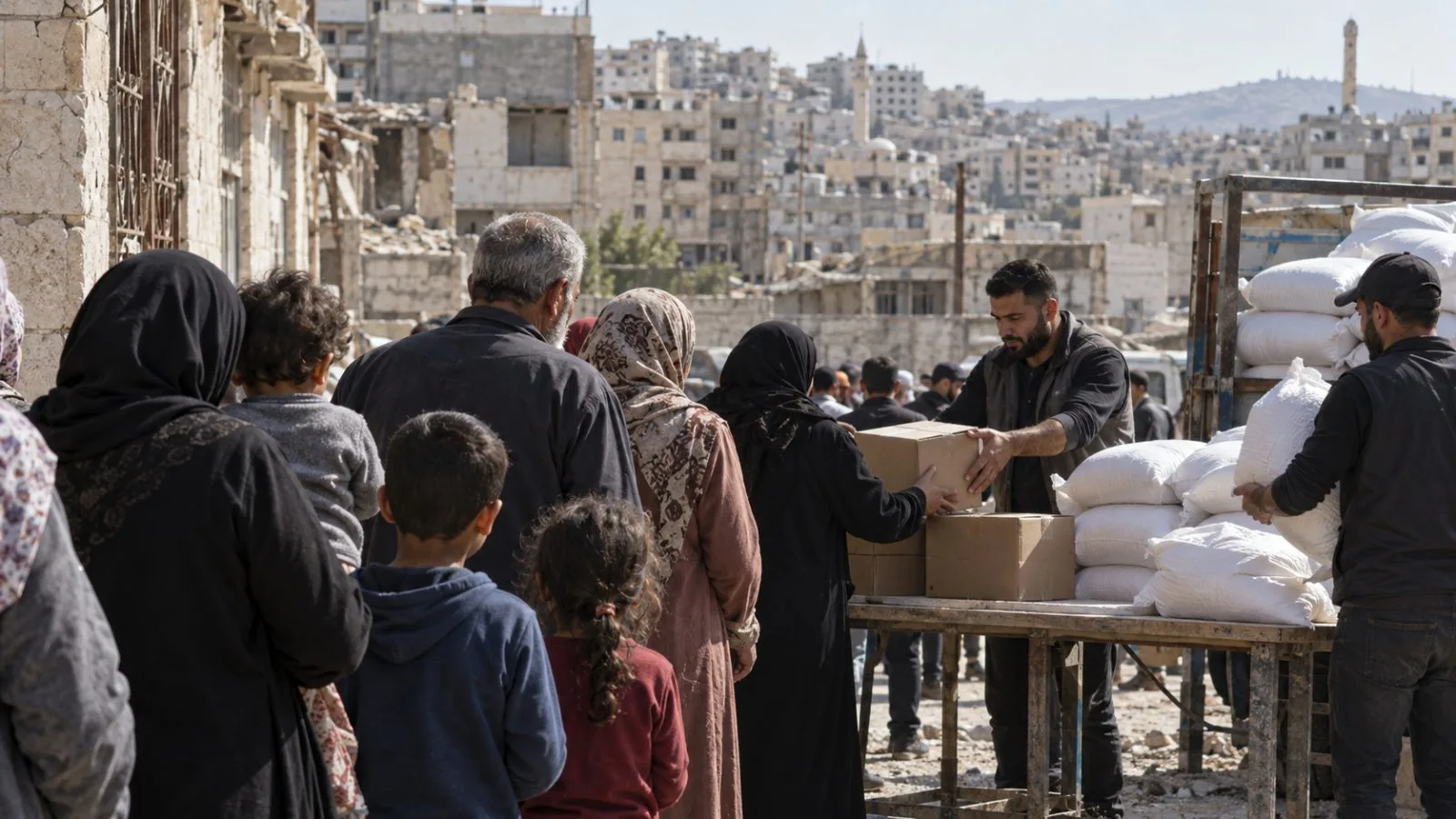
The United Nations World Food Programme (WFP) is removing 500,000 people in Gaza from its monthly assistance rolls as a funding shortfall forces cuts amid widespread food insecurity.
WFP said it will assist 1.1 million people this month, down from 1.6 million in September. Those still receiving food parcels face smaller rations: families get one parcel instead of two, along with less wheat flour. The agency's hot-meal output has fallen from 250,000 to 150,000 meals a day. In some areas that are difficult to reach, families receive meals on alternate days.
An Integrated Food Security Phase Classification (IPC) projection for July through December 2026 puts about 1.4 million people in Gaza at crisis-level food insecurity or worse, including about 200,000 in emergency conditions. WFP said improved humanitarian access and aid deliveries after the October 2025 ceasefire helped ease hunger, but warned that reduced assistance could undo those gains.
WFP said its 2026 funding for Palestine is less than half the level of previous years. It has also reduced cash assistance for 75,000 families. The IPC links households' continuing reliance on aid to damaged livelihoods and exhausted ways of coping.
Funding constraints had already affected meal programs across Gaza. In an earlier count of meals prepared by aid partners, the United Nations Office for the Coordination of Humanitarian Affairs reported about 614,000 cooked meals a day in early October, a decline from late September. That broader, earlier count is separate from WFP's current hot-meal output.
WFP said it can continue supporting bakeries that cover one-third of Gaza's estimated bread needs, providing nutrition assistance to 300,000 women and children, and distributing school snacks to 200,000 children. It is seeking $450 million to maintain critical operations in Gaza and the West Bank through March 2027.