
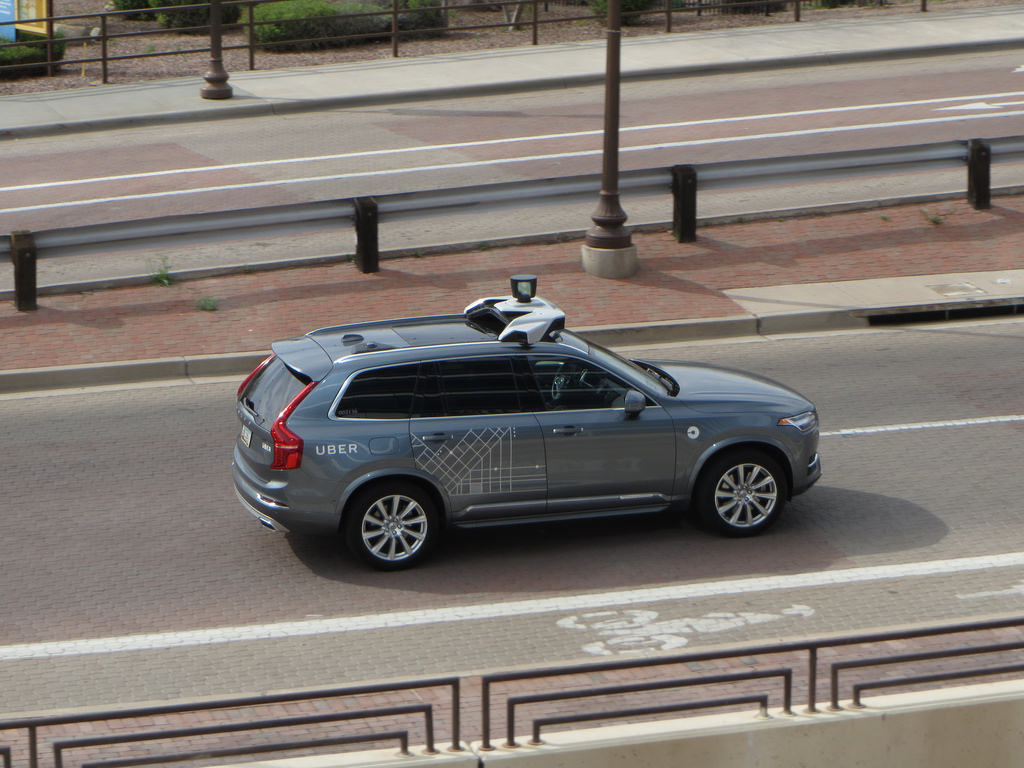
We’re promised a future with driverless cars on our roads, but do people really trust the technology to take us safely on journeys?
New research, published this month in the Journal of Engineering and Technology Management, has found that we may be more willing to trust driverless cars in certain situations, but not so much in other cases.
Driverless cars offer many potential uses. For example, jumping in a driverless car after having a few drinks with friends is an intriguing idea. Getting immersed in the scenery on a road trip is also tempting. But, above all else, we want to reach our destination in one piece.
So our study looked at the underlying factors influencing people’s trust in driverless cars.
It was conducted in South Australia, at the Tonsley innovation precinct that includes a number of large multinational businesses and small businesses as well as a university campus and technical college.
This precinct is also a site for trials for a driverless shuttle to transport people around the precinct and to the nearby bus and train stations.
The study was done prior to the driverless trials to try to better understand the concerns and expectations of passengers and their level of trust in driverless cars. A survey was completed by 100 workers and students. They were also asked about situations when they would be most and least willing to use driverless cars.
It found that the reliability and ability of the driverless car to meet performance expectations is key, particularly in unexpected situations. Security is also important in terms of preventing car hacking and unauthorised remote control. Passengers also needed assurances around privacy such as location tracking.
How much do we trust driverless cars?
On a positive note, the survey indicated there are situations when people are more willing to use driverless cars.
People are most willing to use such cars in closed environments such as university campuses, airports, retirement villages, holiday parks and golf courses. These environments usually involve specific routes and chaperones, which is the typical approach to implementing national safety guidelines.
The research also showed that people are willing to use driverless car features in some circumstances. Finding a place to park in a carpark is one. Using the driverless mode for long road trips in low traffic areas, with the ability for drivers to regain control of the car in busier environments, is appealing.
Some will like to use them as a taxi and people are interested in autonomous buses for public transport with a chaperone.
But people are most unwilling to sit in the driver’s seat of a vehicle with no driver controls (no pedals or steering wheel). People are also hesitant to be passengers in areas with high pedestrian traffic and public transport with no chaperone.
The autonomous future
Driverless vehicles are not limited to consumer cars. Auto-pilot has been long used in aircrafts. As with any technology trajectory, change is constant. Fully automated planes are now in development, although likely to face some passenger opposition.
In the defence sector, in-air, on-land and under-water robotic unmanned vehicles are being developed, promising jobs and manufacturing of the future. Driverless trucks are commonly used in mining and other high risk environments. Fully automated cranes have been created for use in the construction sector. Driverless cars are also being considered for food delivery.
As the autonomous technology develops, more needs to be done to ask the public what they need to feel assured about use of driverless cars.
There are various groups that may benefit from early use. For instance, while the aged and disabled are seen as early users of driverless cars, it is important to understand their concerns and expectations rather than make assumptions on what is best for them.
Driverless cars have an advantage for some people.
Similarly, closed environments such as airports can be associated with another set of situational factors such as time pressures and international safety requirements. Cyber-security and terrorism at airports through hacking of programmable driverless systems needs a deeper probe.
What do consumers really want?
Our research is helpful to car makers interested in offering the next generation of convenience and safety features. For instance, to prevent privacy invasion, privacy protection must be incorporated at the design stage for driverless cars. And this must be communicated to consumers’ satisfaction, so they can establish trust in the technology.
User perceptions should also be monitored and tracked through time. For research and development, and innovation managers, the focus should be on what level of automation is socially acceptable in specific situations and how people’s views evolve. The global race to be leader in driverless car production will certainly push innovation boundaries.
While an exciting journey lies ahead, building trust is a gradual process. Implementation in closed environments is a great start. The use of driverless car features in certain situations may also get an early green light.
 Giselle Rampersad does not work for, consult, own shares in or receive funding from any company or organization that would benefit from this article, and has disclosed no relevant affiliations beyond their academic appointment.


