White evangelical voters still favor Republican House candidates ahead of the Nov. 3 U.S. midterms, while their approval of President Donald Trump has fallen from early 2025, a Pew Research Center survey found.
Pew interviewed 5,062 U.S. adults from Sept. 28 to Oct. 4, including 3,917 registered voters. Among White evangelical registered voters, 73% preferred the Republican candidate for their district’s U.S. House seat and 12% chose the Democratic candidate. Separately, 58% of White evangelical adults approved of Trump’s job performance and 40% disapproved, compared with 78% approval in Jan.-Feb. 2025. White evangelicals were the only religious group in which approval exceeded disapproval.
A separate October measure of Trump support among White evangelicals stood at 63%, down from 77% in January 2025, Reuters reported Oct. 22. Ipsos’ publicly posted topline for its Oct. 16-19 survey of 1,679 adults lists national approval at 31% and disapproval at 66%, but does not include a religious-group breakdown.
PRRI’s 2024 census found that White evangelicals made up 13% of U.S. adults, a share its 2025 census said was unchanged. Pew’s validated-voter analysis found they accounted for 29% of Trump’s 2024 voters. Pew also found that 77% of White evangelical voters backed Trump in 2016, 83% in 2020 and 81% in 2024.
Economic concerns feature prominently in voters’ midterm choices. An Associated Press-NORC Center for Public Affairs Research survey conducted Oct. 8-12 found that 85% considered the economy important to their vote, 84% cited the cost of living and 64% cited the war with Iran.
Robert P. Jones, president of PRRI, told Reuters that some White evangelical voters accept Trump’s personal conduct in exchange for his positions on abortion, LGBTQ rights, immigration and a conservative Christian vision of public life. Jones said those priorities were “more powerful for this group than what they're having to pay at the gas pump.”
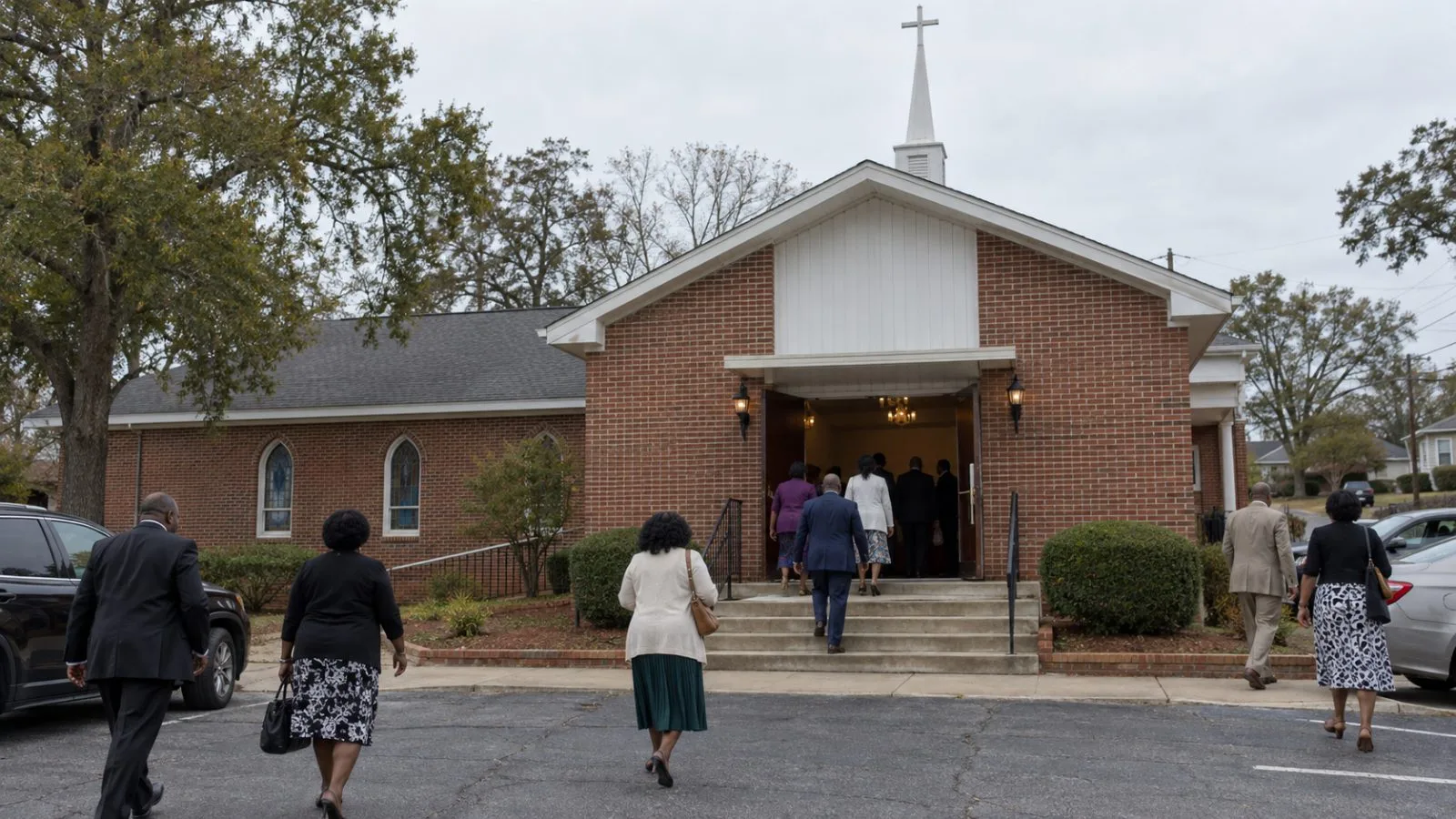
Reuters also interviewed 15 people at two South Carolina churches. Two said they were considering Democratic candidate Annie Andrews, and none said they were abandoning Trump; the interviews were not a representative poll.
Ballots cast Nov. 3 will show how far registered voters’ stated House preferences carry into actual voting.