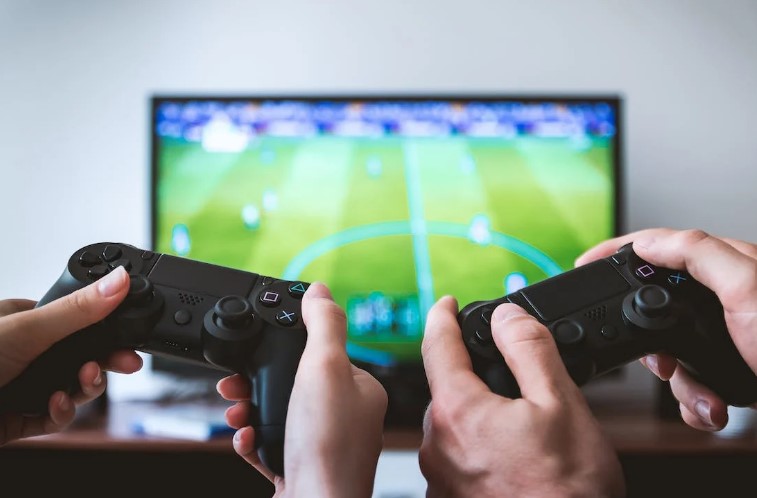
If there is one industry that has changed the most over the past decade, it’s the gaming industry. From the days of Snake on a black and white screen that was the size of a thumb print, to today’s technology driven multi-billion-dollar industry that produces new and innovative products by the day.
One aspect that has fueled this market is the availability of free games. While the latest console titles can leave a giant hole in many people's wallets, free gaming allows many people who may not be able to afford the latest games a chance to experience quality gaming.
Yet, as more and more technology becomes available and at a high cost initially, will the gaming market remain free, or will it become one of the costliest pastimes to have? Let’s explore the future of free gaming below.
What are free to play games?
It seems too good to be true, right? While you’re thinking there must be a catch somewhere, there are in fact, free to play games out there. Sites such as jackpotparty.com offer a variety of free yet high quality games for everyone to access, with a huge choice of classic and new casino games.
Thanks to a high rate of internet use adoption across the world, people are now able to experience games in a different way to the traditional model where you would wait for a title to be released by a gaming company and then que up to buy it or sit with your finger on the enter button ready to make an online purchase and download it from the likes of Origin.
Today, all you need is a high-quality internet connection and you can access quality games from anywhere and at any time. This model is supported by the fact that the gaming world is shifting from an ownership basis to one of innovation and technology.
A great example of a free to play game that you can use anywhere and at any time is Pokémon GO. In it’s peak, over 250 million people a month were using there GPS on their mobile phones to locate Pokémon in their real-world location.
Free to play games have been seen to be popular worldwide. Sites like Clash of Clans and Candy Crush have remained popular with Clash of Clans estimating 76 million users a month from various countries, the highest being the United States. This is due to their constant renewal of content ensuring the game has new gameplay modes. Meanwhile, Candy crush has remained an easy and simple game that increases a user’s dopamine levels due to the constant challenges it presents.
Today, there are many more ways to make money through free games rather than charging people to purchase a copy.
How is the F2P market doing?
The free to play or F2P market is controversial to some, with many companies wondering if it is still worth doing. However, statistics show that the F2P market is the most popular platform for the younger generations, over huge trends like TikTok, YouTube and Facebook.
In fact, statistics suggest that Roblox is the most popular F2P platform, with kids spending an average of 156 minutes on the platform, compared to just 58 on TikTok, 54 on YouTube and 35 on Instagram.
So, how exactly are these platforms so popular? Out of all of the gaming models, P2P or Pay to Play is the most common. However, this model is limited as it is mostly based on PC and console titles, which limits the target audience.
Pay as you go games (where it is free for a while but then you have to pay for more content) is also limited as it is only supported by the small majority who pay for the extra content as most people are there for the free games.
However, F2P games are driven by the ad market which has become more and more powerful as technology has advanced. Traditionally, the ad market was click Baity and annoying, driving players away from the games or causing them to click links which navigated them away from the game. This is a big no no in the marketing world, in which ads are now becoming more advanced and of a higher quality.
As such, many players now enjoy gaming ads, and many people even seek out highly creative and well-made ads to watch on the likes of YouTube.
What is the future of the F2P market?
Today, some of the most popular games like Team Fortress, Counterstrike and Star Wars are all free to play titles. There are a couple of aspects to the F2P gaming model that means it has a high chance of making it into the future. Let’s take a look at some of these below.
They grab a wider audience
The reality is that many more people are likely to play a free game than they are to play a P2P game. As such, free titles get a bigger reputation much faster than traditional games that you have to pay for.
F2P games have higher revenues
How, you ask? Last year, three of the top-grossing dozen games on Steam were free-to-play: Destiny 2, DotA 2, and CS: GO. They even outperformed the most popular and highest grossing P2P game - CoD - Modern Warfare, which made $1.9 billion.
Thanks to advanced and innovative ads that are driven by a new kind of advertising strategy. F2P games have the power to captivate and win the favor of a much larger audience across the globe.
Overall, while it seems to make no sense that the F2P market would be making a lot of money, the fact is it is outperforming the P2P market. Based on gaming and consumer behaviors across the globe, in line with the statistics mentioned above, it seems that the F2P market will be here for many years to come.
This article does not necessarily reflect the opinions of the editors or management of EconoTimes