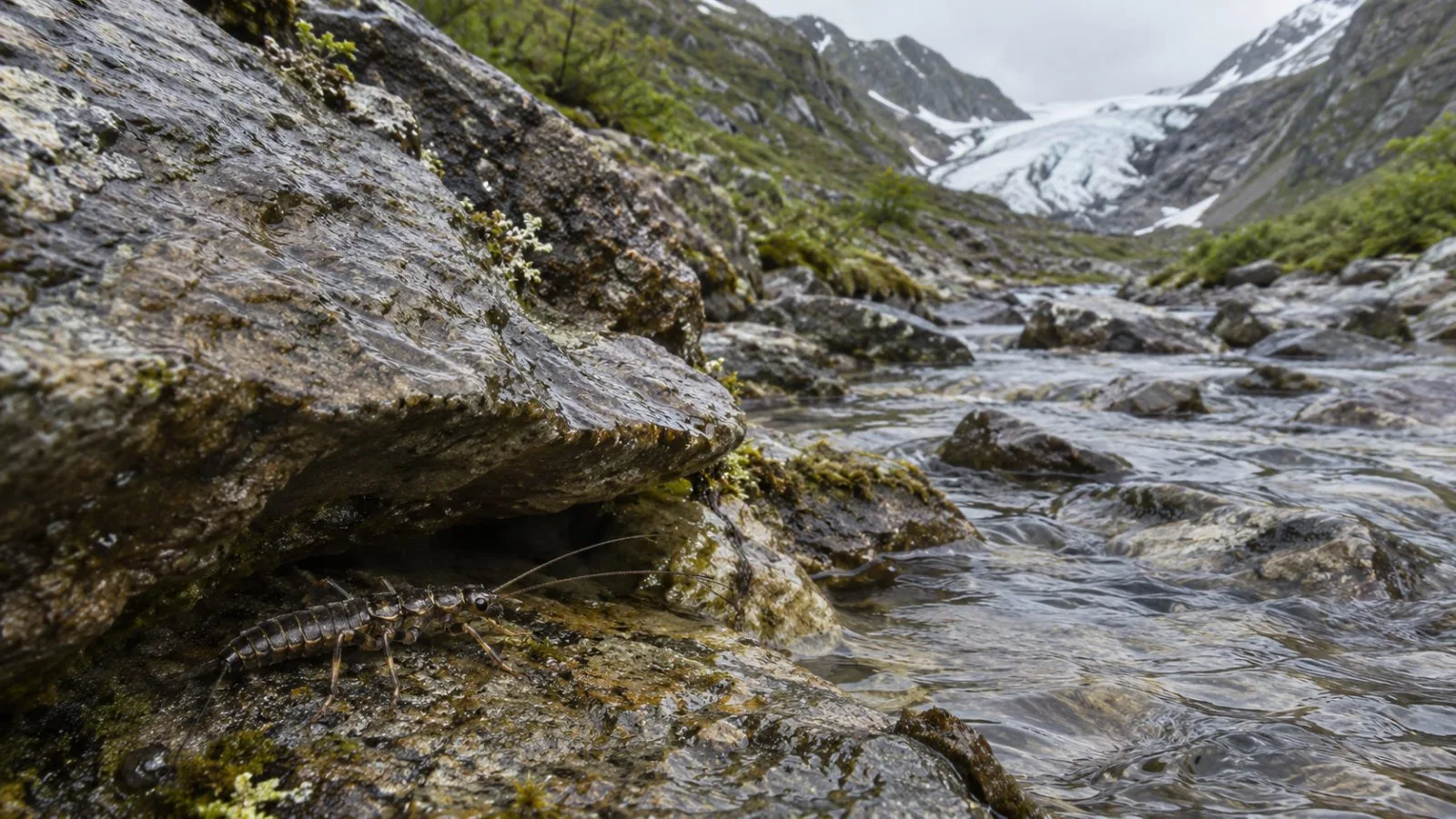
Researchers found a wingless stonefly beside a shrinking glacier remnant on Chile’s Navarino Island, where ice contracted over 16 years, according to a study published in Ecology in November 2026.
The insect belongs to the Gripopterygidae family and was observed at about 780 meters above sea level in the Los Bronces valley. It could not be matched to a recognized species, and its formal classification is still in progress, the Cape Horn International Center said.
Adults measured 15 to 18 millimeters and were found beneath damp, shaded rocks less than a meter from the water. Younger stages were also observed near the ice, though the findings do not establish where the insect completes its life cycle.
To assess changes in the ice, researchers used outlines from January 2010, the 2022 glacier inventory and January 2026. The center reported contraction across the period and pointed to photographs showing pronounced ice loss during the 2025-26 summer.
The insect’s range and conservation status have not been determined. Its lack of wings limits its ability to move to other sites, the center said, but researchers have not quantified its extinction risk or established whether it is confined to the Navarino glacier remnant.
The search began with a different target: Andiperla willinki, which the center identifies as the only known insect whose full life cycle takes place on Patagonian glacier ice. Javier Rendoll-Cárcamo led the study.