American Eagle Outfitters, a U.S. retailer, faces supply-chain scrutiny after workers in Pakistan and Bangladesh told NPR of low pay, heat and demanding targets; no factory was linked to Sydney Sweeney’s campaign jeans.
The company announced its Fall 2025 denim campaign with Sweeney on July 23, 2025. NPR’s investigation drew on interviews with roughly 20 workers at five factories during the spring and summer. The workers used initials, NPR said, because they feared retaliation at work.
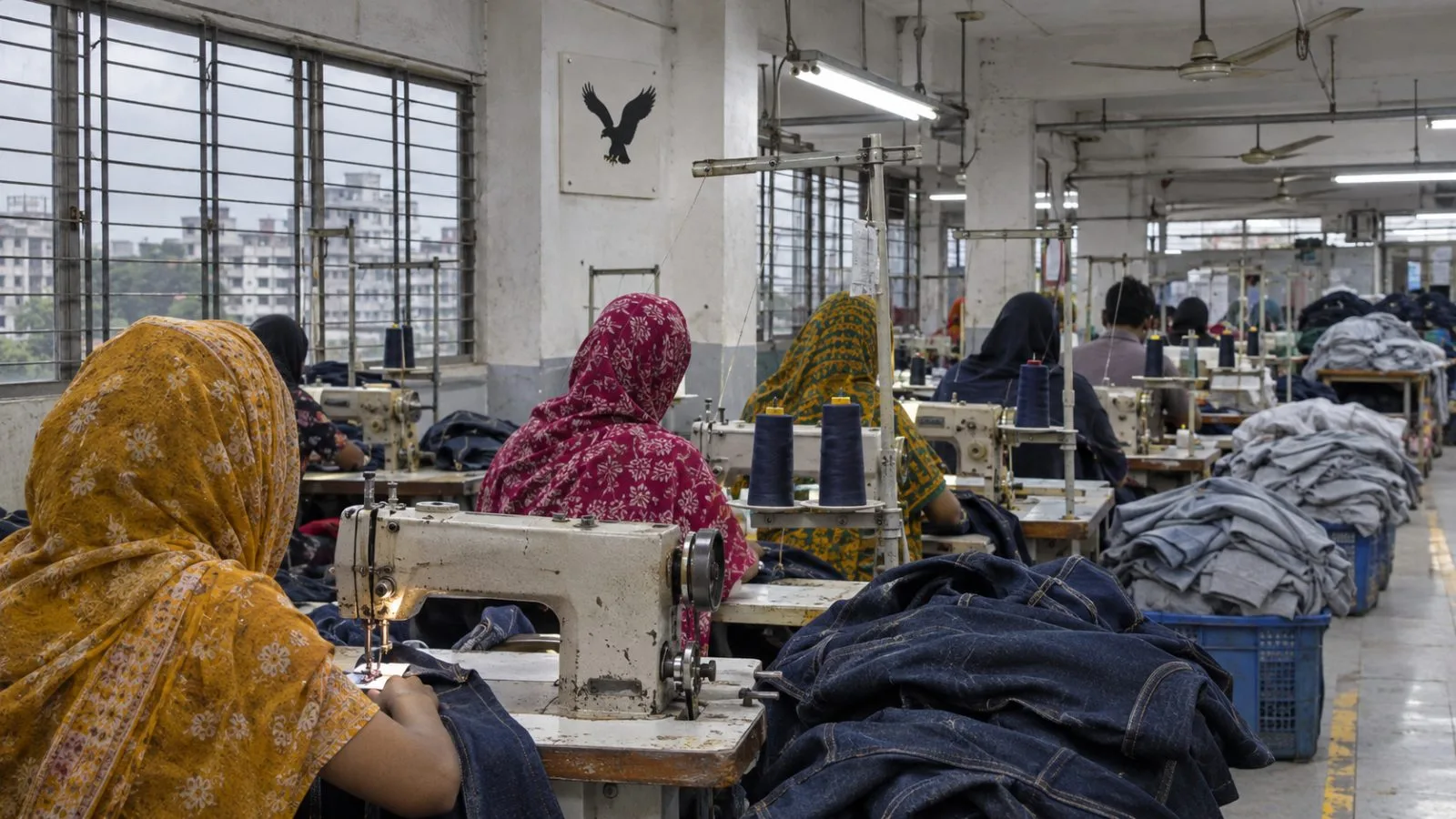
One worker, identified as S., told NPR she had worked on lines producing American Eagle items and thought some campaign denim looked familiar. She worked at a factory operated by Artistic Garment Industries, which confirmed to NPR that it makes clothing for the retailer. The report did not establish that the factory produced Sweeney’s jeans.
S. said she earned about $144 a month, inspected 1,000 to 1,600 garments a day and had fainted three times in 2026. “We are helpless,” she told NPR. Artistic Garment Industries rejected the account that it pushed out workers who complained. The company said workers could use its complaints process and that it checked temperatures at its factories. American Eagle said it treated the reported concerns seriously and reaffirmed its commitment to workers’ health, safety and rights.
A second worker, identified as R., told NPR she earned $140 a month and worked six days weekly for at least 12 hours a day. Her reported stitching target was 150 pieces per hour. NPR said MBM, the company operating her factory, did not respond to its questions.
American Eagle says it does not own or operate factories. Its manufacturers run more than 300 facilities in over 20 countries, and the retailer says its supplier code draws on International Labour Organization conventions and the Universal Declaration of Human Rights. NPR cited experts who said large orders, tight deadlines and narrow margins can intensify pressure on suppliers and workers.
Research by Cornell University’s Global Labor Institute found that factory heat stress in its Dhaka-region study exceeded outdoor levels during a seven-month period in 2025. Researchers estimated heat stress cost one participating factory the equivalent of 4.1% of annual revenue; cooling investments could pay for themselves in one to four years. The study does not establish conditions at the factories NPR described.
International Accord meeting minutes from September 2025 record an agreement to develop a heat-stress protocol. The Associated Press reported Oct. 21, 2026, that heat-stress protocols remained under review and were not yet in effect. As of Oct. 31, the Accord’s Bangladesh program covered 248 brands and retailers, 2.8 million workers and 1,772 factories.