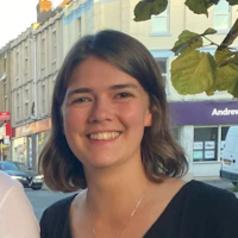
PhD Candidate, Cardiff University During my BSc in Zoology at Cardiff University, on a placement year I conducted a research project studying the habitat use of Samango monkeys in relation to their food availability, first sparking an interest in a career in research. For my dissertation I used genetics to assess the success of translocations of the critically endangered Bojer's skinks among the islands surrounding Mauritius, which was published in Conservation Genetics shortly after I graduated in 2017. In 2018 I started a Masters by Research at the University of Bristol looking at plant plasticity and roots under environmental stress, of two altitude-specific ragwort species found on Mt Etna, Sicily. I submitted this thesis and successfully defended it May 2020. In October 2019 I returned to Cardiff to begin a PhD with the Cardiff University Otter Project and Molecular Ecology groups, using the newly sequenced otter reference genome and samples from the otter archive to study the demographic history of populations within the UK. During the pandemic I begun learning the skills required for population genomics, and initiated the collborations from which I have developed our range-wide whole genome dataset of 63 samples. During my PhD I have spent time working at the Smithsonian's National Zoo and Conservation Biology Institute with one of my supervisors, Dr Klaus-Peter Koepfli, thanks to a Welsh Government Researcher Mobility Grant. I have also spent three months working at the Centre of Evolutionary Hologenomics, at the GLOBE Institute in Copenhagen with Prof Tom Gilbert learning about ancient and historic DNA lab and bioinformatic methods, thanks to an EMBO Scientific Exchange Grant.
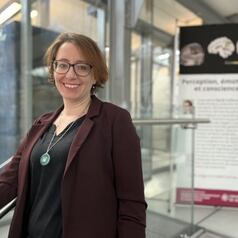
Senior Lecturer at the School of Biosciences, Cardiff University My research focuses on freshwater aquatic systems, particularly the Eurasian otter and British amphibians. I head the Cardiff University Otter Project (CUOP), a research and monitoring project run collaboratively with the Environment Agency. Using the otter as a model species, we address fundamental questions about freshwater systems and population biology. For example, molecular genetic analysis is used to explore the influence of landscape on population connectivity, and to allow epidemiological modelling of recently introduced biliary parasites; stable isotope analysis is applied to investigate nutrient cycling, and volatile analysis of gland material is used to investigate scent communication. Research in amphibian ecology focuses particularly on phenology and climate change, and the effect of environmental cues on behaviour.
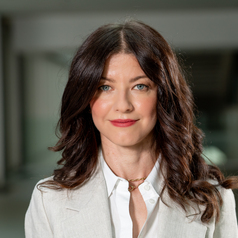
Senior Lecturer in Evolutionary Biology, Cardiff University I am an evolutionary biologist working at the interface of genomics, molecular ecology and conservation biology. I am part of the Cardiff University Otter Project (@Otter_Project on Twitter), where we study otters in the UK and beyond. We are using a diversity of scientific approaches, for example studying their exposure to environmental contaminants, antimicrobial resistance and their population structuring. I also work on a range of projects on seabirds, part of a wonderful group of storm petrel biologists (@CUStormies on Twitter). Much of my work has to do with organisms living water, and hence our Cardfiff University Water Research Institute provides great opportunities for interactions. I serve as Reviews/Associate Editor for the journal 'Heredity' and as Associate Editor for 'Animal Conservation'. Please feel free to get in touch if you're interested in submitting to these journals. During 2016-2020, I served on a time-limited post as Committee Member on the board of the 'Genetics Society UK', representing Population and Evolutionary Genetics.
Lecturer in Digital Methods, The University of Edinburgh My research sits at the intersection of Criminology and Science and Technology Studies, drawing theory and methods from both. I study how digital infrastructures become sites where power of different kinds is exerted. Using qualitative, computational, and statistical approaches, my research falls into three strands. The first involves large-scale ethnographic studies of digital infrastructure, such as my research on the Tor network (the subject of a book with MIT Press: https://mitpress.mit.edu/9780262548182/tor/). The second focuses on how digital technologies and infrastructures become used for crime and resistance, drawing on a mix of ethnographic and AI/'data science' approaches to study large qualitative and quantitative datasets. The third looks at digital infrastructure and state power, including in-depth studies and evaluations of law enforcement interventions (such as FBI takedowns) and a recent project looking at the use of digital influence campaigns by law enforcement and government to shape the behaviour and culture of the public and achieve preventative policy goals. I draw on a range of theoretical perspectives in my work, most prominently Stuart Hall's cultural studies scholarship and Susan Leigh Star's approach to studying the social worlds of digital infrastructure.
Senior Researcher in Environmental and Climate Change Psychology, Universität Wien I am currently a senior researcher at the University of Vienna in the Social Cognitive and Affective Sciences Unit. With more than seven years of experience, my research broadly combines elements of neuroscience, environmental and social psychology, big team science and the behavioural sciences to investigate various societal issues. This includes encouraging COVID-19 compliance behaviours, battling the spread of misinformation, combating (political) polarisation, and, most importantly, understanding and promoting climate change mitigation. This line of research is highly interdisciplinary, combining techniques and methodologies from many disciplines, and includes many collaborations with academics from all over the planet.
Associate Professor, Marketing and Social Science, Bocconi University I am a social scientist and Associate Professor of Marketing at Bocconi University in Milan, Italy. I conduct interdisciplinary, empirical research that investigates adoption of artificial intelligence as a tool for social good, with direct applications for companies, law, and policy. A secondary area of research looks at the determinants of positive behavior change and the drivers of sustainability and climate action. I am the recipient of the 2023 MSI Young Scholar award, the 2022 Journal of Consumer Research Best Article Award and the 2021-22 American Marketing Association Research in Practice Best Article Award. I completed a Ph.D. in marketing at New York University’s Stern School of Business. I also hold a M.S. from Bocconi University, a M.A. in Psychology from New York University, and a M. Phil. in Marketing from New York University’s Stern School of Business.