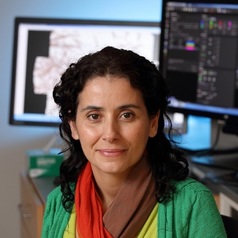
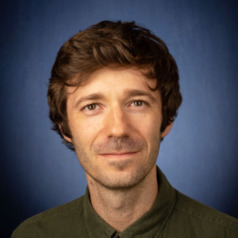
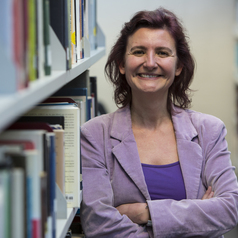
Associate Professor of Biology and Cell Biology, University of Virginia Through evolutionary history the human genome was optimized to promote survival in environments where food is mostly scarce. These survivor-genomes clash with an environment where calorie-rich foods are readily available. Based on the premise that the genes networks that allow animals to endure starvation are under strong selective pressure and consequently conserved, we use a combination of cutting-edge functional genomics, biochemical, cell biology, genetic, and physiological approaches to identify and characterize the conserved gene networks that allow the animal model Caenorhabditis elegans to adapt to changes in food availability. Ultimately, our research would contribute to better understanding of how dysfunctional gene networks affect or cause obesity, diabetes, and cardiovascular disease, and accelerate aging.
Clinical Associate Professor of Nursing, Purdue University I have over 15 years at the bedside and in hospital leadership positions as an RN in the Southwest and Midwest United States. I am a Robert Wood Johnson Foundation Nursing and Health Policy Fellow and completed my PhD in the RWJF nursing and health policy collaborative at the University of New Mexico. My current research focuses on how community coalitions address substance use and the meaningful use of technology in healthcare. The latter includes the development of software solutions and Narcan delivery drones.
Professor of Environment and Sustainability, University of Michigan Joshua Newell is a professor in the School for Environment and Sustainability at the University of Michigan. He is a broadly trained human-environment geographer, whose research focuses on questions related to urban sustainability, resource consumption, and environmental and social justice. Newell’s current research can be divided into two primary areas of interest. The first, Urban Infrastructure and Form, focuses on structural features of the urban form (e.g. built environment, transport, energy, and water infrastructure). The second research area, Urban Consumption and Commodities, focuses on the interrelationships between the consumption of consumer products, our responsibilities as global 'green' urban citizens, and the role of governance mechanisms and frameworks (including local institutions) in regulating product consumption. His research approach is often multi-scalar and integrative and, in addition to theory and method found in geography and urban planning, he draws upon principles and tools of industrial ecology, and spatial analysis. He teaches Sustainability and Society, a large undergraduate course, and Urban Sustainability, which is designed for MS and PhD students. He also leads a year-long interdisciplinary PhD student workshop that grapples with theories and concepts of urbanism, sustainability, and resilience.
Assistant Professor of Sustainable Systems, University of Michigan Benjamin Goldstein, Ph.D, is Assistant Professor of Environment and Sustainability and head of the Sustainable Urban-Rural Futures (SURF) lab. The SURF Lab (www.surf-lab.ca) studies and emphasizes urban sustainability at multiple scales. Through his work at the SURF Lab, Benjamin helps understand how urban processes and urban form drive the consumption of materials and energy in cities and produce environmental change inside and outside cities. He develops methods and tools to quantify the scale of these changes and the locations where they occur using life cycle assessment, input-output analysis, geospatial data, and approaches from data science. Benjamin is particularly interested in combining quantitative methods with theory rooted in social science to explore multiple dimensions of sustainability and address issues of distributive justice. His topical foci include urban food systems (esp. urban agriculture), agri-commodities, residual resource engineering, global supply chains, sustainable production and consumption, and energy systems.
Ph.D. Candidate in Resource Policy and Behavior, University of Michigan Jason “Jake” Hawes is a PhD candidate in the School for Environment and Sustainability. Prior to joining the University of Michigan, Jake received a BS in Environmental and Ecological Engineering and an MS in Natural Resources Social Science, both from Purdue University. His previous work centered on coupled natural-human systems of water and water governance, including disaster recovery, adaptation to water scarcity, and community-scale WASH development. At SEAS, Jake is a member of the Urban Sustainability Research Group with Dr. Joshua Newell, studying adaptation in food-energy-water systems. Specifically, his dissertation couples geography-grounded lenses like political-industrial ecology with tools from engineering and spatial sciences to study the role of urban agriculture in future cities.
Professor of Economics, University of Greenwich Özlem Onaran is Professor of Economics at the University of Greenwich. She is the director of the Greenwich Political Economy Research Centre and Co-Director of the Institute of Political Economy, Governance, Finance and Accountability. She has done extensive research on issues of inequality, wage-led growth, employment, globalization, gender, and crises. She has directed research projects for Rebuilding Macroeconomics/ESRC, the International Labour Organisation, UNCTAD, ITUC, the Institute for New Economic Thinking, the Foundation of European Progressive Studies, the Vienna Chamber of Labour, the Austrian Science Foundation, and Unions21. She is member of the Scientific Committee of the Foundation of European Progressive Studies, Scientific Advisory Board of Hans Boeckler Foundation, and the Policy Advisory Group of the Women's Budget Group. She has more than seventy articles in books and peer reviewed journals such as Cambridge Journal of Economics, World Development, Feminist Economics, Environment and Planning A, Public Choice, Economic Inquiry, European Journal of Industrial Relations, International Review of Applied Economics, Structural Change and Economic Dynamics, Eastern European Economics, and Review of Political Economy. Before joining the University of Greenwich in 2012, Özlem has worked at several universities including the University of Westminster, the University of Applied Sciences-Berlin, Vienna University of Economics and Business, and Istanbul Technical University.