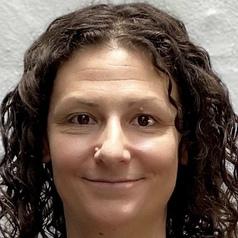
Professor of Global Conflict and Development at The University of Sydney; Non-Resident Fellow at the Sana'a Center for Strategic Studies, University of Sydney Sarah G. Phillips is Professor of Global Conflict and Development at the University of Sydney, a Future Fellow with the Australian Research Council, and a Non-Resident Fellow at the Sana'a Centre for Strategic Studies (Yemen). Her research draws from years of in-depth fieldwork (particularly in Yemen, Somaliland, Iraq, Kenya, and Jordan), and focuses on international intervention in the global South, knowledge production about conflict-affected states, authoritarianism, and critical terrorism studies. She lived in Yemen for nearly four years, and has published two books and many articles on its politics, the latest of which is "Trivializing Terrorists: How Counterterrorism Knowledge Undermines Local Resistance to Terrorism” (with Nadwa al-Dawsari), Security Studies (Open Access, 2023): https://www.tandfonline.com/doi/full/10.1080/09636412.2023.2250253?src= Sarah's most recent book, "When There Was No Aid: War and Peace in Somaliland", was awarded the Australian Political Science Association’s biennial Crisp Prize for the best scholarly political science book (2018-20). It was also listed as a ‘Best Book of 2020’ by Foreign Affairs, and a ‘Book of the Year' (2020) by Australian Book Review, and was shortlisted for both the Conflict Research Society’s 'Book of the Year Prize' (2021), and the African Studies Association’s 'Bethwell A. Ogot Book Prize' (2021).
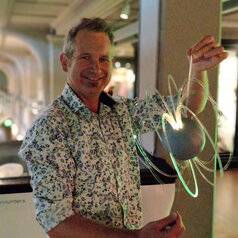
Professor in Science Communication and Astrobiology, UNSW Sydney I research and teach evidence-based science communication in the School of Biological, Earth and Environmental Sciences at the University of New South Wales, where I also teach astrobiology.
Professor of Human Resources and Organizational Behaviour, University of Saskatchewan Dr. Schmidt’s research is focussed on understanding how strategy, human resource management, and leadership interact to influence employee behaviours and firm performance. He also studies the precursors of group effectiveness and the multilevel influences of group processes on individual and team outcomes. He has published research in a number of practitioner publications and scholarly journals including Personnel Psychology, Psychological Bulletin, Journal of Organizational Behavior, and Journal of Business and Psychology. Prior to joining the Edwards School of Business in 2011, Dr. Schmidt worked in the Vancouver office for the global consulting firm Hay Group, specializing in talent management, performance management, and compensation. He worked in Human Resources for an engineering consulting firm in Calgary before pursuing graduate studies. He also completed a variety of consulting projects for clients in both the public and private sectors as a graduate student.
Professor of Astrophysics, University of Manchester My primary research interests are radio pulsars, neutron stars and rapid radio transients. I am a member of the European Pulsar Timing Array (EPTA) and international Pulsar Tming Array (IPTA) projects which are attempting to use precision timing of radio pulsars to detect gravitational waves which have a freqeuncy in the nano-Hz regime. These waves are thought to have been generated by processes in the early universe, either inflation, cosmic strings or binary supermassive blackholes have been proposed. I lead an ERC funded project called MeerTRAP which searches for radio transienst, including pulsars and Fast Radio Bursts, with MeerKAT. It operates commensally on many of the observations being undertaken with the Square Kilometer Array (SKA) radio telescope pathfinder called MeerKAT. It has the capability to detect and localise FRBs over a range of redshifts. I am also co-PI of the pulsars and fast transient project TRAPUM which also runs on MeerKAT. It is revealing hundreds of new pulsars in many different environments from globula clusters to our nearest neighbour galaxies. I am also co-PI of the transients key science project of LOFAR and the head of the pulsar science working group for the same telescope. LOFAR is the LOw Frequency ARray which is a very large radio telescope working at frequencies between 10 and 240 MHz. It is the most sensitive telescope ever built at these frequencies and wass the first of the next generation of radio telescopes which uses large numbers of small elements. As well as using these next generation telescopes I am also involved in the specification and building/wirting software for the pulsar and fast transient search capabilities of the SKA itself which will be the world's largest telescope.