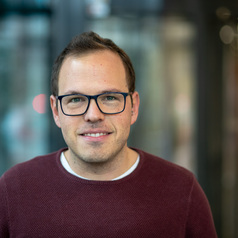
Scientist, Helmholtz Centre for Environmental Research-UFZ Eric Carmona Martinez is a postdoctoral researcher in the Department of Biological & Environmental Sciences, University of Gothenburg, Sweden. He joined Gothenburg in 2023 from the the Department of Effect-Directed Analysis where he had worked since 2019 as a postdoc on the Kleingewässermonitoring (KgM) project analysing data on water pollution using different software. Eric has a bachelor's degree in environmental sciences and a master’s degree in environmental toxicology from the Faculty of Biology, University of Valencia. He did several internships at the Research Centre for Desertification and the Public Health Research Centre. Eric got a PhD in chemistry, also from the University of Valencia. His thesis entitled “Pollutants of emerging concern in the environment. Turia River as study case” was carried out at the food and environmental research group of the University of Valencia and the Spanish National Research Council. During his PhD Eric was working at the TrAMS group of the University of Athens and the Aquatic Ecotox group at the University of Eastern Finland. He published several papers (ResearchGate) with high impact and participated in different projects such as Mefturia, SCARCE-Consolider and Eco2Tools.
Associate Professor, Department of Biological and Environmental Sciences, University of Gothenburg Professor, researcher, ecotoxicology and zoophysiology ► RESEARCH My research focuses on the environmental effects of plastics and plastic-associated chemicals, using different species of fish for study. I use biochemical and physiological methodologies to understand how exposure to microplastics, plastic additives, and environmental chemicals affect fish via different exposure routes. I am specifically interested in oxidative stress mechanisms and their importance following exposure to toxic substances. My research group is included in the environmental science focus area at the Dept of Biological and Environmental Sciences. Other research projects in which I am involved address usage and spread of plastics in society and the environment, as well as consequences of exposure to plastics and associated chemicals. • Weeding out the toxins from recycled plastics • The plastic pollution challenge: a global social-ecological perspective • Limnoplast • Less Space for Plastic RESEARCH CENTERS • CeCar – The Center for Collective Action Research I also work within CeCar, an interdisciplinary project aimed at solving environmental problems by inducing large-scale changes in society. Focus here lies in communication with the general public, industry, and policy makers and addressing problems associated with plastic consumption and possible paths towards mitigating problems. • FRAM – Future Chemical Risk Assessment and Management Strategies I also work with other experts within the FRAM project addressing risk assessment of chemicals and chemical mixtures used in plastic projects and relevant chemical legislation. ► TEACHING and ADVISING As an associate professor at the university, a portion of my time is dedicated to undergraduate and Master’s level courses. I am the course leader for an introductory course in the form and function of organisms as well as an interdisciplinary introductory course in environmental science. I also teach ecotoxicology with focus on physiological effects and biochemical toxicity. In addition, I teach a course for vocational teachers aiming to include issues of sustainable development into their programs. I am also active as an advisor for PhD candidates and Master’s students, guiding them in their independent research projects. This research is often connected to ongoing research projects within my group.
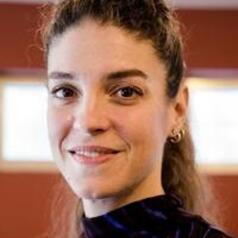
Associate Professor, Global Development, University of East Anglia Anna Macdonald is an associate professor in global development at the University of East Anglia and a senior visiting fellow at the Firoz Lalji Institute for Africa at the LSE. Anna is currently co-investigator on the ESRC-funded Centre for Public Authority and International Development (CPAID), which conducts interdisciplinary research to strengthen knowledge about how governance functions in impoverished and marginalised places across the world. She is co-editor of Humanitarianism: A Dictionary of Concepts (Routledge 2018) and her research has most recently been published in Africa, Development and Change, the International Journal of Transitional Justice, the Journal of Refugee Studies, African Affairs, and Law and Society Review.
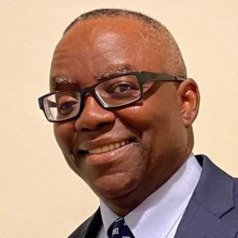
Professor of Structural Engineering, Drexel University Dr. Abieyuwa Aghayere is a Professor of Civil, Architectural and Environmental Engineering whose research focuses on structural design - concrete, steel and wood, structural failure analysis, retrofitting of existing structures, new structural systems and materials, engineering education. Dr. Aghayere has been cited as a structural failure analysis expert on CNN, CTV News and Voice of America regarding the collapse of the Champlain Towers South condominium in Surfside, Florida. He has been featured in numerous articles in the Miami Herald, The New York Times, USA Today and The Wall Street Journal. His contributions regarding the Surfside condominium collapse have been included media stories and coverage that earned a team of reporters at the Miami Herald the 2022 Pulitzer Prize in the Breaking News category. He has been featured on podcasts and in documentaries on The Discovery Channel, The BBC, and The Smithsonian Channel discussing the Surfside condominium collapse, and has delivered several invited lectures on the collapse, notably to the National Institute of Standards and Technology (NIST) - the federal agency charged with investigating the Surfside condominium collapse.
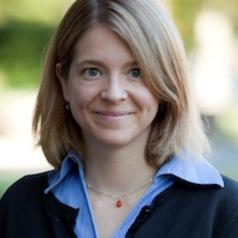
Lecturer in Ecosystem Science and Policy, University of Miami Julia Wester is a lecturer and Associate Director of the undergraduate program in Ecosystem Science and Policy. She completed her master’s at Oxford in conservation biology and management before working on state policy as a legislative aide in the Florida Senate. She then completed her Ph.D. at the Abess Center studying how emotions and norms shape attitudes toward water recycling and related policy development. She has collaborated on projects funded by the Save Our Seas Foundation and National Geographic Explorer to study human-wildlife interactions in south Florida and the southern Caribbean. Her current research focuses on stakeholder engagement and local policy, mostly around Miami and Biscayne Bay.
Associate Professor of Government and Legal Studies, Bowdoin College I specialize in contemporary Russian politics, in particular NGOs, social movements, and state-society relations in Russia. Much of my work has been focused on environmental and natural resource issues.