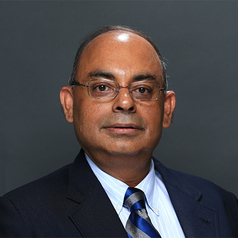
Professor of Electrical and Computer Engineering, University of Dayton Dr. Banerjee is a Professor of Electrical and Computer Engineering and the Director of Holography and Metamaterials Laboratory at the University of Dayton. Dr. Banerjee's research interests include digital and dynamic holography, metamaterials, photorefractives and acousto-optics.
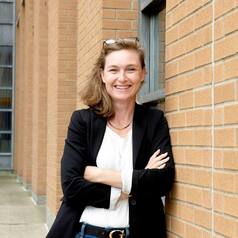
Professor of Criminal Law, University of Birmingham Professor John Child specialises in criminal law, doctrine and theory, and the relationship between criminal law and neuroscience. John co-authors two leading criminal law textbooks: Simester and Sullivan’s Criminal Law and Smith, Hogan and Ormerod’s Essentials of Criminal Law. John is also the founder and co-Director of the Criminal Law Reform Now Network. Launched in 2017, its mission is to facilitate collaboration between academics and other legal experts to gather and disseminate comprehensible proposals for criminal law reform to the wider community. We include members of the public and mainstream media as well as legal professionals, police, policymakers and politicians. Our proposals might require legislation but we do not restrict ourselves to such projects. Reforms which public bodies such as the Home Office, Police or CPS can bring about by internal policies interest us, as do reforms which require the support of some of the judiciary, bearing in mind the proper judicial constraints on law making. We are ready to consult with and make suggestions to anyone who has the power to bring about reform.
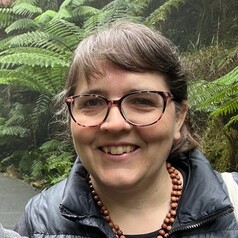
NHMRC Emerging Leadership Fellow, School of Exercise and Nutrition Sciences, Deakin University Dr Rebecca Leech is a Registered Nutritionist (RNutr.) and Nutritional Epidemiologist. She has a PhD in Nutritional Epidemiology, and in 2018, was awarded an Alfred Deakin Medal for her doctoral thesis, which examined adults’ eating patterns and their relationships with overall diet quality and markers of cardiometabolic health. Eating patterns describe the timing, frequency, and food content of eating occasions, which includes meals and snacks. Her current research applies novel analysis techniques and assessment methods to understand the contextual determinants of eating patterns. Rebecca's research intends to inform the development of strategies for healthy eating that are context-specific and tailored to everyday situations. Since the award of her PhD in 2018 Rebecca has held three consecutive fellowships and has received over $673k in research funding (National Heart Foundation; National Health & Medical Research Council) as lead investigator. In 2019, she was a Finalist for the Premier's Award for Health and Medical Research (Public Health Category). Between 2018 and 2021 she was the Chair of Student Mentoring for the Nutrition Society of Australia. Rebecca also has a master's degree in clinical epidemiology and was a secondary teacher of German and Science before pursuing a career in nutrition research.
Professeure en biochimie des interactions hôte-virus, Université de Montréal Nathalie Grandvaux, Ph.D est professeure titulaire au département de biochimie et médecine moléculaire et chercheure au Centre de recherche du CHUM depuis 2005. Depuis 2020, elle est directrice adjointe scientifique - affaires étudiantes et postdoctorales au CRCHUM. Elle détient un diplôme d'ingénieur en biochimie de l‘Institut National des Sciences Appliquées de Lyon, France (1996) et un doctorat en Biologie Moléculaire et Cellulaire à l'Université Joseph Fourier de Grenoble, France (1999). Après un stage postdoctoral à l’Université McGill (2000-2004) où elle se spécialise dans l’étude des interactions hôte-virus, elle rejoint l’Université de Montréal et le CRCHUM comme chercheure indépendante. Les travaux de son groupe visent à élucider l’impact des interactions initiales entre un virus et son hôte – en portant une attention particulière sur la réponse interféron et le métabolisme redox – sur l’évolution d’une infection. Ces études s’inscrivent dans un effort global d’identifier des cibles pour le développement de nouveaux traitements antiviraux à large spectre ciblant des mécanismes cellulaires. Ses travaux ont également des applications possibles pour des traitements transformateurs pour toute une gamme de maladies autoimmunes et inflammatoires, incluant des maladies rares comme les interferonopathies. Ses travaux de recherche, financés par les IRSC, CRSNG, et FRQS et soutenues par des fonds d’infrastructure de la FCI, Elle est coauteur de 78 publications révisées par les pairs citées plus de 7700 fois. Elle est régulièrement invitée à donner des conférences au Canada et à l'étranger. Elle est également très régulièrement sollicitée comme examinateur des programmes de subvention et comme membre de plusieurs comités aviseurs. Elle a présidé le comité « système respiratoire » des IRSC et est actuellement membre du comité consultatif de l’institut III des IRSC. Elle est co-fondatrice et de la Société Canadienne pour la Virologie, un organisme sans but lucratif visant à promouvoir l'avancement de l'éducation, la diffusion et l'application des connaissances liées à la Virologie, dont elle a assuré la présidence jusqu’en 2020. Suite à la déclaration de la pandémie de la COVID-19, elle a co-fondé et co-dirigé le Réseau Québécois COVID-Pandémie à la demande des FRQ. Elle est également adjointe au pilier stratégies et thérapeutiques antivirales du réseau CoVarr-Net pour l’études des variants du SRAS-CoV-2. Elle est rapidement devenue une des porte-parole de la communauté scientifique dans la lutte contre le SRAS-CoV-2 avec de nombreuses apparitions dans les médias dans lesquels elle défend les informations fondées sur les données probantes.
Assistant Professor of Sociology, MacEwan University I am a tenured professor (currently Assistant level) of Sociology. I received my PhD from the University of British Columbia. Thus far I have published 13 peer-review articles in well-regarded journals, such as Social Science & Medicine, Health & Place, and the International Journal of Comparative Sociology. My research focuses on the political determinants of health, most recently on cancer risk especially. However, it has become clear that the economy is an essential consideration when connecting politics to health.Population health is an essential measure of how well societies are doing, but a bigger picture is needed for a more complete understanding of how societies can create the best health. My research portfolio is among the minority that explore all three fundamental areas - politics, economy, AND population health.