Research Fellow, Department of Politics, University of Liverpool Dr Colin Irwin was born in England where he grew up on the south coast attending school and art college in Bournemouth. As Scientific Officer of the British Sub-Aqua Club he salvaged a Bronze Age craft from Poole Harbour in 1964 and lived in the first underwater house with an artificial atmosphere in 1965. In 1968 he worked as a diving instructor in the Red Sea but turned his attention to the Canadian Arctic in the 1970s where he sailed the North West Passage, crossed Arctic North America by dog team and voyaged from Scotland to Iceland, Greenland and Hudson’s Bay. In 1978 he was awarded the Royal Cruising Club Medal for Seamanship. He received his joint Masters Degree in Anthropology, Religious Studies and Philosophy from the University of Manitoba in 1981 with a thesis on Inuit ethics and a Doctorate in Social Science from Syracuse University in 1984 with a dissertation on the nature of human conflict and how the Inuit developed a culture and society without war. After working for Canadian Native organisations he produced the report ‘Lords of the Arctic: Wards of the State’ which led to a Royal Commission on the state of Canada’s First People and an Inuit land claim settlement that established the Territory of Nunavut. With the support of a Canadian Government fellowship he based himself at Queen’s University Belfast in 1989 to complete a comparative study of the systems of segregated education in Northern Ireland and Israel and the role of integrated schools in conflict resolution. This led him to take a series of Human Rights complaints against the British Government to UNESCO and the UN that established the rights of children to attend integrated schools. He was the principal investigator on the ‘Peace Building and Public Policy in Northern Ireland’ project funded by the Joseph Rowntree Charitable Trust and in support of the negotiations of the Belfast Agreement he conducted nine public opinion polls in collaboration with the political parties elected to the Stormont Talks. This work is reviewed in his book, ‘The People’s Peace Process in Northern Ireland’ published by Palgrave MacMillan in 2002. With funding from various NGOs, the British and Canadian Governments and Royal Norwegian Ministry of Foreign Affairs he has extended his work around the world to include the Balkans, Middle East and Asia completing ‘peace polls’ in Macedonia in 2002, Bosnia and Herzegovina 2004, Serbia and Kosovo 2005, UK Muslims in 2006, Kashmir 2007, Israel and Palestine 2008, Sri Lanka 2009/10 and Syria 2014 and Cyprus 2016/17. This work is reviewed in his book ‘The People’s Peace – Pax Populi, Pax Dei’ published in 2012. Colin Irwin is a member of the World Association of Public Opinion Research. As an expert on public opinion, public diplomacy and peace processes he has advised the UN Department of Peace Keeping Operations (DPKO) on their procedures and best practice; lectured in the US, UK, Europe, Middle East and Asia and authored over 100 articles, papers, and books on these topics. As a Research Fellow in the Department of Politics at the University of Liverpool he is presently developing a perceptions based ‘People’s Peace Index’ to globalise and mainstream his ‘peace polls’ methods in all peace processes with research published on his website at: http://www.peacepolls.org Experience
Professor of Human Computer Interaction, Stockholm University Professor Barry Brown is a research Professor at Stockholm University and a Professor at the University of Copenhagen, within the HCC group. At Stockholm he helps to run the STIR group – Stockholm technology and interaction research group. His two most recent books have been published by Sage and MIT Press, focusing on how to research the use of digital technology, and the study and design of leisure technologies. His research has been covered in the international press including the Guardian, Time, New York Times, Sydney Morning Herald, Voice of America and Fortune Magazine.
Directeur de recherche CNRS émérite, biogéochimie territoriale, Sorbonne Université Gilles Billen a effectué le début de sa carrière à l’Université Libre de Bruxelles, où il a dirigé le Groupe de Microbiologie des Milieux Aquatiques pendant 15 ans. Il a été pendant toute cette période très actif dans le domaine de la modélisation des processus microbiens en zones estuarienne et marine, en relation avec les cycles du carbone et des nutriments. Après son intégration au CNRS, il a été le directeur du Programme Interdisciplinaire de recherché sur l’environnement de la Seine (PIREN-Seine). Ses recherches ont été alors centrées sur le développement d’outils de modélisation permettant de faire le lien entre l’activité humaine dans les bassins versant et la qualité de l’eau dans les réseaux hydrographiques, principalement sur la Seine mais aussi sur l’Escaut, la Moselle, la Loire, le Danube, le Fleuve Rouge (Nord Vietnam) et la Nam Kahn (Laos), dans le cadre de plusieurs programmes européens et de coopération. Plus récemment, le champ de ses travaux s’est élargi à l’étude des relations entre la demande alimentaire urbaine et l’agriculture des territoires qui les nourrissent, avec l’introduction du concept de foodprint et de bassin alimentaire. L’élaboration de scénarios alternatifs de relocalisation de l’approvisionnement alimentaire des villes et de conversion de l’agriculture à des modes de production plus respectueux de l’environnement est au cœur de ses recherches actuelles.
Chercheuse postdoctorale, Institut du Cerveau (ICM) Née en Turquie, j'ai déménagé en France pour poursuivre mes études supérieures. J'ai obtenu une double licence en sciences cognitives et en psychologie à l'Université de Lyon 2. Par la suite, j'ai été admise à l'École Normale Supérieure de Paris, où j'ai complété un master de recherche en sciences cognitives. J'ai poursuivi ma carrière académique en effectuant ma thèse à l'Institut du Cerveau, me spécialisant dans les domaines de la conscience et du sommeil. À l'heure actuelle, je travaille en tant que chercheuse postdoctorale à l'Institut du Cerveau, continuant ainsi mes recherches dans le domaine de la neuroscience cognitive.
Assistant Professor of Natural Resource Economics, University of Wisconsin-Madison Jennifer Raynor is an Assistant Professor of Natural Resource Economics at the University of Wisconsin-Madison. Before entering academia, she conducted policy-relevant economic research for the U.S. federal government for nearly a decade, most recently at National Oceanic and Atmospheric Administration Fisheries. Her research focuses on improving the efficiency and sustainability of fisheries and wildlife management, primarily using methods from economics, data science, and remote sensing. She strives to inform the legislative decision-making process and works closely with state and federal resource managers to design and evaluate conservation policies. Jennifer serves on the Board of Trustees for Global Fishing Watch, and her research has appeared in top journals such as Science and The Proceedings of the National Academy of Sciences. Her work has also been featured in major national and international news outlets, such as The Atlantic, The Associated Press, The Washington Post, The Economist, National Geographic, Scientific American, and Smithsonian Magazine.
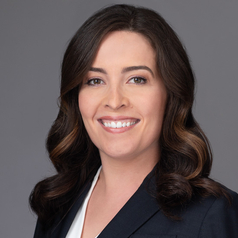
Associate Dean for Research, Professor and Endowed Chair of Rural Safety and Health, University of Iowa In her work, Rohlman, Associate Professor in the Department of Occupational and Environmental Health at the University of Iowa College of Public Health, has collaborated with researchers from Brazil, Thailand, the Philippines and elsewhere. One of those collaborations has taken her to Egypt, to examine the health effects of organophosphorus pesticides on young Egyptian field workers. Rohlman received both her master’s and Ph.D in experimental psychology from Bowling Green State University in Ohio. Her early research examined the impact of low-level occupational exposure to organophosphorus pesticides in adult and adolescent farm workers in Oregon. Young workers are less likely to recognize hazards, be less aware of their legal rights and more reluctant to speak up regarding safety, putting them at increased risk for occupational injuries. They also often engage in behaviors that may increase their risk of injury, such as sleep deprivation, substance use and distracted work behaviors. Her research was later extended to examine environmental pesticide exposure among children living in agricultural communities. Since many chemicals can attack the brain and nervous system, having methods to assess memory, attention and learning can be used to identify early deficits. While she has been actively involved in research on five continents and more than 10 countries, Rohlman, who served as director of the Agricultural Safety and Health Training Program in the UI’s Heartland Center for Occupational Health and Safety, also offers training closer to home. The center provides graduate training programs in Industrial Hygiene, Occupational Medicine, Ergonomics, Occupational Epidemiology, Occupational Injury Prevention, and Agricultural Safety and Health. Rohlman also serves as the Director of the UI’s Healthier Workforce Center for Excellence, a NIOSH Total Worker Health Center of Excellence. The Center focuses on promotion of safety, health, and well-being among working populations. She has mentored undergraduate, graduate and postdoctoral trainees.