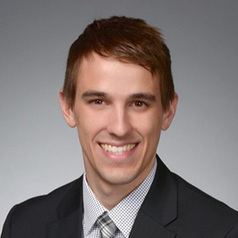
Assistant Professor of Radiation and Cellular Oncology, University of Chicago Mark Korpics is a radiation oncologist whose research interests include using radiomics, imaging analysis, combination stereotactic body radiotherapy and immunotherapy, and population-based studies to improve cancer treatments. His work has been published in the International Journal of Radiation Oncology, Biology, Physics, Cancer, Head and Neck, Journal of Applied Clinical Medical Physics, and Nature Communications. Korpics completed his undergraduate studies at New York University with a BS in physics and a minor in chemistry and philosophy. He subsequently attended medical school at Loyola University Chicago Stritch School of Medicine, and completed his internship at Resurrection Medical Center and a radiation oncology residency at the University of Chicago. During his residency, he received an MS in public health sciences from the University of Chicago.
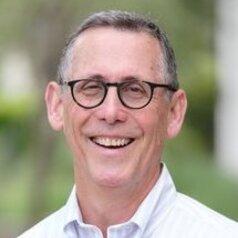
Assistant Professor of Radiation and Cellular Oncology, University of Chicago Behzad Ebrahimi is a faculty member, researcher, and a clinical physicist, specialized in medical imaging and radiation therapy. His research is dedicated to understanding the dynamics of cancer, using statistical analysis of imaging data to explore patterns in pathological markers. By bridging the gap between medical imaging research and radiation therapy, Ebrahimi's work contributes to enhancing the accuracy and effectiveness of cancer treatments. Ebrahimi holds degrees in both Physics and Biomedical Engineering. His academic journey included postdoctoral research at Mayo Clinic and Harvard Medical School's MGH, where he concentrated on physiological and functional imaging. He also completed a Medical Physics - Radiation Therapy residency at the University of Miami and has been a faculty member in the Department of Radiation and Cellular Oncology and the graduate program in Medical Physics at the University of Chicago since 2019.
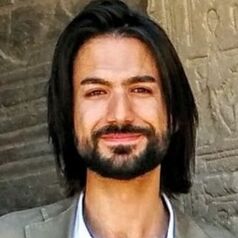
Professor and Chair, History Department: Director of the African-American Studies Program, University of Montana Tobin Miller Shearer is the Director of the African-American Studies Program at UM and an Professor and Chair of History. He conducts research into the history of race and religion in the United States with a particular emphasis on prayer, the civil rights movement, and white identity. His classes include "Black: From Africa to Hip-Hop," "Voodoo, Muslim, Church: Black Religion," and "The Black Radical Tradition."
Lecturer in History, California Institute of Technology Dan Lewis is the full-time Dibner Senior Curator for the History of Science & Technology at the Huntington Library in San Marino, California. He is a writer and an environmental historian who has taught at Claremont Graduate University as an Associate Research Professor, and at USC in both the Organismic Biology and History departments. He also teaches at NYU Abu Dhabi every January, offering a course on birds in endangered ecosystems. Lewis is the author of four books and the co-author of another. His most recent book, on twelve species of trees from around the world, is forthcoming from Simon & Schuster in the Spring of 2024. He has held post-docs at at Oxford, the Smithsonian, the Rachel Carson Center in Munich, and elsewhere. Lewis also served as Chief Curator of Manuscripts for the Huntington for six years. His permanent exhibition Beautiful Science: Ideas that Changed the World was named as the best exhibition in America by the American Association of Museums the year after it opened. Lewis won an Emmy in 2020, as a producer for KCET's "Women in Aerospace" program. He is also a Commissioner for the IUCN's Species Survival Commission, as a Bird Red List Authority member, 2021–2025.
Executive Director, Fraunhofer IME Stefan Schillberg mainly investigates Recombinant DNA, Antibody, Biotechnology, Molecular biology and Biochemistry. The various areas that Stefan Schillberg examines in his Recombinant DNA study include Proteases, Plant cell and Transgene. His Antibody research includes elements of Genetically modified crops, Microbiology and Virology. His studies deal with areas such as Downstream processing and Suspension culture as well as Biotechnology. His Molecular biology study also includes fields such as Nicotiana tabacum and related Cell culture, Protein A most often made with reference to Affinity chromatography. When carried out as part of a general Biochemistry research project, his work on Enzyme, Ornithine decarboxylase, Nucleic acid and Putrescine is frequently linked to work in Glycolate dehydrogenase, therefore connecting diverse disciplines of study. He most often published in these fields: Recombinant DNA (27.23%) Antibody (26.29%) Biotechnology (24.41%)
Assistant Professor in Smart and Sustainable Urbanism, Trinity College Dublin Federico Cugurullo is Assistant Professor in Smart and Sustainable Urbanism at Trinity College Dublin. His research is positioned at the intersection of urban geography, political philosophy and experimental urbanism, and explores how ideas of sustainability are cultivated and implemented, with a focus on projects for smart and eco-cities. He is currently researching how artificial intelligence (AI) is impacting on urban governance and planning, thereby influencing the sustainability of cities. Federico has done extensive empirical research in the Middle East and Southeast Asia where he has investigated the sustainability performance of supposedly experimental cities such as Masdar City in Abu Dhabi and Hong Kong. His work has been used by the United Nations and the United Kingdom's Department for Environment, Food & Rural Affairs (DEFRA) to foresee future urban challenges and develop preventive policies. Building upon his empirical research on AI, Federico has contributed to the development of the theory of autonomous urbanism. Other theoretical contributions include the concept of urban eco-modernisation, the notion of urban artificial intelligence, the development of urban equations and the critical theory of Frankenstein Urbanism. Before joining Trinity College Dublin, Federico held positions at the University of Manchester, King's College London and the London School of Economics and Political Science.