Professor of Psychology, University of Washington Over the last few years my laboratory has been focusing on the effects of long term visual deprivation on human visual processing. Long term visual deprivation results in deficits in high level visual processing (such as face and object recognition) that cannot be explained by low level amblyopic deficits, and suggest that the role of visual experience differs widely across different types of processing. As well as characterizing the behavioral effects of deprivation, we have been examining the neural effects, using functional magnetic resonance imaging.
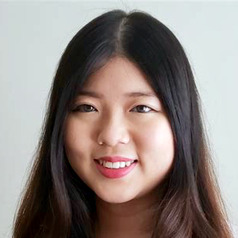
Assistant Professor of School Psychology, University of Tennessee Dr. Shum is a Licensed Psychologist and a Nationally Certified School Psychologist (NCSP). After receiving her Bachelor of Arts (BA) degree in Psychology from the University of Wisconsin-Madison, Dr. Shum completed her graduate training in the School Psychology program at the University of South Florida (USF). Post doctoral graduation, she directed and assisted with multiple nationally funded grants at the USF School Mental Health Collaborative Center focusing on school-based mental health. Currently, she is an assistant professor in the University of Tennessee-Knoxville’s School Psychology program. Her research interests include social-emotional assessment and interventions in the schools, positive psychology, motivational interviewing, social justice and cultural humility, as well as school-based coaching and professional development. Dr. Shum is passionate about sharing research findings and evidence-based strategies and has extensive presentation experiences across various conferences and professional development settings.
Professor of Architecture, Penn State Ute Poerschke, professor and associate department head for graduate education, teaches architectural design and technical systems integration/comprehensive studio. Prior to her tenure at Penn State, she taught design, construction, and environmentally responsible architecture at the Technical Universities of Berlin and Munich (1999–2005) and completed her doctoral degree in architectural theory at the Technical University of Cottbus in 2005. She is a licensed architect and licensed urban planner in Germany, an international member of the American Institute of Architects, and a LEED-accredited professional. Poerschke is a principal of the firm Friedrich-Poerschke-Zwink Architekten | Stadtplaner in Munich, Germany, and co-editor of the architectural journal Wolkenkuckucksheim | Cloud-Cuckoo-Land. Poerschke’s research focuses on the relationship of architecture and technology, the theory of functionalism, and the interpretation of how architects integrate aspects of technology with expression in architectural projects and education. Most of her recent work focuses on the high modernism of the 1920s to 1960s, particularly on how architects responded to the progressing lighting and heating, cooling, and ventilation science, technology and engineering of the time.
Associate Professor of Architecture, Director of the Hamer Center for Community Design, Penn State Lisa D. Iulo is an associate professor of architecture at The Pennsylvania State University and a Registered Architect, Professional Planner, and LEED-Accredited Professional who has focused her work and research on building and planning for a more sustainable future. Specifically, Iulo’s work has been recognized in research and practice related to residential green building practices and affordable housing, energy efficiency, and strategies for the implementation of renewable energy at the building and community scale.
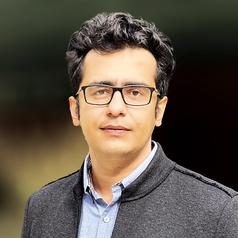
Assistant Professor in Architecture, The University of Texas at San Antonio Farzad serves as an Assistant Professor of Architecture at the University of Texas at San Antonio (UTSA). He is also the founding director of the Climate-Sensitive Design Lab (CSDL) at the UTSA School of Architecture + Planning. Holding a Ph.D. in Architecture from Penn State, with a focus on Sustainability, Farzad is deeply passionate about climate-responsive design, energy-efficient buildings, and sustainable urban development. His investigations primarily explore the intricate connections between urban microclimates and the energy performance of buildings, with a particular focus on vulnerable communities.
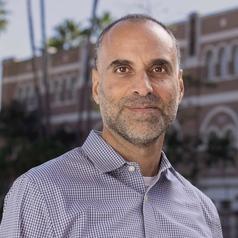
Assistant Professor of Entrepreneurship, University of Southern California I'm part of the faculty at the USC Marshall School of Business, in the Lloyd Greif Center for Entrepreneurial studies. I study how the social conversation around new technologies helps or hinders their adoption. For example, I study the century-long efforts of making electric vehicles market viable. I also study how perceptions of authenticity around specialty products like high-end coffee and whiskey impact their markets.