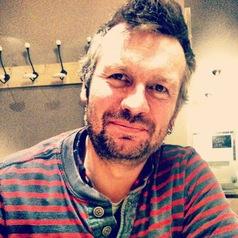
Associate Professor and Director, Flinders Microarchaeology Laboratory, Flinders University I am a geoarchaeologist with 20 years’ experience working in both academic and commercial environments. My primary area of expertise is the study of archaeological site formation processes and the reconstruction of palaeoenvironments at various scales through the study of site micro- and macro-stratigraphy, geological sequences and geomorphological landforms. I am interested in reconstructing changes in geomorphological systems (e.g., river behavioural change) and the implications of these dynamics on humans (and hominins) living in—and interacting with—these landscapes. I have worked widely in Europe, North Africa (Sudan, Libya), southern Africa (South Africa, Lesotho), Middle East (Oman, Bahrain, UAE, Saudi Arabia) and Southeast Asia (Malaysian Borneo, Vietnam, Indonesia, Myanmar).
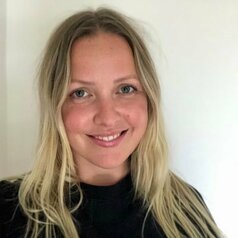
Lecturer in Education, Monash University Dr Stephanie Wescott is a lecturer in humanities and social sciences in the Faculty of Education’s School of Education, Culture and Society. Her research examines how education practice, policy and curriculum intersects with and is influenced by current socio-political conditions, and she is particularly interested in post-truth and its relationship to knowledge and expertise in education. She is currently researching misogynist radicalisation among boys in Australian schools.
Research Professor, University of the Sunshine Coast F.E. “Jack” Putz is a newly appointed research professor at UniSC in the Forest Research Institute. Before joining UniSC he was on the faculty at the University of Florida (UF) where he taught 3 undergraduate and graduate-level courses per year, for which he received numerous teaching awards, and advised more than 50 post-graduate students. Before UF he received his PhD from Cornell University and served as a Peace Corps Volunteer in Malaysia and a high-school biology teacher in Wisconsin. His research focuses on tropical forest conservation through improved management but he’s ventured into other fields including biomechanics, ethnobotany, ecophysiology, and fire ecology; based on his publications, he’s ranked among the world’s top five forestry researchers. In his spare time, he’s surfing and working on a South American prequel to his steamy jungle novel, Borneo Dammed, published under the nom de plume of Juan Camilo Moro.
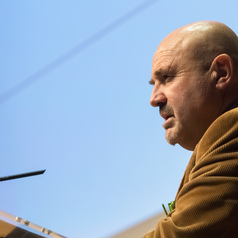
Chair in Clinical Pharmacology and Therapeutics, University of Hertfordshire Professor Schifano is one of the very few physicians with training and specialist qualifications in both psychiatry and clinical pharmacology and has contributed to the biomedical science as well as the clinical science of addiction. He has also made a significant contribution to several areas in addiction psychiatry and general psychiatry, including: stimulant synthetic drugs, mortality studies (Professor Schifano co-supervises and co-leads the National Programme on Substance Abuse Deaths (npSAD)), the internet and drugs. This is a new area of research and Professor Schifano is the Principal Investigator of the third consecutive EU Commission-funded, multi-centre Psychonaut/ReDNet research programme. Results from these studies have provided the only comprehensive and multilingual analysis of the information available online on psychoactive compounds to date.
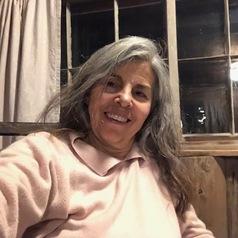
Professor of Criminology, University of South Wales Katy Holloway is a Professor of Criminology at the University of South Wales. She obtained her PhD from the University of Cambridge in 2000 and moved to Wales as a Research Fellow in 2002. Since completing her PhD, Katy's academic career has been focused on issues related to substance use and misuse. Originally, her primary research interest was on the link between drug use and crime. Over time, however, she has become far more interested in the people who use different substances and of finding ways to help keep them alive and reduce drug and alcohol-related harm. Katy has published widely in the field of substance use (80+ publications) and has secured more than £1.5m of external grant funding. She is currently working on several research projects including: an evaluation of Buvidal (long-acting injectable buprenorphine); an assessment of the impact of Minimum Pricing for Alcohol in Wales; and an NIHR-funded evaluation of the Staying Safe Programme (an online course about drugs and alcohol for university students). Katy is Director of the Substance Use Research Group at the University of South Wales and is a member of a range of advisory boards and steering groups. This includes Welsh Government's National Implementation Board for Drug Poisoning Prevention and the Western Bay Drugs Commission.