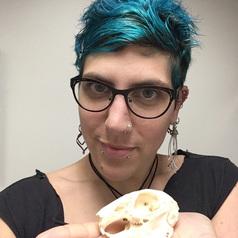
Senior Research Fellow in Ecology & Evolutionary Biology, University of Adelaide I am an evolutionary biologist, interested in understanding how the Earth's biodiversity came to be. In 2011, I completed a PhD at the Natural History Museum, London, on a group of cryptic amphibians called caecilians. They are limbless, head-first burrowing animals, and I used museum-based collections and cutting-edge imaging techniques to investigate how their skull evolved. Since then I have held research appointments at institutions including Harvard University, Australian National University and University of Adelaide. I have studied a diversity of animals including rabbits, bivalved scallops, lizards, frogs and their tadpoles, and sea snakes. I am an expert in the statistical analysis of organismal form, a software creator, and a passionate educator.
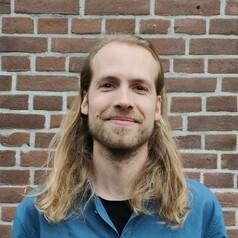
PhD candidate in Behavioural Ecology, Wageningen University Hugo Loning completed his Bachelor in Biology at the Universiteit Leiden in 2014 with a thesis on anthropogenic noise effects on blackbird song. Becoming more and more interested in animal ecology and bioacoustics, he continued his studies at Wageningen University. Here he conducted research on artificial light colour effects on bat roosting ecology at the Netherlands Institute of Ecology (NIOO-KNAW) and conducted a comparative study on acoustic adaptation in neotropical frog species in Panama in collaboration with the Vrije Universiteit Amsterdam and the Smithsonian Tropical Research Institute. After obtaining his Master degree in Biology in 2018, he continued as PhD at the Behavioural Ecology Group in Wageningen. Here he studies vocal communication in wild zebra finches. This is done under supervision of Marc Naguib (Wageningen University) and in collaboration with Simon Griffith (Macquarie University, Sydney).
Professor of Avian Behavioural Ecology, Macquarie University I am an evolutionary biologist and have spent most of my career to date investigating how the reproductive behaviour of birds drives the process of speciation and the amazing diversity of birds that we hear and see around us. Reproductive behaviour can be broken down into many components, such as: the expression of ornaments like colourful plumage; the process of choosing a social partner to breed with; how many offspring to have; how many sons or daughters to have; how much investment you make in current or future offspring. All of these decisions affect the quality of the resulting offspring. It is the variation in quality amongst individuals in a population that the process of natural selection acts upon. The best quality individuals are likely to be more attractive, live longer and produce more offspring than individuals or lower quality. Over generations, the population will change as a result of this non-random selection and eventually a new species is born. Birds have provided a disproportionate level of insight into evolutionary biology over the past hundred years because they are well surveyed, well understood and highly amenable to morphological and behavioural research. Developing a better knowledge of avian reproductive behaviour increases our capacity to conserve biodiversity and understand ourselves, because most birds share the same socially monogamous mating system as humans – a system that is actually very rare among other mammals.
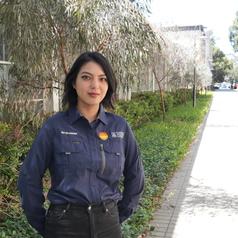
Postdoctoral research fellow, The University of Western Australia Prema Arasu is a postdoctoral research fellow at the Minderoo-UWA Deep-Sea Research Centre. They are a writer and poet interested in the phenomenology of the deep sea. They have an MLitt in Modern and Contemporary Literature and Culture, and have a PhD in Creative Writing from UWA. Prema is interested in how speculative fiction and experimental forms might provide us with new ways of talking about and conceptualising the oceans, particularly in the context of the Anthropocene. Their approach is interdisciplinary; integrating the methodologies of literary studies, creative arts, environmental humanities, philosophy, and science communication.