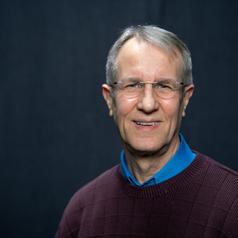
Doctorant en littérature et arts de la scène et de l'écran (concentration cinéma), Université Laval John Harbour est doctorant en littérature et arts de la scène et de l’écran à l’Université Laval. Ses recherches portent sur l’artiste multidisciplinaire québécois Raoul Barré, les interactions entre le cinéma d'animation et la bande dessinée ainsi que sur les cinéastes pionniers et pionnières. Également vidéaste pour la chaîne Noovo, John Harbour est aussi cinéaste d’animation dont les films furent sélectionnés dans plusieurs festivals internationaux (Fantasia, Sommets du cinéma d'animation, Festival international de cinéma d’animation de Meknès, LINOLEUM d’Ukraine).
Professor of Political Science, University of Windsor I am a sociologist teaching politics, communication and culture in a political science dept. Study news media and politics and information literacy.
Postdoctoral Fellow, University of Nebraska-Lincoln I study the interdependencies and connections among sociality, communication, and cooperation. Modeling suggests that communication and cooperation can be stabilized by social interactions. At the same time, we know communication reduces the potential costs of intergroup competition and cooperation is a way to realize the benefits of sociality. Further, a number of evolutionary hypotheses predict that complexity in one of these three leads to or requires complexity in another. My work uses observations of and experiments with wild and captive animals to tease apart the factors governing how these complex behaviors evolve and interact. As a PoE Fellow, I am working with Dr. Eileen Hebets to study the cooperative hunting behavior of a social pseudoscorpion (Paratemnoides nidificator) and the neural development and intelligence of the amblypygid (Phrynus marginemaculatus). Paratemnoides nidificator lives in colonies, shares parental care, and hunts large insects. Their unique social structure allows us to ask questions about how social ties and communication signals affect their ability to cooperate to obtain food. From this, we can determine whether social bonds built up over time or signals emitted during hunting are more important for cooperation. Our work with P. marginemaculatus tests two popular hypotheses for the evolution of large brains in primates: environmental complexity and social complexity.
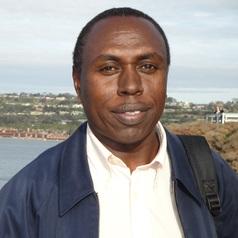
Chief Research Scientist and Director, Centre for Microbiology Research, Kenya Medical Research Institute Sam Kariuki is Chief Research Scientist and Director, Centre for Microbiology Research at KEMRI in Nairobi and a Wellcome Trust Sanger Institute International Fellow. He is visiting Professor of Tropical Microbiology, Nuffield Department of Medicine, University of Oxford, UK. He is Co-ordinator of Medical Microbiology postgraduate course, Institute of Tropical Medicine and Infectious Diseases, KEMRI. He has research interest in the epidemiology and antimicrobial resistance of enteric bacterial pathogens, including invasive non-typhoidal salmonellosis (NTS) and typhoid fever, Shigella spp, Vibrio cholerae and Escherichia coli. He is Chair, Global Antimicrobial Resistance Partnership (GARP)-Kenya chapter and in 2014-16, led the initiative for development of the Situational Analysis on AMR in Kenya culminating in the National Action Plan Draft document. He has Authored/co-authored over 130 papers in peer-reviewed journals and 3 text books on Antimicrobial resistance and Food Safety.
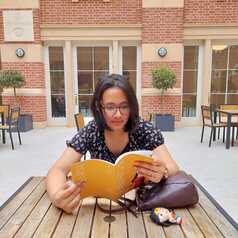
Lecturer of Labour Law, Universitas Gadjah Mada Nabiyla Risfa Izzati is a labour law lecturer in Faculty of Law Universitas Gadjah Mada. She is now a PhD student in Queen Mary University of London, researching on gender in gig economy. She completed her Bachelor of Law in Universitas Gadjah Mada in 2014 and her LLM degree in Leiden University, Netherland in 2015. Her research interest is in the labour law areas, specifically about labour rights, gig economy, and comparison study of international labour. She is also the Vice Director of Research Center for Law, Gender, and Society Universitas Gadjah Mada.
Canada150 Research Chair in Gender and African Politics and Visiting Professor, WiSER Wits University, Carleton University Professor Shireen Hassim is a Canada150 Research Chair in Gender and African Politics, Carleton University and Visiting Professor, WiSER Wits University. She has written and edited several books, including No Shortcuts to Power: African Women in Politics and Policy Making (Zed Books, 2003) and Go Home or Die Here: Violence, Xenophobia, and the Reinvention of Difference in South Africa (Wits University Press, 2008) and The ANC Women’s League (Ohio University Press, 2014). Her book Women’s Organizations and Democracy in South Africa: Contesting Authority (University of Wisconsin Press, 2006) won the Victoria Shuck Award from the American Political Science Association. Her most recent book is Hassim obtained her PhD from York University (Canada). She is a member of the Academy of Science of South Africa and an elected member of its ASSAf Council.