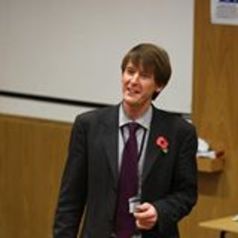
Assistant Professor, Faculty of Social Sciences, University of Nottingham Mark Stuart is an Assistant Professor in the School of Politics and International Relations. For the last twenty years, his main research area (along with Professor Philip Cowley) has been in the realm of parliamentary voting behaviour. He has also published widely in the field of British political biography, having penned portraits of Douglas Hurd (1998) and John Smith (2005). His latest biography - on Eric Forth - is due to be published in the late autumn of 2017.
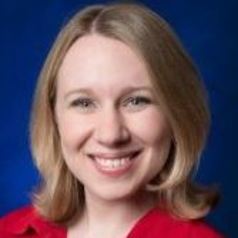
Postdoctoral research fellow, Queensland University of Technology Dr Kate Letheren is a Postdoctoral Research Fellow at the QUT Business School. Prior to joining QUT, she spent time studying at Griffith University and also working in marketing roles on a consulting basis for a number of clients. She is an active researcher in the areas of consumer psychology and communications, with a specific focus on anthropomorphism, anthropomorphic tendency, spokes-characters and robotics. Dr Letheren also holds a research interest in marketing education, and sits on the editorial board for the Journal for the Advancement of Marketing Education. In 2015, Dr Letheren was awarded a Fellowship from the Higher Education Academy in recognition of her approach to teaching and learning.
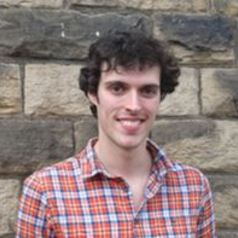
Postdoctoral Research Associate, University of Sheffield Matt Wood is a postdoctoral research associate at the Department of Politics and Deputy Director of the Sir Bernard Crick Centre for the Public Understanding of Politics. He has previously worked in local journalism and lobbying, and has held visiting fellowship positions at the UK Cabinet Office and ANZSOG Institute for Governance, Unviersity of Canberra. Matt's research interests are diverse, but centre mainly upon understanding the problem of 'anti-politics' as a societal trend of disaffection, disengagement, and anger with liberal democratic politics in western states.
Research Investigator, University of Michigan Dr. Craig Smith’s research focuses on children’s social cognitive development and links to social behavior. Examples of specific areas of interest are: children’s developing understanding of distributive and retributive justice, children’s understanding of antisociality, children’s reactions to conflicts and mitigating accounts (apologies, confessions, etc.), influences on children’s money saving and spending behaviors, links between math performance and cognition about fairness, and children’s use of social input as a guide for future thinking. Craig is currently the director of the Living Lab project at the University of Michigan. The Living Lab is a research/education model that brings developmental research into community settings such as museums and libraries. The UM Living Lab sites currently include the Ann Arbor Hands-On Museum, the UM Museum of Natural History, and the main branch of the Ann Arbor District Library. Since the start of the Living Lab project in 2012, over 6,000 children and families have participated in research in these community settings, and thousands more have had opportunities to converse with researchers studying child development.
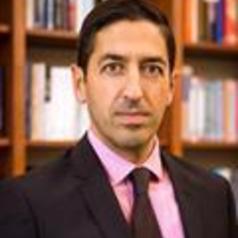
Dean, School of Public Health, Boston University Dr Galea is a physician and an epidemiologist. He is Dean and Professor at the Boston University School of Public Health. Prior to his appointment at Boston University, Dr Galea served as the Anna Cheskis Gelman and Murray Charles Gelman Professor and Chair of the Department of Epidemiology at the Columbia University Mailman School of Public Health where he launched several new educational initiatives and substantially increased its focus on six core areas: chronic, infectious, injury, lifecourse, psychiatric/neurological, and social epidemiology. He previously held academic and leadership positions at the University of Michigan and at the New York Academy of Medicine. In his own scholarship, Dr Galea is centrally interested in the social production of health of urban populations, with a focus on the causes of brain disorders, particularly common mood-anxiety disorders and substance abuse. He has long had a particular interest in the consequences of mass trauma and conflict worldwide, including as a result of the September 11 attacks, Hurricane Katrina, conflicts in sub-Saharan Africa, and the American wars in Iraq and Afghanistan. This work has been principally funded by the National Institutes of Health, Centers for Disease Control and Prevention, and several foundations. He has published over 500 scientific journal articles, 50 chapters and commentaries, and 9 books and his research has been featured extensively in current periodicals and newspapers. His latest book, co-authored with Dr Katherine Keyes, is an epidemiology textbook, Epidemiology Matters: a new introduction to methodological foundations. Dr Galea has a medical degree from the University of Toronto, and graduate degrees from Harvard University and Columbia University. He was named one of TIME magazine’s epidemiology innovators in 2006. He is past-president of the Society for Epidemiologic Research and an elected member of the American Epidemiological Society and of the Institute of Medicine of the National Academies of Science. Dr Galea serves frequently on advisory groups to national and international organizations. He has formerly served as chair of the New York City Department of Health and Mental Hygiene’s Community Services Board and as member of its Health Board.
Associate Professor, School of Education, Aarhus University As well as being an associate professor, Dr Adriansen also serves as international adviser at Aarhus University. Her research focuses on higher education and scientific knowledge production, including the internationalisation of higher education. Her most recent publication is Higher Education and Capacity Building in Africa: The Geography and Power of Knowledge Under Changing Conditions.